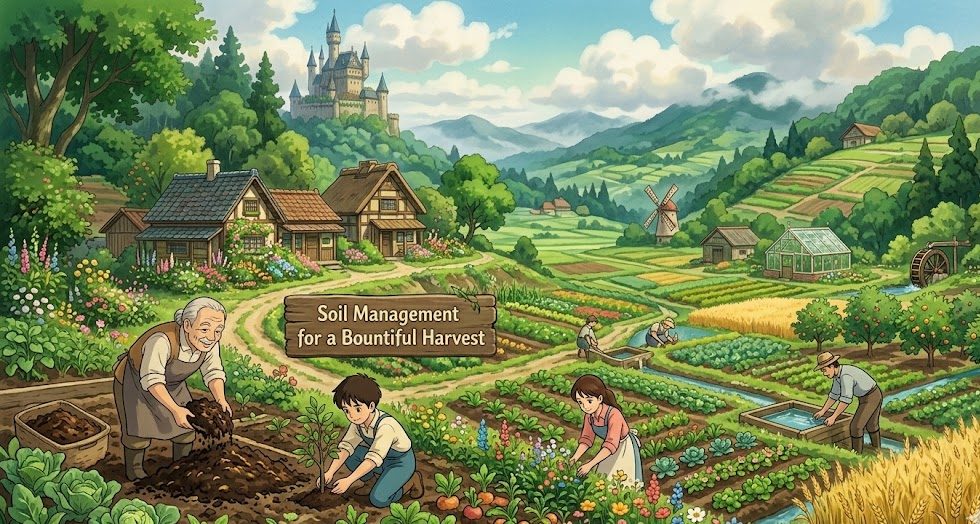
Did you know that it takes nature approximately 500 to 1,000 years to build just one inch of topsoil? Yet, through improper management, that same inch can be swept away by a single season of heavy rain or wind. This staggering reality presents a massive “Pain Point” for modern farmers: we are essentially “spending” our most valuable natural capital faster than the earth can replenish it. The “Challenge” is that as soil health declines, plants become weaker, pests become bolder, and the cost of synthetic “quick fixes” continues to skyrocket, eating into your hard-earned profits.
The ultimate solution lies in Advanced Soil Management. This isn’t just about adding fertilizer; it is about treating your soil as a living, breathing biological engine rather than a sterile medium for holding plants. This article serves as your professional roadmap to a better harvest by focusing on the foundation of all agriculture. You will learn the core fundamentals of soil structure, the measurable benefits of regenerative practices, and a practical step-by-step guide to restoring the vitality of your land for a more bountiful and profitable future.
Understanding Soil Management: Key Concepts and Importance
Soil management is the strategic integration of biological, chemical, and physical practices to protect and enhance the productivity of the land. Historically, soil was viewed merely as dirt—a substrate to be manipulated. Today, modern science has revealed that soil is a complex “Soil Food Web” teeming with billions of microbes, fungi, and earthworms that act as the digestive system for your crops.
Think of soil management like Maintaining a Great City. The sand, silt, and clay are the “buildings” (structure). The organic matter is the “food supply.” The water and air channels are the “roads and highways.” If the roads are blocked (compaction) or the food supply runs out (lack of organic matter), the city collapses.
Getty Images
Explore
A technical concept to master is Soil Aggregation. This is how soil particles bind together. High-quality soil looks like “chocolate cake crumbs.” This structure allows roots to breathe and water to infiltrate deeply rather than running off the surface. By understanding fundamentals like Cation Exchange Capacity (CEC)—the soil’s ability to hold onto nutrients—you move from being a “disturber” of the earth to a “manager” of a thriving underground civilization.
Why It Matters: The Top Benefits of Proactive Soil Management
Investing in your soil is the single most effective way to ensure a high-yield, low-stress harvest. Here is why it matters:
- Drastic Increase in Nutrient Density: Healthy soil produces plants with higher Brix levels (sugar content) and more minerals, making your harvest more nutritious and better tasting.
- Extreme Drought Resilience: Soil with high organic matter acts like a Giant Sponge. It can hold significantly more water, keeping your crops hydrated during long dry spells when other farms are withering.
- Reduction in Input Costs: When you manage soil biology correctly, the microbes naturally “unlock” nutrients like phosphorus and nitrogen from the air and earth, reducing your reliance on expensive synthetic fertilizers.
- Natural Pest and Disease Resistance: Robust soil creates robust plants with thicker cell walls, making it harder for insects and fungal diseases to take hold.
Pro Fact: Every 1% increase in soil organic matter allows the soil to hold an additional 20,000 to 25,000 gallons of water per acre.
How to Get Started: A Practical Guide for Beginners
Restoring your soil is a journey of consistency. Follow this 5-step implementation plan to begin seeing a “Better Harvest”:
Step 1: Professional Soil Testing
Don’t guess—measure. Get a comprehensive soil test that includes Microbial Activity and Organic Matter percentage. Knowing your starting point is essential for tracking progress.
Step 2: Implement “Minimum Tillage”
Every time you plow, you shatter the “roads” (fungal networks) in your soil city. Switch to No-Till or Strip-Till methods to keep the underground infrastructure intact and prevent carbon from escaping into the atmosphere.
Step 3: Use “Green Manure” and Cover Crops
Never leave your soil naked. Plant a mix of legumes (to fix nitrogen) and grasses (to add biomass) during the off-season. This “feeds” the soil microbes even when you aren’t growing a cash crop.
Step 4: Add High-Quality Organic Matter
Apply well-aged Compost or Vermicompost. This doesn’t just add nutrients; it “inoculates” your soil with beneficial bacteria and fungi that act as a natural immune system for your plants.
Step 5: Master Water Infiltration
Instead of flood irrigation, use Drip Irrigation or Mulching. Mulch keeps the soil cool, prevents evaporation, and slowly breaks down into rich humus, providing a constant slow-release food source for the earth.
Beginner’s Tip: Avoid the “Over-Fertilization” trap. Adding too much nitrogen can actually “burn” the organic matter in your soil and kill the beneficial microbes you are trying to protect.
Overcoming Challenges and Looking into the Future
The biggest hurdles in soil management are Soil Compaction (caused by heavy machinery) and Erosion. To solve compaction, modern farmers are switching to smaller, lighter equipment or “controlled traffic farming” to keep the “roads” open for roots. To fight erosion, the use of Perennial Buffer Strips is becoming a standard practice.
Looking into the future, we are moving toward Digital Soil Mapping. We are seeing the rise of AI-driven soil sensors that provide real-time data on nutrient levels directly to a smartphone. Another trend is Bio-Design, where farmers use specific “Microbial Inoculants”—tailor-made probiotics for the soil—to target specific crop needs without a single drop of chemicals. The future of the harvest is not in the sky, but in the intelligent management of the ground beneath us.
Conclusion
Best soil management practices are the bridge between a struggling farm and a flourishing legacy. By shifting your focus from the plant to the soil, you create an environment where success is the natural outcome. The core message is simple: Feed the soil, and the soil will feed the plant. When you treat your land with respect and biological intelligence, you ensure a better harvest for yourself and for generations to come.
Call to Action: This week, take a shovel to your field and dig a 12-inch deep hole. Count how many earthworms you find.
If you find fewer than ten, start your journey today by researching Cover Cropping. The health of your future harvest starts with the life you build in the dirt today.
Frequently Asked Questions (FAQs)
1. How long does it take to see results from better soil management? While some benefits like better water infiltration are immediate, significant increases in Yield and Organic Matter usually manifest fully within 2 to 3 growing seasons as the soil biology stabilizes.
2. Can I manage soil health without livestock? Yes. While animal manure is a great resource, you can achieve excellent soil health through Cover Cropping, Composting, and Green Manures alone.
3. What is the “ideal” pH for a better harvest? Most crops thrive in a slightly acidic to neutral range, typically between 6.0 and 7.0. Within this range, nutrients are most “available” for the plant to absorb.
4. Does “No-Till” farming cause more weeds? Initially, it can be a challenge. However, by using Heavy Mulching and Cover Crops to “choke out” weeds, many no-till farmers find they have fewer weed problems over time because they aren’t constantly bringing new weed seeds to the surface through plowing.