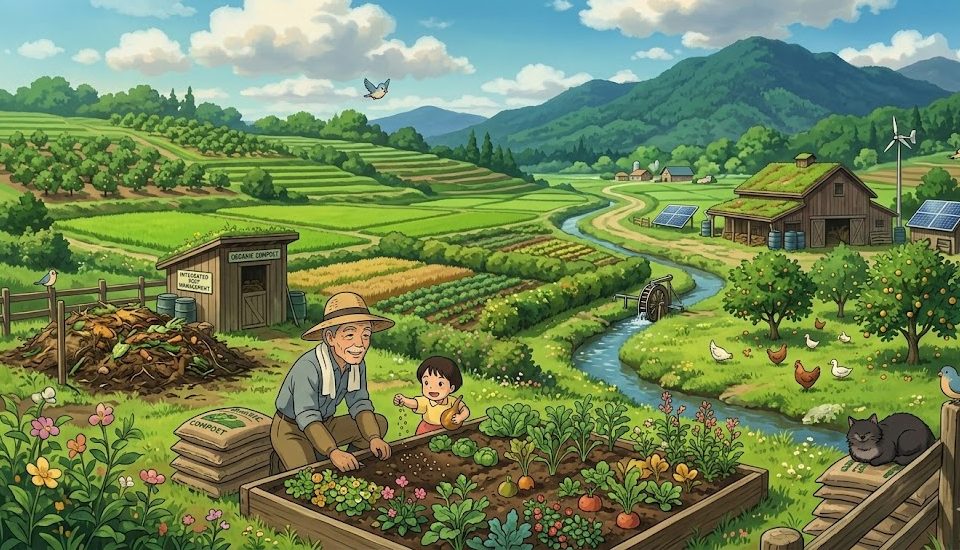
Sustainable farming means using agricultural methods that meet present food needs without harming the ability of future generations to farm successfully. It focuses on balancing productivity, environmental care, and economic stability. This approach is not limited to one country or climate. It can be adapted to different farming systems across the world, from small family farms to large commercial operations.
One of the key principles of sustainable farming is soil health. Healthy soil is the foundation of successful agriculture. It supports root growth, stores water, provides nutrients, and helps protect plants from stress. However, poor farming practices can damage soil over time. Repeated overuse of chemical inputs, heavy tillage, and lack of organic matter can reduce soil fertility. Sustainable farming encourages methods such as crop rotation, compost use, cover cropping, and reduced tillage to improve soil structure and biological activity.
Crop rotation is a simple but effective practice used in many farming systems. Instead of planting the same crop in the same field every season, farmers rotate different crops over time. This helps reduce pest and disease buildup, improves soil fertility, and can lead to more balanced nutrient use. For example, rotating cereals with legumes may naturally improve soil nitrogen levels and reduce the need for certain external inputs.
Water conservation is another major part of sustainable agriculture. Water is essential for crop and livestock production, but in many regions it is becoming less reliable. Efficient irrigation systems, mulching, rainwater harvesting, and proper scheduling of irrigation can help farmers use water more carefully. By reducing water waste, farms become more resilient during dry periods and better prepared for changing weather patterns.
Biodiversity also plays an important role in sustainability. Farms are healthier when they support a variety of plants, insects, and natural organisms. Beneficial insects can help control pests, while diverse cropping systems can reduce the risk of total loss from disease or extreme weather. Agroforestry, hedgerows, mixed farming, and pollinator-friendly planting are examples of ways to support biodiversity while also benefiting the farm.
Responsible nutrient management is essential for both productivity and environmental protection. Crops need nutrients to grow, but excessive or poorly timed fertilizer use can lead to waste and environmental problems. Sustainable farming encourages testing soil, applying nutrients in the right amount, and using organic materials where appropriate. This not only supports crop growth but also helps reduce runoff and unnecessary cost.
Pest management is another area where sustainable methods can make a significant difference. Instead of relying only on chemical pesticides, farmers can use integrated pest management strategies. These include monitoring pest levels, encouraging natural predators, choosing resistant crop varieties, and applying treatments only when needed. This approach can lower chemical dependence and create a more balanced farm ecosystem.
Livestock management is also part of sustainable agriculture. Healthy animal care, clean water, balanced feeding, and proper pasture rotation help maintain productivity while protecting land resources. In mixed farming systems, livestock and crop production can support each other. Animal manure can improve soil fertility, while crop residues may be used as feed. When managed carefully, this creates a more efficient and circular farming system.
Economic sustainability is just as important as environmental sustainability. Farmers must be able to earn a reliable income in order to continue farming. Sustainable practices often help reduce long-term costs by improving efficiency and lowering dependency on expensive inputs. They can also open opportunities in premium markets, local food systems, and quality-focused production. A farm that is profitable, resource-efficient, and resilient is more likely to succeed over time.
Climate change has made sustainable farming even more important. Farmers in many parts of the world are dealing with irregular rainfall, rising temperatures, extreme weather, and new pest pressures. Sustainable methods can improve resilience by strengthening soil, conserving water, and diversifying production systems. While no farming method can remove all risks, sustainability helps farms adapt more effectively to changing conditions.
Education, innovation, and local knowledge are essential in building a sustainable agricultural future. Farmers often understand their land deeply, and combining that experience with improved research and practical training can lead to strong results. Governments, agricultural institutions, and rural communities all have a role to play in supporting sustainable practices through education, infrastructure, and fair market access.
In conclusion, sustainable farming is not just a trend; it is a necessary approach for the future of agriculture. By focusing on soil health, water conservation, biodiversity, responsible nutrient use, and resilient farm systems, farmers can protect the environment while maintaining productivity. Sustainable agriculture supports long-term food security, healthier ecosystems, and stronger rural economies. As farming continues to evolve around the world, sustainable practices will remain one of the most valuable tools for building a better agricultural future.