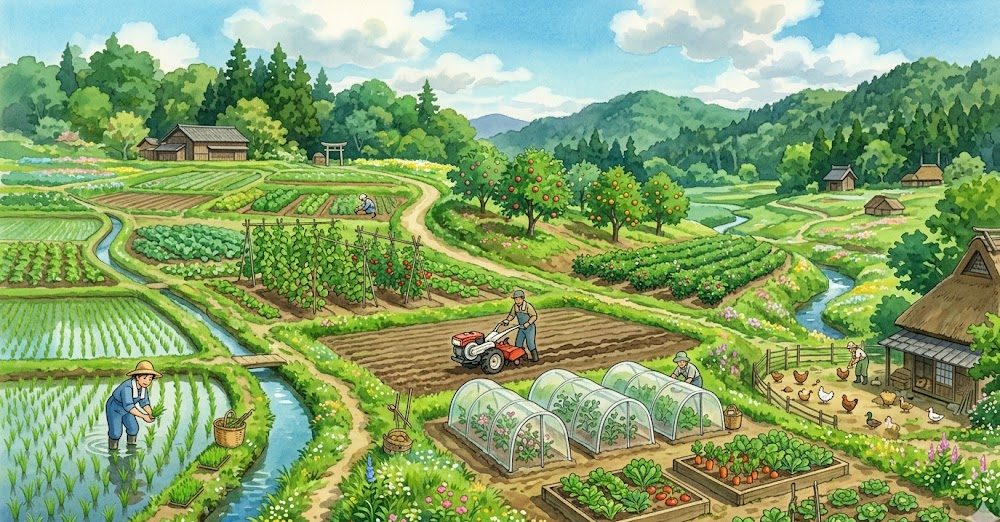
For centuries, the image of farming has remained relatively unchanged: vast, open fields stretching toward the horizon, heavily dependent on the unpredictable whims of weather and seasons. However, as the global population accelerates toward 10 billion and arable land becomes increasingly scarce, the agricultural sector is undergoing a profound transformation.
To meet the demands of tomorrow, today’s growers are stepping outside the traditional boundaries of agriculture. By embracing diverse agricultural practices and specialized farming methods, innovators are proving that high-yield, profitable, and sustainable food production can happen virtually anywhere. From climate-controlled indoor environments to highly specialized niche crops, let us explore the revolutionary methods reshaping the global food supply chain.
The Shift Toward Specialized Agriculture
Traditional monoculture—growing a single crop over a massive area—has historically been the backbone of global food production. While effective for staple crops like corn and wheat, it requires immense amounts of land and water.
Specialized farming methods pivot away from this model. Instead of asking, “How much land can we farm?” modern agriculturalists ask, “How efficiently can we use the space we have?” This shift focuses on precision, controlled environments, and high-value crops, allowing farmers to operate profitably even in urban centers or arid regions.
1. High-Tech Urban Yields: Vertical Farming
One of the most visually striking specialized methods is Vertical Farming. As the name suggests, this practice involves growing crops in vertically stacked layers, often integrated into structures like skyscrapers, shipping containers, or repurposed warehouses.
Key Features and Benefits
- Climate Independence: Vertical farms are completely enclosed, meaning crops are protected from extreme weather, droughts, and seasonal changes. Farming becomes a 365-day-a-year operation.
- Zero Food Miles: By bringing the farm into the heart of urban cities, produce can be harvested and sold on the exact same day, drastically reducing transportation emissions and ensuring peak freshness.
- LED Technology: These farms rely on advanced LED lighting systems calibrated to the exact light spectrum needed by specific plants, optimizing photosynthesis and accelerating growth rates.
2. The Soilless Revolution: Hydroponics, Aquaponics, and Aeroponics
Soil is no longer a strict requirement for agriculture. Soilless farming methods are dominating the specialized agriculture space due to their incredible water and nutrient efficiency.
Hydroponics
In a hydroponic system, plant roots are suspended directly in a nutrient-rich, oxygenated water solution. Because the plants do not have to expend energy growing massive root systems to search for food in the soil, they direct all their energy into upward growth, resulting in faster harvests and larger yields. Hydroponics uses up to 90% less water than traditional field farming because the water circulates in a closed loop.
Aquaponics
Aquaponics takes hydroponics a step further by creating a symbiotic ecosystem between plants and aquatic life. Fish (such as tilapia or koi) are raised in tanks, and their nutrient-rich waste is pumped into the plant beds. The plants act as a natural bio-filter, absorbing the nutrients and returning clean, purified water back to the fish.
Aeroponics
Originally developed by NASA for growing food in space, aeroponics involves suspending plant roots in mid-air and misting them continuously with a nutrient solution. This method provides maximum oxygenation to the root zone, leading to rapid development and significantly lower water usage even compared to standard hydroponics.
3. Niche Cultivation: The Economics of Mushroom Farming
Not all diverse agricultural practices require high-tech lighting or circulating water pumps. One of the most profitable and sustainable specialized methods is Mushroom Cultivation.
Unlike plants, fungi do not require sunlight to grow; they require specific humidity, temperature, and a steady food source.
Why Mushroom Farming is Highly Specialized
- Agricultural Upcycling: Mushrooms are master decomposers. They are cultivated on substrates made from agricultural waste products—such as straw, sawdust, or coffee grounds—effectively turning waste into high-value food.
- Rapid Turnover: Gourmet and medicinal varieties, such as Oyster, Shiitake, or Lion’s Mane mushrooms, have incredibly fast growth cycles. A specialized indoor grow room can yield multiple harvests within a single month.
- Space Efficiency: Similar to vertical farming, mushroom grow bags or blocks can be stacked floor-to-ceiling in climate-controlled tents, yielding massive amounts of product per square foot.
4. Precision Agriculture: Farming with Data
Specialized farming isn’t just about what you grow or where you grow it; it’s about how you manage the operation. Precision Agriculture (or Smart Farming) is the practice of using advanced technology to monitor and optimize field-level management.
The Tools of Precision Farming
- IoT Sensors: Devices planted in the soil monitor moisture, pH levels, and nutrient density in real-time, sending data directly to a farmer’s smartphone or dashboard.
- Agricultural Drones: Drones provide multispectral aerial imagery, allowing farmers to spot irrigation leaks, pest infestations, or nutrient deficiencies in specific zones of a field before they spread.
- Variable Rate Technology (VRT): Instead of applying water or fertilizer evenly across a whole field, VRT equipment uses GPS data to apply exact amounts of resources only to the specific plants that need them.
5. Agroecology and Permaculture Design
On the opposite end of the high-tech spectrum lies Permaculture (Permanent Agriculture). This is a highly specialized design philosophy that seeks to seamlessly integrate human activity with natural surroundings.
Rather than forcing a crop to grow in an unnatural environment, permaculture studies the local ecosystem and designs a farm that mimics natural forests. It utilizes specialized practices like food forests, where tall nut trees provide a canopy, fruit trees form a sub-canopy, berry bushes create an understory, and root vegetables grow beneath the soil. This creates a self-sustaining, resilient ecosystem that requires minimal human intervention once established.
Conclusion: Diversify to Thrive
The future of agriculture is not a single, uniform method. It is a mosaic of Diverse Agricultural Practices & Specialized Farming Methods.
Whether it is a high-tech hydroponic vertical farm supplying leafy greens to a bustling metropolis, a specialized mushroom facility turning agricultural waste into gourmet food, or a data-driven precision farm optimizing every drop of water, diversification is the key to global food security. By embracing these specialized methods, the agricultural industry is building a system that is more resilient, more profitable, and infinitely more adaptable to the challenges of the 21st century.