Did you know that by the year 2050, the world will need to produce 60% more food than it does today, but we will have to do it with nearly the same amount of land and significantly less water? This isn’t just a global statistic; it is the daily “Pain Point” for farmers who face skyrocketing input costs, unpredictable weather patterns, and soil that is becoming increasingly tired. The traditional “more is better” approach to fertilizers and water has hit a wall, leaving many growers wondering how to stay profitable in a changing world.
The “Challenge” is that agriculture is no longer just about hard work; it is about Intelligence. The ultimate solution lies in the adoption of Top Agricultural Innovations—a suite of biological and technological breakthroughs that allow us to grow more using less. This article serves as your comprehensive guide to the frontier of farming. You will learn the core fundamentals of precision tech, the massive economic benefits of smart systems, and a practical roadmap to implementing these innovations on your farm today to ensure long-term survival and success.
Understanding Agricultural Innovation: Key Concepts and Importance
Agricultural innovation is the strategic application of modern science and digital data to the ancient practice of growing food. It represents a fundamental shift from “Guesswork” to “Precision.” Historically, farming relied on regional averages—applying the same amount of water or fertilizer to every acre. Modern innovation, however, prioritizes Site-Specific Management. It recognizes that the health of the soil can change every few meters.
Think of agricultural innovation like a Modern Healthcare System. In the past, a doctor might have given the same medicine to everyone with a fever. Today, we use blood tests and DNA mapping to provide “Personalized Medicine.” In this analogy, the farm is the patient. We use IoT (Internet of Things) sensors and satellite imagery to “test the blood” of the soil and the “heartbeat” of the plants.
The importance of these concepts today is rooted in Resource Scarcity. Innovations like Variable Rate Technology (VRT) allow machinery to adjust the flow of seeds or fertilizer automatically as it moves across different soil zones. This isn’t just “cool tech”; it is a vital tool for modern relevance, ensuring that every drop of water and every grain of fertilizer is an investment rather than an expense.
Why It Matters: The Top Benefits of Agricultural Innovation
Embracing these breakthroughs isn’t just about keeping up with the neighbors; it’s about transforming your farm’s bottom line. Here are the primary advantages:
- Significant Cost Reduction: By using precision sensors, farmers can reduce fertilizer and pesticide waste by up to 30%, keeping more money in their pockets.
- Drought Proofing: Innovations like Sub-Surface Drip Irrigation (SDI) deliver water directly to the roots, reducing evaporation loss and ensuring crop survival during heatwaves.
- Enhanced Soil Longevity: Biological innovations, such as Mycorrhizal Inoculants, restore the natural microbial life of the soil, making it more fertile for future generations.
- Higher Market Value: Data-tracking innovations (like Blockchain) allow you to prove your produce is “sustainably grown,” opening doors to premium organic and export markets.
Pro Fact: Recent studies indicate that farmers who adopt Integrated Pest Management (IPM) technologies can reduce their chemical dependency by 40% without losing a single bushel of yield.
How to Get Started: A Practical Guide for Beginners
Modernizing your farm doesn’t require a million-dollar investment overnight. It is a journey of small, smart steps. Follow this 5-step implementation plan:
Step 1: Digitization of Field Maps
Start by using free tools like Google Earth or specialized farm apps to map your field boundaries. Look at historical satellite data to identify “High” and “Low” performing zones in your fields.
Step 2: Install Basic Soil Moisture Sensors
Place sensors in your most productive and least productive areas. This will teach you the “Invisible” water needs of your soil, allowing you to stop watering by the calendar and start watering by the plant’s demand.
Step 3: Utilize “Precision Scouting”
Instead of walking every row, use Multi-Spectral Drone Mapping once a month. These maps show “Plant Stress” (Vigor) that the human eye cannot see, allowing you to treat a small outbreak before it consumes the whole field.
Step 4: Experiment with Biologicals
In one small test plot, replace synthetic fertilizers with Bio-Stimulants like seaweed extracts or beneficial bacteria. Compare the root structure of these plants to your traditional ones.
Step 5: Adopt Data-Based Harvest Tracking
Use a Farm Management Software (FMS) to record exactly how much each zone produced. This “Final Grade” allows you to decide which innovations to scale up next year.
Beginner’s Tip: Don’t buy a complex robot if you don’t have good data yet. The “Brain” of innovation is Information. Focus on sensors and mapping first; the automation can come later.
Overcoming Challenges and Looking into the Future
The shift toward innovation faces two major hurdles: Initial Capital Cost and the Connectivity Gap. Many rural areas still lack the high-speed internet needed for real-time data. To solve this, “Edge Computing”—where sensors process data locally without needing the cloud—is becoming a standard. For the cost issue, “Ag-Tech Leasing” is allowing smaller farmers to use expensive drones and robots on a pay-per-use basis.
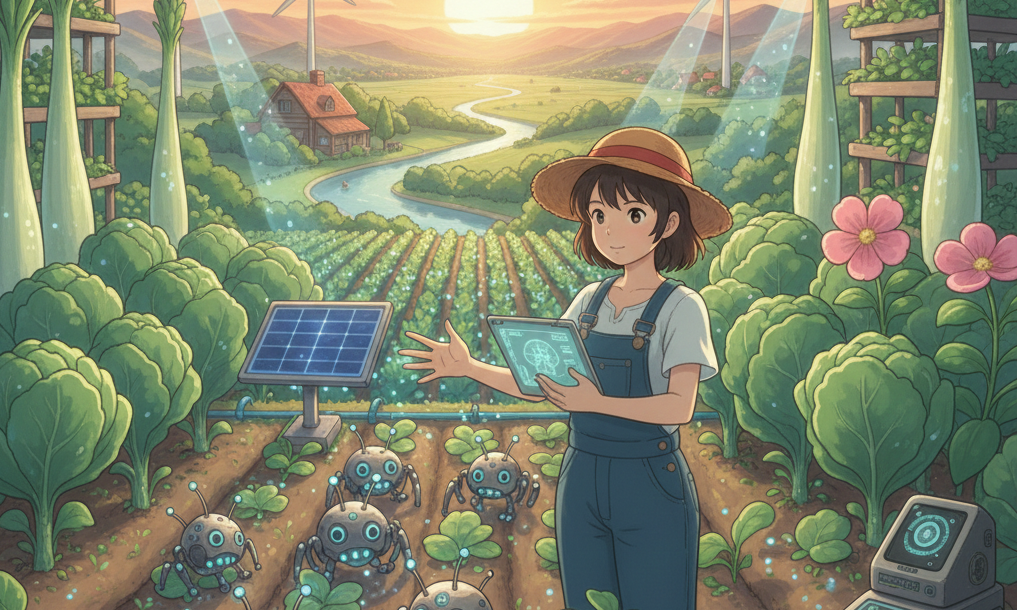
Looking into the future, we are on the verge of Autonomous Swarm Robotics. Instead of one massive tractor, imagine fifty small, solar-powered robots working together like bees to weed and plant. We are also seeing the rise of Vertical Farming and Hydroponics moving into urban centers, and AI-Driven Breeding that creates seeds naturally resistant to salt and heat. The trend is moving toward “Circular Agriculture,” where the farm produces its own energy and fertilizer on-site.
Conclusion
The top agricultural innovations of today are the “Survival Kits” for the farmers of tomorrow. By moving from a “Broad-Stroke” approach to a “Precision-Targeted” mindset, we can feed the world while restoring the health of our planet. The core message is clear: The most valuable crop you will ever grow is Knowledge.
Call to Action: This week, identify one “Data Gap” on your farm—perhaps you don’t know your exact soil pH or your exact water usage—and find one low-cost sensor or tool to measure it.
Start your journey of innovation today. The future of food is digital, biological, and bright—and it starts with the choices you make in the field this season.
Frequently Asked Questions (FAQs)
1. Is “High-Tech” farming only for the wealthy? No. While some machines are expensive, many innovations like soil sensors and farm management apps are very affordable and provide a massive Return on Investment (ROI) by saving you money on wasted fertilizer and water.
2. Does “Innovation” mean using more GMOs? Not necessarily. Many of the greatest innovations are Mechanical (drones/robots) or Biological (compost teas/beneficial insects) that actually help farmers move away from heavy chemical and GMO reliance.
3. Will technology replace the farmer? Never. Technology is a tool, not a replacement. A drone can see a problem, but it takes the Farmer’s Experience to decide the best way to solve it. Innovation makes the farmer a more powerful manager.
4. How do I know which innovation is right for my specific soil? The best way is to Start a Test Plot. Never change your whole farm at once. Test a new technology or biological product on 5% of your land and compare the results to your traditional 95%.