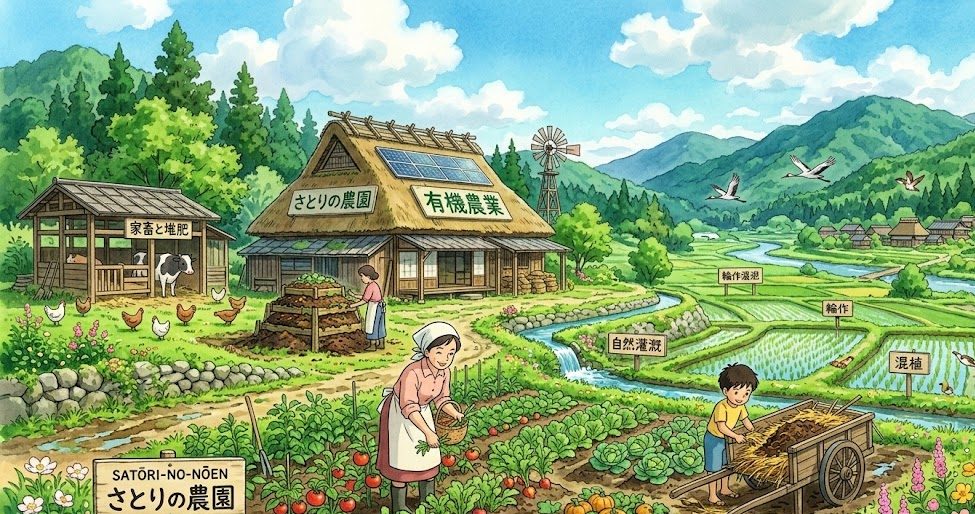
Did you know that a single teaspoon of healthy organic soil contains more microorganisms than there are people on Earth? It is a staggering biological reality that highlights the hidden power beneath our feet. Yet, for decades, modern agriculture has treated soil like a sterile medium, relying on a “chemical cocktail” of synthetic fertilizers and toxic pesticides. The “Challenge” is that this industrial approach has led to a massive “Pain Point”: our land is becoming addicted to chemicals, while the nutrient density of our food is plummeting and biodiversity is vanishing.
The ultimate solution lies in Organic Farming Techniques. This isn’t just about “farming like our ancestors did”; it is a sophisticated system of Regenerative Biology that works in harmony with nature’s laws. By shifting from a model of extraction to one of stewardship, we can restore the earth’s fertility while producing high-quality, profitable harvests. This article serves as your professional roadmap to the organic revolution. You will learn the core fundamentals of soil ecology, the measurable benefits of sustainable practices, and a practical guide to implementing organic methods on your own land today.
Understanding Organic Farming: Key Concepts and Importance
Organic farming is a holistic production management system that promotes and enhances agro-ecosystem health. It fundamentally prohibits the use of synthetic inputs, but more importantly, it emphasizes the restoration of natural cycles. Historically, all farming was organic, but the Green Revolution of the 20th century pushed us toward chemical dependency. Today, organic farming has gained modern relevance as the primary defense against soil desertification and climate change.
Think of organic farming like Building a Natural Immune System. In chemical farming, when a plant gets “sick” (attacked by pests), we give it a “pill” (pesticide). In organic farming, we focus on the Gut Health of the soil. If the soil is thriving with diverse microbes and fungi, the plant grows so strong that it naturally resists disease and pests.
A technical concept to grasp is the Soil Food Web. This is the community of organisms living all or part of their lives in the soil. When we use organic matter—like compost or green manure—we are “feeding the workers” (microbes) who then “build the infrastructure” (soil structure) and “deliver the goods” (nutrients) to the plant roots. By understanding this fundamental synergy, you move from being a “disturber” of the land to an “architect” of life.
Why It Matters: The Top Benefits of Organic Farming
Transitioning to organic techniques offers a transformative impact that reaches far beyond the boundaries of your field:
- Restoration of Soil Fertility: Organic methods increase Soil Organic Matter (SOM), which improves the soil’s structure, aeration, and ability to hold moisture.
- Economic Resilience: While organic farming requires more labor, it eliminates the skyrocketing costs of synthetic fertilizers and pesticides, often resulting in higher Net Profits due to lower input expenses.
- Environmental Protection: By eliminating chemical runoff, organic farms protect local groundwater and encourage the return of Pollinators like bees and butterflies, which are essential for global food security.
- Human Health and Nutrition: Organic crops have been shown to contain higher levels of Antioxidants and essential minerals, providing a “cleaner” and more nutrient-dense product for consumers.
Pro Fact: Organic soils can capture and store up to three times more carbon than chemically treated soils, making organic farming one of our most powerful tools for reversing global warming.
How to Get Started: A Practical Guide for Beginners
Launching an organic operation requires a disciplined shift from “Force” to “Finesse.” Follow this 5-step implementation plan:
Step 1: Conduct a “Biological” Soil Test
Go beyond NPK. Get a test that measures Microbial Biomass and organic matter percentages. You need to know the baseline of your soil’s “living capital.”
Step 2: Master the Art of Composting
Compost is the “Black Gold” of organic farming. Create a system that recycles all farm waste, livestock manure, and crop residues. High-quality Thermal Compost inoculates your soil with the beneficial bacteria needed to fight pathogens.
Step 3: Implement Multi-Species Cover Cropping
Never leave your soil naked. Plant a mix of legumes (to fix Nitrogen) and grasses (to build Biomass) during the off-season. This prevents erosion and “feeds” the underground soil web 365 days a year.
Step 4: Use Crop Rotation and Companion Planting
Avoid “Monocultures.” Rotate your plant families every season to break pest cycles. Use Companion Planting (e.g., planting Marigolds near Tomatoes) to naturally repel harmful insects through scent and root secretions.
Step 5: Adopt “Organic Mulching”
Spread straw, wood chips, or leaves over your garden beds. This suppresses weeds, keeps the soil cool in the summer, and slowly breaks down into rich humus.
Beginner’s Tip: Don’t try to go “Cold Turkey” on a massive scale if your soil is currently chemical-dependent. Start with a 10% Transition Plot to learn the rhythms of organic biology before scaling up to your entire farm.
Overcoming Challenges and Looking into the Future
The biggest hurdles in organic farming are the Transition Period (where yields may temporarily dip as soil life wakes up) and Weed Management. To solve the weed issue, modern organic farmers use Thermal Control (gentle steaming) and Robotic Weeding that pulls weeds without disturbing the soil structure.
Looking into the future, we are moving toward Digital Organic Agriculture. We are seeing the rise of AI-driven Biological Monitoring, where sensors can detect specific fungal diseases and suggest the exact “Compost Tea” recipe to fix them. We are also seeing the trend of Bio-Design, where farmers use “Microbial Inoculants”—basically probiotics for the earth—to target-grown specific high-value crops with zero chemical inputs. The trend is moving toward a future where “Organic” isn’t a niche label, but the global gold standard for food production.
Conclusion
Organic farming is a journey back to the roots of life, powered by the technology of tomorrow. By respecting the soil food web and utilizing regenerative techniques, we can produce food that heals the planet rather than harming it. The core message is simple: We do not inherit the earth from our ancestors; we borrow it from our children. Organic farming ensures we return it in better shape than we found it.
Call to Action: This weekend, start your first Compost Pile using kitchen scraps and yard waste.
Take the first step toward building your own “Black Gold.” The future of sustainable agriculture starts in your own backyard, one handful of healthy soil at a time.
Frequently Asked Questions (FAQs)
1. Is organic farming less productive than chemical farming? While industrial farming may have higher yields in the short term, organic farming yields stabilize over time and often outperform chemical farms during Drought Years because organic soil holds significantly more water.
2. How do I control pests without chemicals? In organic farming, we use Biological Control. This means encouraging “predatory” insects like ladybugs and lacewings to live on your farm. When the ecosystem is balanced, the “good bugs” eat the “bad bugs” for you.
3. Does organic farming take more work? In the beginning, yes. It requires more Observation and Planning. However, as the soil becomes healthier, the farm begins to “manage itself” more effectively, eventually requiring fewer inputs and less corrective labor.
4. How do I know if my soil is “Organic” yet? A healthy organic soil will have a dark, rich color, a “sweet” earthy smell (caused by Actinomycetes bacteria), and a high population of earthworms. If you see ten earthworms in a single shovel-full of dirt, you are on the right track