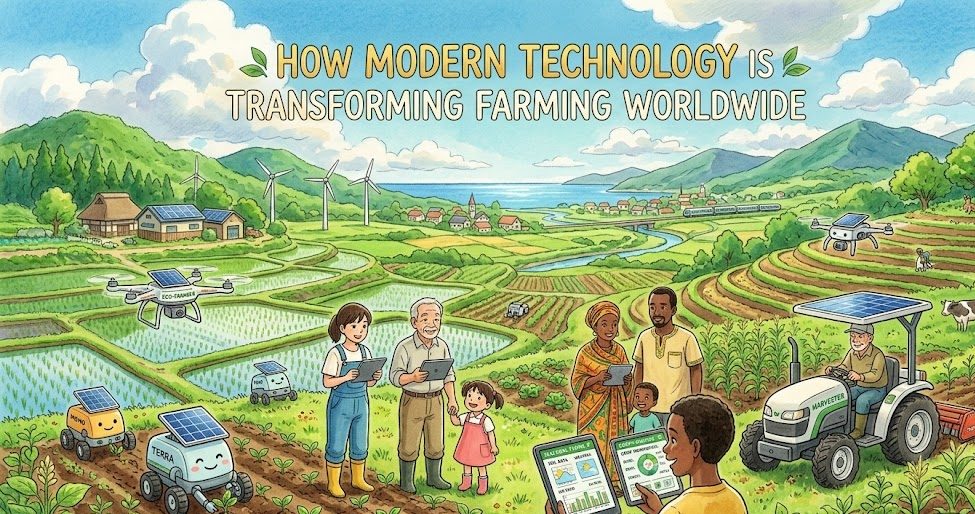
Agriculture has always been one of the most important industries in the world. It provides food, employment, raw materials, and economic stability for billions of people. Over the last few decades, farming has changed rapidly, and one of the biggest reasons is the rise of smart agriculture. Across many countries, farmers are now using modern technology to improve productivity, reduce waste, and make farming more efficient than ever before.
Smart agriculture is the use of digital tools, machines, and data-based systems to manage farming operations in a better way. Instead of depending only on traditional methods, farmers can now use sensors, weather tracking, mobile apps, GPS-guided equipment, drones, and automated irrigation systems. These tools help them make more accurate decisions about planting, watering, fertilizing, and harvesting.
One of the greatest benefits of smart agriculture is improved efficiency. In traditional farming, many decisions are based on experience alone. While experience is valuable, technology gives farmers more exact information. For example, soil sensors can show how much moisture is in the ground. This helps farmers know exactly when to irrigate crops. As a result, they can save water, reduce cost, and avoid overwatering.
Another major advantage is better crop health monitoring. Drones and satellite imaging are becoming more useful in many regions of the world. These tools can capture images of large farms and identify areas where crops may be under stress due to pests, diseases, or lack of nutrients. Instead of treating the entire field, farmers can focus only on the affected area. This saves time, lowers input costs, and may reduce unnecessary chemical use.
Weather forecasting has also become more important in smart farming. Farmers often face unpredictable conditions such as drought, heavy rain, storms, and temperature changes. With modern weather tools and mobile alerts, they can plan field activities more safely and effectively. If heavy rain is expected, fertilizer application or harvesting can be adjusted. If a dry period is coming, irrigation planning can be improved. This kind of preparation can protect crops and reduce losses.
Automation is another key part of modern agriculture. In some areas, farmers are using automated irrigation systems, smart greenhouses, and even robotic machines for planting or harvesting. These technologies are especially valuable where labor shortages exist. Automation can also improve accuracy. A machine that applies water or nutrients in controlled amounts can help maintain consistency across the field, which often leads to better plant growth.
Smart agriculture is not useful only for large farms. Small and medium farmers can also benefit from it. Today, many affordable mobile applications provide useful information about weather, crop care, soil management, and market prices. Even a simple smartphone can help a farmer access advice, track expenses, and improve farm planning. As digital tools become cheaper and easier to use, more growers around the world can take advantage of them.
Sustainability is another important reason why smart agriculture is gaining attention. Modern farming must not only produce more food, but also protect natural resources. Water, soil, and biodiversity are all valuable for the future of farming. By using data and precision tools, farmers can often reduce waste and use inputs more responsibly. Precision fertilizer application, controlled irrigation, and early pest detection can all support more sustainable production.
Despite its many advantages, smart agriculture also comes with challenges. Some farmers may find new technologies expensive at first. Others may need training to understand how to use digital tools properly. Internet access and electricity can also be a problem in some rural areas. However, as technology continues to improve and governments or agricultural organizations provide more support, access is becoming easier in many places.
Education and training will play a major role in the future of smart farming. It is not enough to simply introduce a machine or app. Farmers need practical guidance on how to use technology in real farming conditions. Agricultural extension services, online learning, local cooperatives, and digital training programs can help bridge this gap and make innovation more useful at the farm level.
Looking ahead, smart agriculture is likely to become even more common worldwide. Population growth, climate change, and resource pressure are increasing the demand for efficient food production. Farmers will need better tools to produce more while using less. Technology alone is not the full solution, but it can be a powerful partner when combined with good farming knowledge and sustainable practices.
In conclusion, smart agriculture is changing the way farming works across the world. From soil sensors and weather apps to drones and automated irrigation, modern technology helps farmers improve productivity, reduce waste, and manage resources more wisely. As access expands and training improves, smart farming has the potential to support both food security and long-term agricultural sustainability. For farmers, researchers, and policymakers alike, the future of agriculture will likely be shaped by how well technology is used to solve real farming challenges.