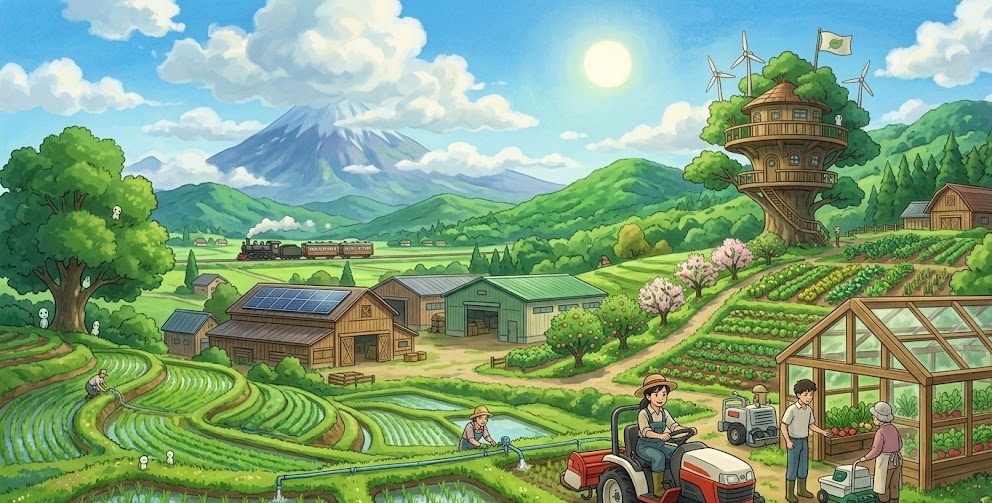
In the coming decades, the global agricultural sector faces a monumental challenge: producing more food on less land with fewer resources. For the modern grower, “scaling up” is no longer just about buying more acres. In the current economic climate, scaling is about efficiency, intensity, and smart expansion.
Increasing farm productivity requires a shift from traditional expansion to vertical and horizontal optimization. Whether you are managing a small family plot or a large-scale commercial operation, the goal is to maximize the “output per unit”—more bushels per acre, more liters per hour, and more profit per seed.
Here is a comprehensive guide on how to scale your agricultural operations and push the boundaries of productivity.
1. Precision Scaling: The Data-Driven Expansion
The most effective way to scale today is through Precision Agriculture. Before adding more land, you must ensure that every square meter of your current holding is performing at its peak.
- Grid Soil Sampling: Instead of testing a whole field, divide your land into small grids. This allows you to apply lime, phosphorus, and potassium only where they are needed. This “surgical” approach prevents over-spending on under-performing areas.
- Yield Mapping: Using GPS-enabled harvesters to create yield maps helps identify “zones of opportunity.” If one corner of your field consistently produces 20% less, technology helps you investigate if it’s a drainage issue, a soil compaction problem, or a nutrient deficiency.
- Satellite Crop Monitoring: Scaling up means you can’t be everywhere at once. Satellite imagery provides real-time “Health Index” (NDVI) reports, allowing you to manage 1,000 acres as easily as you once managed 10.
2. Optimizing the “Input-to-Output” Ratio
Productivity isn’t just about the size of the harvest; it’s about the cost of getting there. To scale profitably, you must optimize your inputs.
High-Efficiency Irrigation
Water is often the biggest bottleneck in scaling. Moving from flood irrigation to Drip or Micro-Irrigation can increase water-use efficiency by up to 90%. By delivering water directly to the root zone, you reduce evaporation and weed growth, leading to a direct spike in plant health and yield.
Smart Fertilization (Fertigation)
By mixing liquid fertilizers directly into your irrigation system, you ensure that plants receive nutrients in small, digestible doses. This prevents “nutrient leaching” and ensures that the plant is always in a state of growth, accelerating the time to harvest.
3. High-Density Planting and Cropping Intensity
If you cannot expand your boundaries, you must expand your density. This is often referred to as Vertical Scaling.
- Ultra-High-Density (UHD) Orchards: In fruit farming, moving from traditional spacing to UHD (where trees are planted much closer together and managed with specialized pruning) can triple the yield per acre within the first five years.
- Intercropping and Relay Cropping: Don’t let your soil sit idle. Scaling productivity often involves growing two or more crops in the same field. For example, planting a short-term vegetable between rows of a long-term fruit crop ensures a constant stream of revenue and maximizes the use of sunlight and soil nutrients.
- Protected Cultivation: Scaling into greenhouses or poly-houses allows for year-round production. By removing the “seasonal” barrier, a farm can produce 3–4 harvests a year instead of just one.
4. Mechanization and Labour Automation
One of the biggest hurdles to scaling is the “labour ceiling.” As a farm grows, managing manual labor becomes complex and expensive.
Small-Scale Mechanization
For developing farms, productivity jumps significantly when moving from manual tools to Power Tillers and Mini-Tractors. These machines allow for deeper soil preparation and faster planting, ensuring that the “optimal planting window” is never missed.
Post-Harvest Technology
A huge portion of farm productivity is lost after the harvest due to poor handling. Scaling your productivity must include:
- On-site Cold Storage: Preventing spoilage allows you to wait for better market prices.
- Automated Sorting and Grading: This ensures your premium produce fetches a higher price, increasing the overall value of your output without increasing the volume.
5. Genetic Selection: The Seed is the Software
You cannot scale a farm using outdated “hardware.” The seeds you choose are the foundational software of your productivity.
To increase yields, look for:
- Hybrid Vigor: Modern hybrids are bred specifically for high-stress environments, offering better resistance to local pests and droughts.
- Short-Duration Varieties: If you can reduce the growth cycle of a crop from 120 days to 90 days, you open up a 30-day window to plant a “catch crop,” effectively increasing your annual land productivity by 25%.
- Biotech Enhancements: Utilizing seeds that are “stacked” with traits like pest resistance (Bt) or herbicide tolerance allows for cleaner fields and less manual intervention.
6. Financial Scaling: Managing the Capital
Scaling requires capital. High-productivity farming is an investment-heavy business.
- Crop Insurance: As you scale, your risk increases. Protecting your investment against climate shocks is essential for long-term survival.
- Value Addition: Instead of selling raw commodities, productive farms scale by processing. Turning tomatoes into puree or grain into flour adds “value-added” margins to the same volume of farm output.
- Direct-to-Market Links: Using digital platforms to skip the middleman ensures that the farmer keeps a larger share of the “food dollar,” providing the cash flow needed for further expansion.
The Productivity Roadmap: Summary Table
| Strategy | Focus Area | Impact on Productivity |
| Precision Ag | Data & Soil | Reduces waste; optimizes fertilizer use. |
| High-Density | Space Management | More plants per square meter; higher yields. |
| Mechanization | Labor | Faster operations; reduces human error. |
| Year-Round Farming | Timing | 365-day revenue; maximizes land use. |
| Genetics | Seed Quality | Better resistance; faster growth cycles. |
Final Thoughts: Growth Without Exhaustion
The secret to scaling up isn’t just working harder; it’s working smarter. Scaling farm productivity is a balance of respecting the biology of the land while embracing the technology of the future.
As you move toward a high-production model, remember that the healthiest farms are those that scale their knowledge alongside their acreage. By focusing on soil health, data analytics, and efficient mechanization, you can build a farm that isn’t just bigger—it’s better, more resilient, and significantly more profitable.
The future belongs to the “Pro-Farmer”—the professional who views the field as a high-performance engine and the harvest as a result of precise engineering.