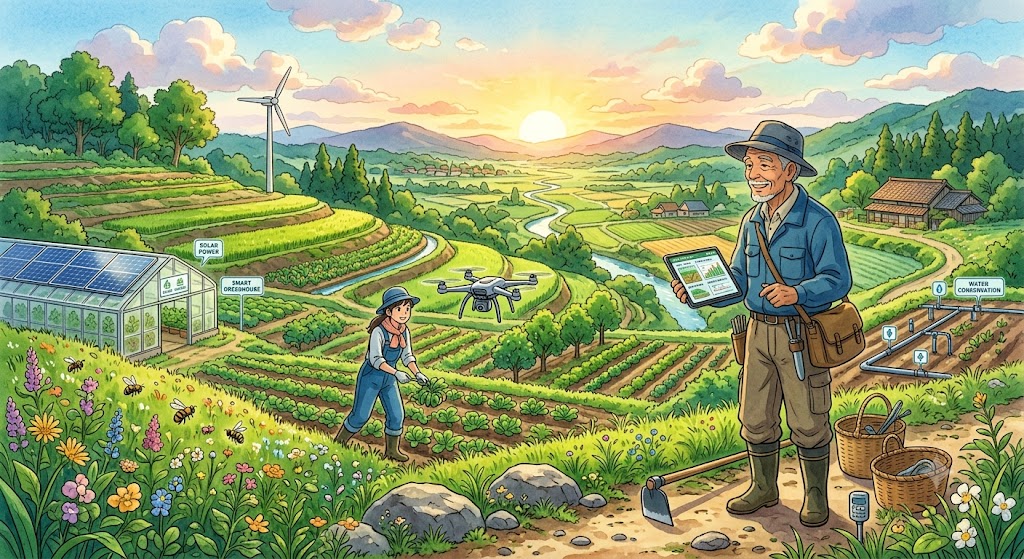
Agriculture is changing faster than ever before. Advances in technology, shifting consumer preferences, climate challenges, and evolving market demands are transforming how food is produced around the world. Farmers who stay informed about these developments are often better prepared to improve productivity, reduce costs, and remain competitive in an increasingly dynamic agricultural landscape.
While traditional farming knowledge remains valuable, modern agriculture now requires growers to adapt to new opportunities and challenges. From precision farming technologies to sustainable production methods, emerging trends are reshaping the future of farming and influencing how crops and livestock are managed.
Understanding these trends can help farmers make smarter decisions, increase profitability, and build more resilient agricultural operations. Here are some of the most important agricultural trends every farmer should know.
The Importance of Staying Updated in Agriculture
Agricultural practices that worked well a decade ago may not always be sufficient today. Market conditions, environmental concerns, and technological innovations continue to influence farming operations.
Keeping up with emerging trends can help farmers:
- Improve crop yields
- Reduce production costs
- Increase efficiency
- Access new markets
- Strengthen sustainability
- Adapt to changing climate conditions
Farmers who embrace innovation often gain a competitive advantage while preparing for future challenges.
1. Precision Agriculture Is Becoming Mainstream
Precision agriculture is one of the fastest-growing trends in modern farming.
This approach uses technology and data to manage fields more accurately rather than treating entire farms uniformly.
Common Precision Agriculture Tools
- GPS-guided machinery
- Drones
- Yield monitors
- Soil sensors
- Satellite imagery
Benefits for Farmers
- More efficient resource use
- Better crop monitoring
- Reduced input costs
- Improved yields
- Enhanced decision-making
Precision farming allows growers to apply fertilizers, water, and other inputs exactly where they are needed.
2. Smart Farming Technology Adoption
Technology continues to play a larger role in agricultural operations.
Many farms now use connected devices and digital systems to monitor field conditions in real time.
Examples of Smart Farming Technologies
- Automated irrigation systems
- Weather monitoring stations
- Livestock tracking devices
- Farm management software
- Remote sensing tools
These technologies help farmers improve efficiency and respond quickly to changing conditions.
3. Increased Focus on Soil Health
Healthy soil is gaining attention as farmers recognize its importance for long-term productivity.
Rather than focusing solely on fertilizer application, many growers are adopting practices that improve overall soil health.
Popular Soil Health Practices
- Cover cropping
- Compost application
- Reduced tillage
- Crop rotation
- Organic matter management
Healthy soils often provide better water retention, stronger crop growth, and improved resilience to environmental stress.
4. Sustainable Farming Practices
Consumers, governments, and agricultural organizations are increasingly encouraging sustainable farming methods.
Sustainable agriculture focuses on protecting natural resources while maintaining productive farming systems.
Key Sustainability Practices
- Efficient water use
- Reduced chemical inputs
- Conservation tillage
- Biodiversity protection
- Renewable energy adoption
Sustainability is becoming an important factor in both production and marketing strategies.
5. Climate-Smart Agriculture
Climate change continues to affect farming operations in many regions.
Unpredictable weather patterns, droughts, floods, and temperature extremes have increased interest in climate-smart agriculture.
Climate Adaptation Strategies
- Drought-resistant crop varieties
- Improved irrigation systems
- Soil conservation techniques
- Diversified cropping systems
- Weather-based decision-making
These practices help farmers manage risks while maintaining productivity.
6. Growing Demand for Organic Products
Consumer demand for organic foods continues to expand globally.
Many consumers are willing to pay premium prices for products grown using approved organic methods.
Opportunities for Farmers
- Access to specialty markets
- Higher product value
- Increased consumer trust
- Potential long-term profitability
Although certification requirements can be challenging, organic farming remains an attractive option for many growers.
7. Water Conservation Technologies
Water scarcity is becoming a major concern in many agricultural regions.
As a result, farmers are increasingly investing in water-efficient technologies.
Popular Water-Saving Solutions
- Drip irrigation
- Smart irrigation controllers
- Rainwater harvesting
- Soil moisture sensors
- Precision water management systems
Efficient water use helps conserve resources while supporting crop production.
8. Agricultural Drones Are Expanding Rapidly
Drone technology has become more accessible and affordable.
Modern agricultural drones can assist with:
- Crop scouting
- Field mapping
- Pest detection
- Irrigation assessment
- Plant health monitoring
Advantages of Drone Use
- Faster field inspections
- Improved crop management
- Early problem detection
- Reduced labor requirements
Drones provide valuable information that helps farmers make informed decisions.
9. Artificial Intelligence and Data Analytics
Artificial Intelligence (AI) is becoming increasingly important in agriculture.
AI systems can analyze large amounts of data to identify patterns and support decision-making.
Applications of AI in Farming
- Yield prediction
- Disease detection
- Pest forecasting
- Weather analysis
- Resource optimization
As technology improves, AI is expected to become even more valuable for agricultural management.
10. Automation and Robotics
Labor shortages in many regions have accelerated the adoption of automation.
Robotic technologies are now being used for:
- Planting
- Harvesting
- Weeding
- Spraying
- Crop monitoring
Benefits of Automation
- Increased efficiency
- Reduced labor dependence
- Greater operational precision
- Improved consistency
Automation is expected to continue growing as technology becomes more affordable.
11. Vertical Farming and Controlled Environment Agriculture
Urbanization and limited agricultural land have encouraged interest in alternative production systems.
Vertical farming and controlled environment agriculture allow crops to be grown indoors using carefully managed conditions.
Advantages
- Year-round production
- Reduced land requirements
- Efficient water use
- Greater control over growing conditions
Although not suitable for every crop, these systems are becoming increasingly important in food production.
12. Renewable Energy on Farms
Many farmers are adopting renewable energy solutions to reduce operating costs and environmental impact.
Common options include:
- Solar panels
- Wind turbines
- Biogas systems
- Energy-efficient equipment
Benefits
- Lower energy expenses
- Reduced carbon emissions
- Improved energy independence
Renewable energy investments can provide long-term financial and environmental benefits.
13. Direct-to-Consumer Marketing
Digital platforms have created new opportunities for farmers to sell products directly to consumers.
Popular channels include:
- Farm websites
- Online marketplaces
- Social media
- Farmers’ markets
- Subscription programs
Why This Trend Matters
Direct sales can increase profit margins by reducing dependence on intermediaries.
Consumers also appreciate greater transparency about food production.
Preparing for the Future of Agriculture
The agricultural industry will continue evolving as new technologies and market demands emerge.
Farmers can prepare by:
- Investing in education and training
- Monitoring industry developments
- Testing new technologies carefully
- Diversifying income sources
- Prioritizing sustainability
A proactive approach helps farmers remain competitive and adaptable.
Frequently Asked Questions
1. What is the biggest trend in modern agriculture?
Precision agriculture is widely considered one of the most important trends because it improves efficiency and resource management through data-driven farming.
2. How are drones helping farmers?
Drones assist with crop monitoring, field mapping, pest detection, and irrigation management, helping farmers identify problems quickly.
3. Why is soil health receiving more attention?
Healthy soil improves crop productivity, water retention, nutrient availability, and long-term farm sustainability.
4. What is climate-smart agriculture?
Climate-smart agriculture includes farming practices designed to improve resilience to changing weather conditions while maintaining productivity.
5. Is technology only useful for large farms?
No. Many technologies, such as soil sensors, mobile apps, and weather monitoring tools, can benefit farms of all sizes.
Conclusion
Agriculture is entering an exciting period of innovation and transformation. Emerging trends such as precision agriculture, smart farming technologies, climate-smart practices, automation, renewable energy, and direct-to-consumer marketing are reshaping how food is produced and delivered worldwide.
Farmers who stay informed and adapt to these developments are often better positioned to improve efficiency, increase profitability, and overcome future challenges. While not every trend will be suitable for every operation, understanding these changes can help growers make informed decisions and build stronger, more resilient farming businesses.
Explore more helpful articles on our website for additional farming guides, agricultural innovations, and practical crop management strategies.