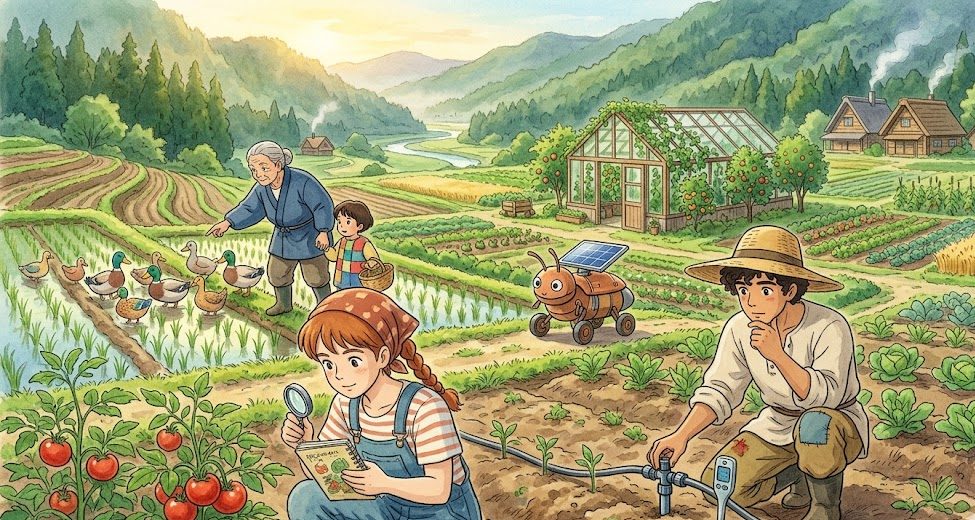
Farming has always been a partnership with nature, but the rules of the game are changing. Unpredictable weather, shrinking arable land, and rising costs are forcing modern growers to rethink how they manage their crops. Today, agriculture is no longer just about working harder in the field; it is about working smarter.
The future of agriculture lies in resilience and efficiency. Whether you are managing a traditional outdoor plot or experimenting with indoor vertical setups, the goal is to produce more food using fewer resources. Smart crop farming combines time-tested organic practices with intelligent management to protect the environment while maximizing your harvest.
If you are looking to secure a better yield this season without exhausting your land or your budget, you need a strategy. Let us explore practical, sustainable methods that modern farmers are using to grow healthier crops and build reliable, long-term success.
Understanding Your Growing Medium
Healthy plants require a healthy foundation. For traditional field farmers, this means deeply understanding your soil. For modern growers utilizing controlled environments, it means mastering your chosen growing medium.
If you are growing in the earth, your primary focus should be on building a robust soil microbiome. Tilling the ground heavily every season destroys the natural fungal networks that help roots absorb water. Instead, focus on minimal tilling and enriching the earth with high-quality organic compost. This turns your soil into a sponge that retains moisture during dry spells and provides a steady, slow-release diet of nutrients to your crops.
If you are exploring soil-less methods, such as hydroponics, the focus shifts to precision. Hydroponic systems allow you to deliver the exact mineral balance directly to the plant’s root zone. Because the plant does not have to expend energy searching for food in depleted dirt, it grows significantly faster and produces a much higher yield in a smaller space.
Smart Water Management for Maximum Efficiency
Water is becoming one of our most precious agricultural resources. Relying purely on natural rainfall or traditional overhead sprinklers is inefficient and increasingly risky. To achieve sustainable growth, you must control exactly where and when your water is used.
For outdoor fields, drip irrigation is an essential upgrade. This method slowly releases water directly at the base of the plant. It drastically reduces evaporation and prevents the leaves from getting wet, which naturally lowers the risk of fungal diseases.
For indoor or vertical farming setups, closed-loop water systems are the standard. These setups capture the runoff water, filter it, and recirculate it back to the plants. This method can use up to ninety percent less water than traditional field farming, making it a highly sustainable choice for regions facing severe drought conditions.
Practical Tips for the Modern Grower
Improving your yield does not always require massive financial investments. Often, a few smart adjustments can make a world of difference. Here are practical strategies you can implement right away:
- Go Vertical to Save Space: You do not need massive acreage to increase production. Utilizing vertical trellises for vining crops like cucumbers and tomatoes increases airflow and sunlight exposure. For indoor growers, utilizing stacked vertical racks allows you to multiply your yield per square foot.
- Plant Cover Crops: If you farm outdoors, never leave your soil bare during the off-season. Planting cover crops like clover or winter rye protects the topsoil from erosion. When tilled back into the earth, they provide a massive, natural boost of nitrogen.
- Embrace Companion Planting: Certain plants naturally protect each other. Planting basil near your tomatoes can confuse pests with its strong scent, reducing the need for chemical insect sprays.
- Prioritize Resilient Seeds: Stop fighting your local climate. Choose seed varieties that are specifically bred for your region’s unique challenges, whether that means selecting drought-tolerant hybrids or early-maturing heirlooms.
A Real-Life Example: Scaling Up with Smart Systems
Let us look at how adopting smart techniques can transform a struggling operation. Consider a modern farmer who managed a small, two-acre plot. For years, he battled exhausted soil and erratic summer rains. His yields were inconsistent, and his profits were shrinking.
Realizing he needed a more resilient approach, he decided to pivot. He converted a portion of his property into a controlled vertical farming space using a simple hydroponic setup. Instead of fighting the weather outside, he created the perfect environment indoors.
By precisely controlling the nutrient flow and utilizing energy-efficient LED lighting, he was able to grow high-value leafy greens year-round. He used a fraction of the water required by his outdoor fields and completely eliminated the need for chemical pesticides. Within two years, this modern approach allowed him to triple his overall production volume while ensuring a highly consistent, sustainable income stream from local markets.
Common Mistakes to Avoid
Even experienced growers can fall into traps that silently hurt their harvest. Avoiding these common mistakes is vital for sustainable growth.
The most frequent error is over-fertilizing. More food does not automatically mean a bigger plant. Pumping excess synthetic nitrogen into your system can burn delicate roots and encourage weak, leafy growth that attracts pests. Always follow precise measurements and lean toward slow-release, organic nutrients.
Another common mistake is overcrowding. It is tempting to squeeze as many plants as possible into your available space. However, crowded crops fight aggressively for light, water, and airflow. This leads to stunted growth and creates a perfect breeding ground for mold and disease. Always respect the mature spacing requirements of your specific crop.
Step-by-Step Guide to Planning a Smart Harvest
Success starts long before a single seed is planted. Follow this simple checklist to set your farming operation up for a sustainable, high-yield season:
- Analyze Your Environment: Test your soil or check your local water quality if using hydroponics. You must know your baseline pH and nutrient levels before making any adjustments.
- Select the Right Crop: Choose plants that naturally fit your specific growing environment. Do not force a water-heavy crop to grow in a dry, arid setup without proper infrastructure.
- Set Up Efficient Delivery: Install your drip lines or test your hydroponic pumps before planting day. Ensure your water delivery system is functioning perfectly to avoid stressing young seedlings.
- Plan Your Spacing: Map out your planting rows or vertical racks accurately. Give every single plant the room it needs to reach its full size.
- Monitor Daily: Walk your rows or check your system daily. Catching a pest issue or a blocked water line early is the key to saving an entire harvest.
Conclusion
Farming today is a delicate balance of working alongside nature while utilizing smart, efficient techniques. You do not need to rely on harsh chemicals or excessive resources to grow beautiful, healthy crops. By focusing on the health of your growing medium, adopting precise water management, and optimizing your physical space, you set yourself up for lasting success.
Sustainable farming is not just about protecting the environment; it is about protecting your livelihood. When you build resilient systems—whether in a traditional field or a modern vertical setup—you ensure that your farm will continue to produce high-quality yields season after season. Stay curious, keep observing your plants, and let smart practices guide your harvest.
Frequently Asked Questions (FAQs)
Q: Can I use hydroponics for all types of crops? A: While almost anything can be grown hydroponically, it is most efficient and profitable for fast-growing, above-ground crops like leafy greens, herbs, tomatoes, and peppers. Heavy root vegetables like potatoes or carrots are generally better suited for deep, loose soil.
Q: How do I naturally improve the organic matter in my soil? A: The most effective way is to consistently apply high-quality compost and aged manure to the surface of your beds. Growing green manure (cover crops) and leaving the chopped plant residue on the surface to decompose also drastically improves soil structure over time.
Q: Is smart farming only for large commercial operations? A: Not at all. Smart farming is simply about efficiency. A backyard grower using a simple drip irrigation timer and a targeted composting strategy is practicing smart farming. The principles apply to any scale.
Q: Why are the leaves on my hydroponic plants turning yellow? A: Yellowing leaves in a soil-less setup usually indicate a nutrient lockout or a pH imbalance in your water reservoir. Check your water’s pH level first; if the water is too acidic or too alkaline, the plant roots physically cannot absorb the nutrients you are feeding them.
Q: What is the biggest advantage of vertical farming? A: The greatest benefit is space optimization and climate control. Vertical farming allows you to produce massive amounts of food in a tiny footprint, entirely independent of outside weather conditions, droughts, or seasonal changes.