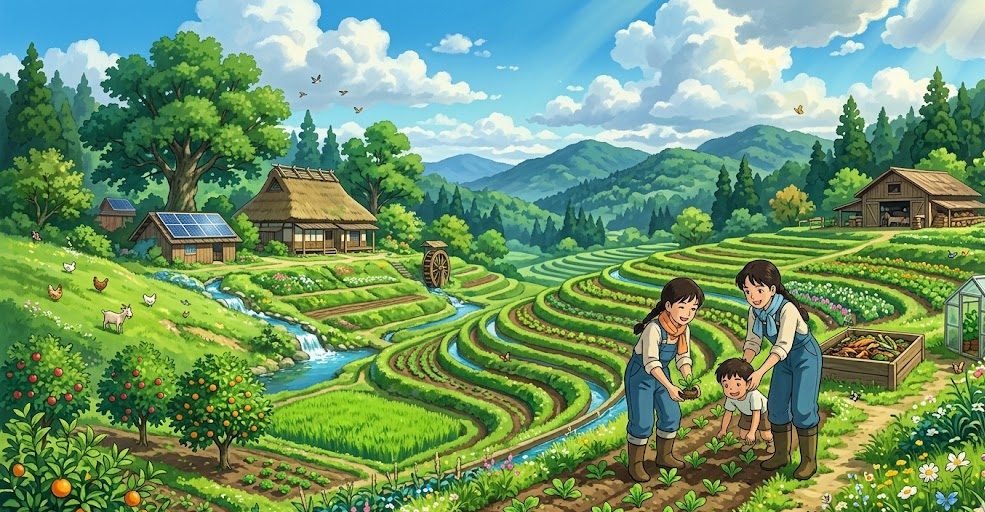
The global agricultural landscape is facing an unprecedented convergence of challenges. By 2050, the global population is projected to reach nearly 10 billion, requiring a 60% increase in food production compared to 2010 levels (FAO, 2023). At the same time, farmers are grappling with depleting water tables, volatile weather patterns driven by climate change, and skyrocketing input costs for fertilizers and energy.
The traditional model of intensive, high-input agriculture is no longer viable. To secure global food supplies without permanently damaging our planet’s ecosystems, the agricultural sector must pivot toward a unified framework: Smart Crop Cultivation, Sustainable Farming Practices, and Precision Resource Management.
This comprehensive guide explores how these three interconnected domains work together to build a resilient, profitable, and eco-friendly farming ecosystem.
1. Smart Crop Cultivation: The Tech-Driven Revolution
Smart crop cultivation leverages data-driven technology to transition agriculture from an industry of “blanket applications” to one of “targeted precision.” By utilizing cutting-edge tech, farmers can optimize growing conditions for individual crops rather than treating an entire 100-acre field uniformly.
Internet of Things (IoT) and Field Sensors
IoT devices are changing the way farmers monitor their fields. Soil moisture sensors, localized weather stations, and leaf-temperature sensors transmit real-time data directly to a farmer’s smartphone.
- Predictive Diagnostics: Instead of waiting for visible signs of plant wilt or disease, AI-driven software analyzes sensor data to predict crop stress days before it manifests physically.
- Automated Action: Advanced setups link these sensors directly to automated irrigation systems, which turn on or off based entirely on actual soil tension rather than preset timers.
AI and Satellite Imagery in Yield Prediction
High-resolution satellite imagery combined with Machine Learning (ML) algorithms allows for continuous Normalized Difference Vegetation Index (NDVI) mapping. This tech gauges plant health based on how light reflects off the crop canopy. Healthy, chlorophyll-rich leaves reflect more near-infrared light. Identifying low-performing patches early allows farmers to apply remedial treatments before yield potential drops permanently.
2. Sustainable Farming Practices: Safeguarding the Soil
Technology is meaningless if the underlying biological foundation—the soil—is degraded and lifeless. Sustainable farming practices focus on restoring agroecosystems so they can naturally resist pests, retain moisture, and sequester carbon.
Regenerative Agriculture and Soil Organic Matter (SOM)
Regenerative farming treats the soil as a living organism. Healthy soil should contain high levels of Soil Organic Matter (SOM). Every 1% increase in SOM dramatically increases the soil’s water-holding capacity, allowing fields to survive prolonged droughts without severe yield penalties.
Key sustainable practices include:
- No-Till or Minimum-Till Farming: Traditional plowing breaks down soil structure, accelerates erosion, and releases stored carbon into the atmosphere. No-till farming leaves the soil undisturbed, preserving microbial networks (like mycorrhizal fungi) that help plants absorb nutrients.
- Cover Cropping: Planting off-season crops like legumes, clover, or rye prevents wind and water erosion, suppresses weeds naturally, and fixes atmospheric nitrogen back into the soil, reducing the need for synthetic chemical fertilizers.
- Polyculture and Intercropping: Growing multiple crop species together breaks up pest cycles and fosters biodiversity, mimicking a natural ecosystem.
3. Precision Resource Management: Maximizing Efficiency
Input costs represent the largest financial burden on modern farms. Precision resource management aims to optimize the use of water, fertilizers, and energy—ensuring that every single drop or grain applied translates directly into crop yield.
Variable Rate Technology (VRT)
Traditionally, a farmer would apply the exact same volume of fertilizer across an entire field. However, soil fertility varies naturally across topography. Variable Rate Technology (VRT) utilizes GPS-guided tractors and smart spreaders to dynamically adjust chemical and fertilizer application rates on the fly based on pre-mapped soil fertility zones. Areas with rich soil receive less starter fertilizer, while nutrient-deficient zones receive a heavier application, eliminating waste and preventing environmental run-off.
Advanced Water Management: Drip and Micro-Irrigation
Agriculture accounts for roughly 70% of global freshwater withdrawals. Conventional flood irrigation is highly inefficient, losing up to 50% of its water to evaporation and surface run-off.
VectorMine
Subsurface Drip Irrigation (SDI) delivers water directly to the plant’s root zone through a network of buried pipes. This drastically cuts down evaporation losses, discourages weed growth between rows (as the soil surface stays dry), and can save up to 40-50% more water compared to overhead sprinklers.
4. The Synergy Matrix: Building an Integrated System
When smart tech, sustainable practices, and strict resource management operate together, they create a highly efficient loop.
| Management Pillar | Core Mechanism | Direct Benefit |
|---|---|---|
| Smart Cultivation | IoT sensors, NDVI imaging, AI diagnostics. | Early disease detection and hyper-accurate yield forecasting. |
| Sustainable Practices | No-till farming, cover crops, biodiversity. | Enhanced soil structure, carbon capture, and natural pest suppression. |
| Resource Management | VRT fertilization, subsurface drip irrigation. | Drastic drop in input costs (water/fertilizer) and zero chemical waste. |
Export to Sheets
For example, a smart field sensor detects a localized dip in soil nitrogen. Instead of spraying nitrogen across the entire farm, the Variable Rate tractor precisely applies the exact dosage only to that specific zone. Because the farmer practiced no-till and planted cover crops, the soil absorbs this nitrogen perfectly without it washing away into nearby water streams during a heavy rainfall event.
Conclusion: The Path Forward for Modern Growers
The future of farming lies at the intersection of traditional ecological wisdom and modern digital innovation. Transitioning to smart crop cultivation, adopting sustainable farming practices, and maintaining strict precision resource management is no longer just an environmental choice—it is a financial necessity for long-term farm survival.
By embracing these integrated methodologies, modern growers can build a resilient agricultural business that minimizes environmental footprints, lowers operating overheads, and consistently achieves maximum crop yields.
References
- Food and Agriculture Organization (FAO). (2023). The State of Food and Agriculture: Leveraging automation in agriculture for transforming agrifood systems. Rome.
- Lal, R. (2024). Regenerative agriculture for food security and climate change mitigation. Journal of Soil and Water Conservation.
- Balafoutis, A. (2025). Precision Agriculture Technologies and their footprint on resource efficiency: A review. Sustainability.
- Pretty, J. (2023). Sustainable intensification in agricultural systems. Annals of Botany.