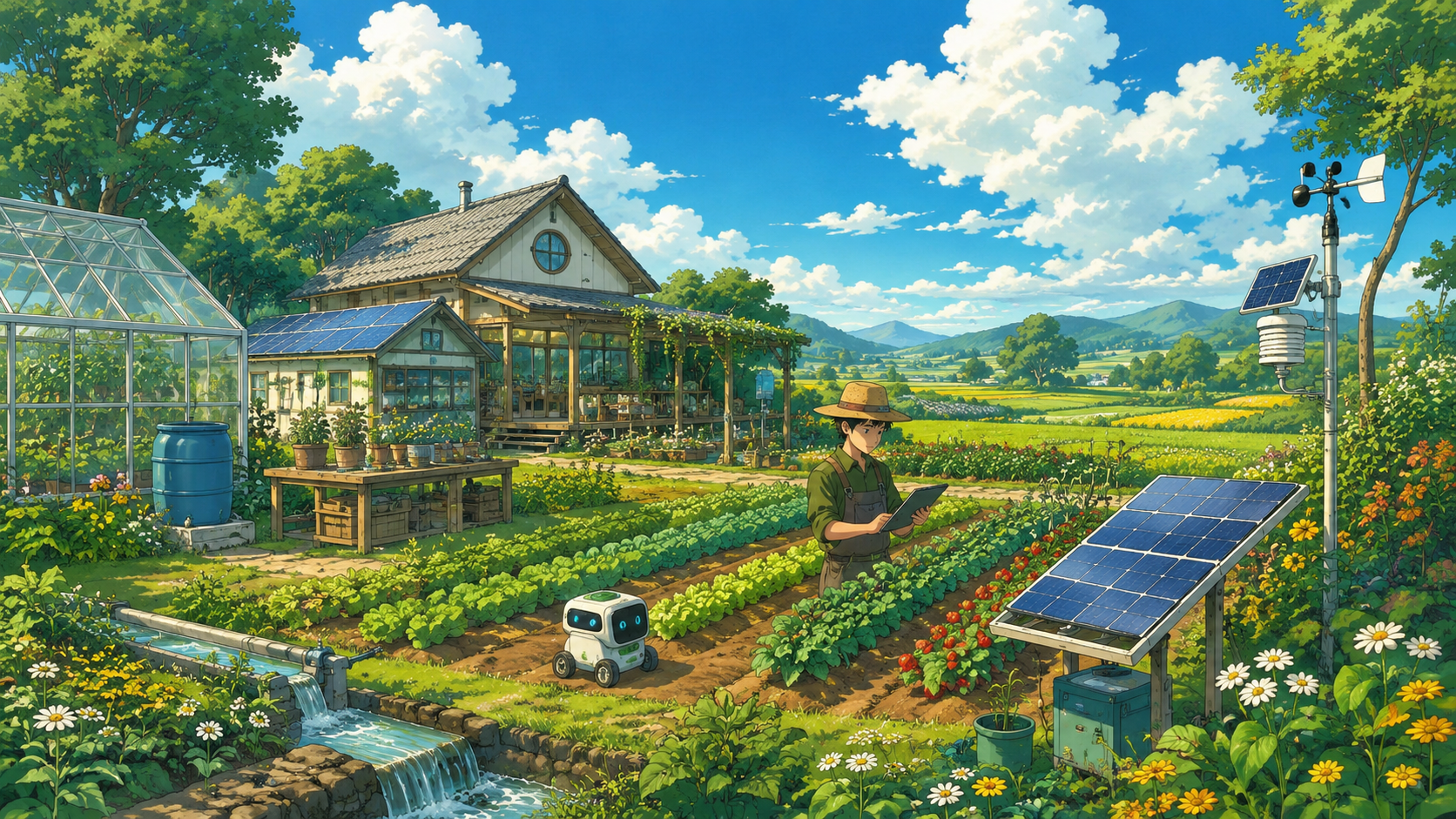
The image of a farmer staring up at the clouds, completely at the mercy of the next rainstorm, is quickly fading into history. Today, the world’s most successful farms look more like technology hubs. Tractors steer themselves with centimeter-level precision, fields are monitored from space, and data guides every single seed placed in the ground.
Modern agriculture is undergoing a massive shift. Growers face a complex puzzle: how to produce more food for a booming population while dealing with unpredictable weather patterns, skyrocketing input costs, and shrinking natural resources. The answer lies in agricultural innovation. By adopting smart, practical ideas, independent farmers can transform their operations from labor-heavy gambles into lean, data-driven, and highly profitable businesses.
1. Precision Nitrogen Management and Variable-Rate Feeding
For decades, the standard approach to fertilizing a field was uniform application. A farmer would set their spreader to a single rate and apply it across the entire acreage. While simple, this method ignores a fundamental reality: soil fertility varies wildly even within a single field.
Precision nitrogen management changes this by treating different zones of a field as unique environments. Using historical yield maps and soil testing data, growers can create a prescription map for their machinery.
When the tractor passes over a sandy ridge that inherently holds fewer nutrients, the automated spreader reduces the output. When it moves into a rich, low-lying basin with high yield potential, the output increases. This variable-rate application ensures that you never waste expensive fertilizer on areas that cannot utilize it, protecting both your bank account and the local groundwater from chemical runoff.
2. Low-Cost Mobile Diagnostics and Field Scouting
Innovation does not always mean buying a brand-new, six-figure piece of machinery. Some of the most valuable tools in modern agriculture live directly inside a smartphone. Digital field scouting and diagnostic tools have leveled the playing field for independent operations.
High-resolution camera phones combined with cloud databases allow growers to identify crop diseases, fungal outbreaks, and specific weed species instantly in the field. Instead of waiting days for an expert to visit the farm, a quick photo can confirm a diagnosis on the spot.
This immediate clarity enables targeted spot-treatments. If a specific patch of a crop shows signs of rust or armyworms, a farmer can treat just that specific quadrant. This stops the outbreak from spreading while minimizing the total volume of chemical inputs required.
3. Micro-Irrigation and Solar-Powered Water Pumping
Water scarcity is one of the greatest operational threats to modern agriculture. Traditional flood or overhead sprinkler irrigation systems lose a massive percentage of water to evaporation and wind drift before it ever reaches the plant roots.
Micro-irrigation, specifically drip systems, delivers water directly to the base of each plant through a network of pipes and emitters. By keeping the plant foliage dry, it also significantly reduces the risk of fungal diseases that thrive in damp, humid leaf canopies.
To make this system even more cost-effective, forward-thinking operations are pairing micro-irrigation with solar-powered water pumps. Off-grid solar pumping eliminates the recurring monthly electricity or diesel costs associated with running heavy irrigation pumps, providing a reliable water supply driven entirely by free, clean energy.
4. Diversified Revenue: Integrating Agrotourism and Small-Scale Upgrades
A truly smart farm does not rely entirely on a single wholesale commodity market. Price volatility can wipe out a year of hard work in a matter of weeks. The modern innovation hub model encourages diversifying income streams on the farm.
Many growers are turning portions of their property into agrotourism destinations, offering seasonal events, farm-to-table experiences, or educational tours. This brings immediate, retail-level cash flow directly to the farm.
Other operations are adding value to their raw crops before they leave the gate. Instead of selling raw berries or grain at low wholesale prices, they invest in small-scale processing equipment to create jams, specialized flours, or packaged oils. This allows the grower to capture the maximum retail margin of their hard work.
Practical Tips for Modern Growers
- Map Your Farm’s Drainage First: Before investing in high-tech tools, ensure your fundamental land structure is sound. Poor drainage will ruin the ROI of the best fertilizer or seed technology available.
- Build a Modular Tech Setup: Do not buy an all-in-one ecosystem that locks you into a single equipment brand. Choose tools, software, and sensors that use open data formats so they can communicate with different machinery brands.
- Keep Physical Journals Alongside Digital Data: Apps are excellent, but backup physical logs of unexpected weather anomalies or unique soil observations provide an invaluable second layer of reference over the years.
A Real-Life Example of Smart Innovation
In central Indiana, a third-generation grain farmer found himself struggling with a 15% increase in input costs while market prices remained stagnant. Rather than taking on more debt for larger machinery, he decided to optimize his existing 600 acres using accessible technology.
He installed simple, wireless soil moisture probes across his primary fields and signed up for a low-cost satellite crop monitoring service. The very first season, the satellite imagery identified a severe nitrogen deficiency in a 40-acre corner that was invisible from the road.
By catching the issue early and using his smartphone data to apply a targeted side-dress fertilizer application to just that section, he saved the crop from a total failure. The rescued yield from that single 40-acre patch completely covered the cost of his digital subscriptions for the next four years.
Common Mistakes to Avoid
- Overcomplicating the Setup: Do not buy technology that you or your workers cannot easily operate. If a tool takes hours to configure every morning, it will eventually be left sitting in the machine shed.
- Neglecting Regular Calibration: Automated machinery is only as good as its underlying calibration. A variable-rate spreader that has not been properly calibrated can misapply thousands of dollars of nutrients.
- Chasing Every New Trend: Focus strictly on the bottlenecks holding your specific farm back. If your biggest issue is weed management, do not spend your capital budget on advanced grain storage sensors.
Step-by-Step Guide to Transforming Your Farm
Transitioning your traditional operation into an innovation hub is a step-by-step process that protects your cash flow while building efficiency.
[Phase 1: Baselines] ───> [Phase 2: Digital Tools] ───> [Phase 3: Automation]
  • Conduct soil tests      • Deploy scouting apps       • Add variable spreaders
  • Map field boundaries    • Track localized weather    • Upgrade irrigation lines
- Conduct a Ground-Level Audit: Run comprehensive soil tests across your fields to map organic matter and baseline nutrient levels. You cannot optimize what you have not measured.
- Adopt Free and Low-Cost Digital Tools: Start by using free satellite mapping services and mobile agronomy apps to get comfortable tracking field data digitally.
- Target Your Highest Expense: Identify your single largest operational cost—whether it is water, fertilizer, or labor—and invest your first tech budget specifically into reducing that line item.
- Upgrade with Retrofit Kits: You do not need to buy a brand-new tractor to get GPS steering or smart features. Look into aftermarket retrofit kits that add modern precision capabilities to your existing reliable equipment.
Conclusion
The modern farming innovation hub is built on a foundation of efficiency, resource conservation, and smart data use. True agricultural innovation is not about replacing the hard-earned practical experience of a grower; it is about providing the clear insights needed to make better daily decisions. By starting small, focusing on practical solutions, and scaling up tech investments gradually, any farm can build a resilient, productive, and highly sustainable business for the future.
Frequently Asked Questions
1. Can a small family farm benefit from precision agriculture?
Yes. Precision agriculture is highly scalable. Small farms can see massive benefits simply by utilizing mobile diagnostic apps, targeted soil probes, and localized weather data tools, all of which require very low upfront capital.
2. How do variable-rate input systems save money?
Instead of wasting expensive seeds or fertilizers on poor, unproductive sections of a field or over-applying them to naturally rich zones, variable-rate systems adjust the application output automatically based on the specific yield potential of each square meter.
3. What is the easiest way to start monitoring crop health from space?
There are several reputable, user-friendly online platforms that offer free or subscription-based access to public satellite data (such as Sentinel or Landsat). These platforms automatically calculate crop health indices (like NDVI) and deliver clean, color-coded maps straight to your computer or phone.
4. Do smart irrigation systems work well in areas with unreliable power?
Absolutely. Pairing modern drip irrigation networks with off-grid solar-powered water pumping systems ensures consistent, automated watering schedules without relying on an unstable electrical grid or expensive diesel fuel.
5. How can I protect my farm’s digital data?
When choosing software or data platforms, always verify the provider’s data privacy policy. Ensure that you maintain clear, explicit ownership of your yield maps, soil logs, and financial records, and that the data cannot be shared or sold without your direct permission.