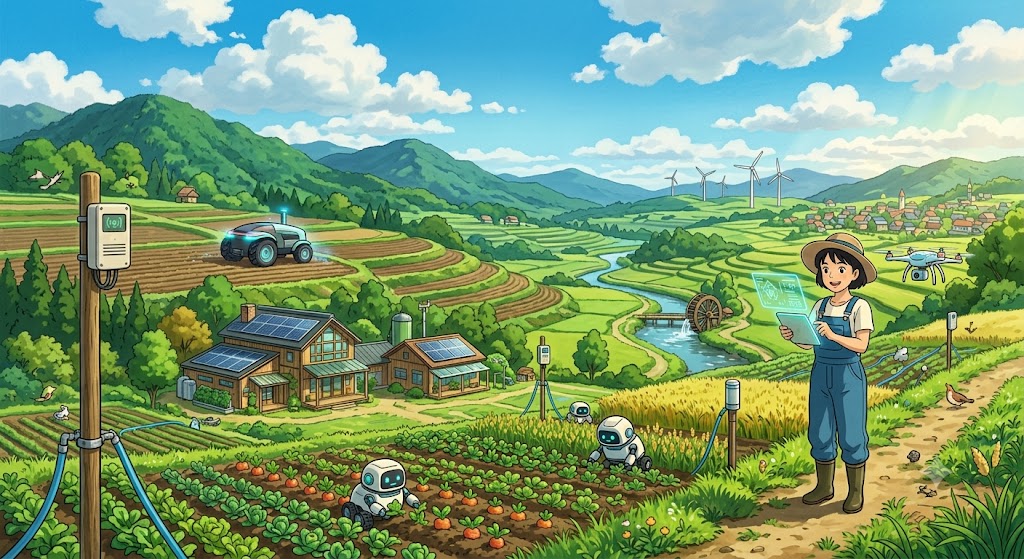
Agriculture has come a long way from traditional farming methods that relied heavily on manual labor and experience-based decision-making. Today, technology is rapidly changing how food is produced, helping farmers increase productivity, reduce costs, and use resources more efficiently. As the global population continues to grow, the demand for food is rising, making innovation in agriculture more important than ever.
Smart farming, also known as precision agriculture, uses advanced technologies to improve farm management and optimize crop production. From drones and sensors to artificial intelligence and automated machinery, modern farming tools are helping growers make better decisions while reducing environmental impact.
Whether managing a small family farm or a large agricultural operation, farmers can benefit from technologies that increase efficiency, improve yields, and support long-term sustainability. This article explores the most important smart farming technologies that are transforming modern agriculture around the world.
What Is Smart Farming?
Smart farming refers to the use of digital technologies, data analysis, and automation to improve agricultural productivity and efficiency.
The primary goals of smart farming include:
- Increasing crop yields
- Reducing production costs
- Conserving natural resources
- Improving farm management
- Enhancing sustainability
- Supporting data-driven decision-making
By collecting and analyzing real-time information, farmers can respond more effectively to changing field conditions and crop needs.
Precision Agriculture
Precision agriculture is one of the most significant advancements in modern farming.
Instead of treating an entire field the same way, precision agriculture allows farmers to manage specific areas based on actual conditions.
Benefits of Precision Agriculture
- More efficient fertilizer application
- Improved irrigation management
- Reduced input waste
- Better crop monitoring
- Increased profitability
This approach helps farmers use resources only where they are needed, improving both productivity and sustainability.
GPS-Guided Farm Equipment
Global Positioning System (GPS) technology has revolutionized field operations.
Modern tractors, planters, and harvesters often use GPS guidance systems to improve accuracy during farming activities.
Advantages of GPS Technology
- Precise planting and harvesting
- Reduced overlap during field operations
- Lower fuel consumption
- Increased efficiency
- Better field mapping
Accurate navigation helps farmers save time while maximizing field productivity.
Agricultural Drones
Drones have become valuable tools for crop monitoring and farm management.
Equipped with cameras and sensors, drones can quickly survey large areas and provide detailed information about crop conditions.
Common Uses of Agricultural Drones
- Crop health monitoring
- Field mapping
- Pest detection
- Irrigation assessment
- Plant growth analysis
Farmers can identify potential problems early and take corrective action before significant losses occur.
Soil Sensors and Smart Monitoring Systems
Soil health plays a critical role in crop productivity.
Smart soil sensors provide real-time data about important factors such as:
- Soil moisture
- Temperature
- Nutrient levels
- Salinity
- pH levels
Why Soil Sensors Matter
Instead of relying on estimates, farmers can make informed decisions based on actual field conditions, improving resource efficiency and crop performance.
Smart Irrigation Systems
Water management is becoming increasingly important as many regions face water shortages and changing climate conditions.
Smart irrigation systems use sensors, weather data, and automation to optimize watering schedules.
Benefits of Smart Irrigation
- Reduced water waste
- Lower operating costs
- Improved crop health
- Better drought management
- Enhanced water-use efficiency
These systems ensure crops receive the right amount of water at the right time.
Internet of Things (IoT) in Agriculture
The Internet of Things (IoT) connects devices, sensors, and equipment to collect and share data across the farm.
IoT systems can monitor:
- Weather conditions
- Livestock health
- Soil conditions
- Equipment performance
- Irrigation systems
How IoT Helps Farmers
Connected devices provide continuous updates, allowing farmers to monitor operations remotely and respond quickly to potential issues.
Artificial Intelligence in Farming
Artificial Intelligence (AI) is increasingly being used to analyze agricultural data and support decision-making.
AI-powered systems can help farmers:
- Predict crop diseases
- Identify pest infestations
- Forecast yields
- Optimize planting schedules
- Improve resource allocation
Benefits of AI in Agriculture
AI enables faster and more accurate analysis of large amounts of information, helping farmers improve efficiency and reduce risks.
Automated Farm Machinery
Automation is reducing labor requirements while improving operational efficiency.
Examples of automated equipment include:
- Self-driving tractors
- Robotic harvesters
- Automated planters
- Smart sprayers
Advantages of Automation
- Increased productivity
- Reduced labor costs
- Greater operational precision
- Improved consistency
Automation is particularly valuable in areas where labor shortages are becoming a challenge.
Remote Sensing Technology
Remote sensing uses satellite imagery and aerial data to monitor agricultural fields.
This technology provides valuable insights into:
- Crop growth
- Soil conditions
- Water stress
- Pest outbreaks
- Nutrient deficiencies
Why Remote Sensing Is Valuable
Farmers can identify problems across large areas without physically inspecting every part of the field.
This saves time while improving management decisions.
Farm Management Software
Modern farm management platforms help farmers organize and analyze farm data.
These systems often track:
- Crop performance
- Financial records
- Equipment maintenance
- Field activities
- Inventory management
Benefits of Farm Management Software
- Better planning
- Improved record-keeping
- Enhanced productivity analysis
- Simplified decision-making
Digital management tools make farm operations more organized and efficient.
Smart Greenhouse Technology
Greenhouses are becoming more advanced through automation and environmental monitoring systems.
Smart greenhouses can automatically regulate:
- Temperature
- Humidity
- Lighting
- Ventilation
- Irrigation
Advantages of Smart Greenhouses
- Consistent growing conditions
- Higher yields
- Reduced resource consumption
- Improved crop quality
These systems allow farmers to maintain optimal environments throughout the growing cycle.
Livestock Monitoring Technology
Technology is also transforming animal agriculture.
Wearable sensors and monitoring systems help farmers track:
- Animal health
- Activity levels
- Feeding behavior
- Reproductive status
Benefits for Livestock Farmers
- Early disease detection
- Improved animal welfare
- Better productivity
- Reduced veterinary costs
Real-time monitoring allows faster responses to health concerns.
Challenges of Smart Farming Adoption
Despite its advantages, smart farming comes with certain challenges.
These may include:
- High initial investment costs
- Limited internet connectivity in rural areas
- Technical training requirements
- Equipment maintenance expenses
- Data management complexity
However, as technology becomes more accessible, adoption continues to grow worldwide.
The Future of Smart Agriculture
Agricultural technology continues to evolve rapidly.
Future developments may include:
- More advanced robotics
- Improved AI systems
- Enhanced predictive analytics
- Autonomous farming equipment
- Greater integration of renewable energy
These innovations will likely help farmers meet increasing food demands while using resources more efficiently.
Frequently Asked Questions
1. What is smart farming?
Smart farming involves using technology, data, automation, and digital tools to improve agricultural productivity and efficiency.
2. How do drones help farmers?
Drones help monitor crop health, detect pests, assess irrigation needs, and provide valuable field data.
3. What are smart irrigation systems?
Smart irrigation systems use sensors and automation to deliver water more efficiently based on crop needs and environmental conditions.
4. Is smart farming suitable for small farms?
Yes. Many technologies, including mobile apps, soil sensors, and farm management software, can benefit farms of various sizes.
5. How does artificial intelligence improve agriculture?
AI helps analyze agricultural data, predict crop issues, optimize resource use, and support better decision-making.
Conclusion
Smart farming technologies are transforming agriculture by helping farmers produce more food with greater efficiency and sustainability. Innovations such as GPS-guided equipment, drones, IoT sensors, artificial intelligence, smart irrigation systems, and automated machinery are making it easier to manage farms while reducing waste and improving productivity.
As agricultural challenges continue to evolve, technology will play an increasingly important role in ensuring food security, conserving resources, and supporting profitable farming operations. Farmers who embrace these advancements can gain valuable insights, improve decision-making, and build more resilient agricultural systems for the future.
Explore more helpful articles on our website for additional farming guides, agricultural innovations, and sustainable crop production strategies.