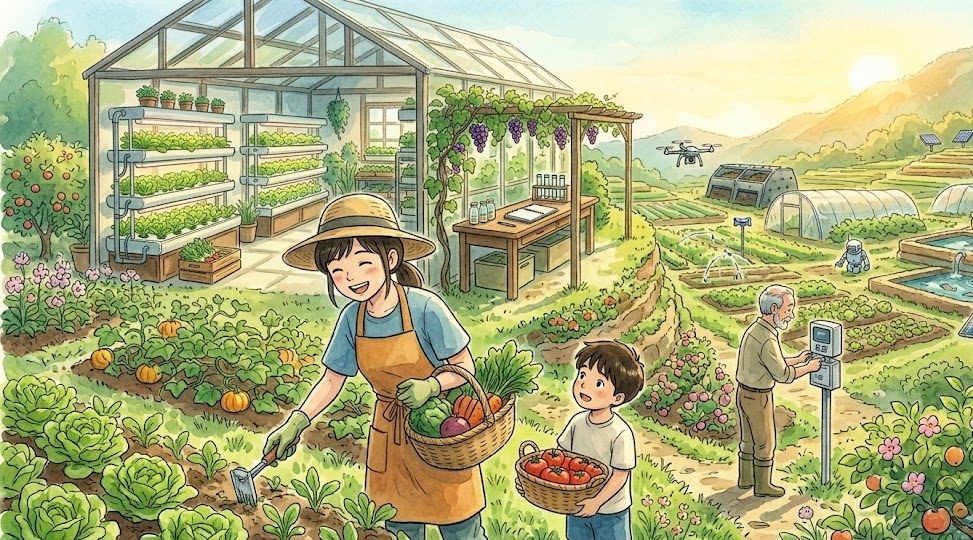
Agriculture is no longer just about planting seeds and waiting for rain. In the modern era, successful farming is a sophisticated business that requires a blend of technology, strategic planning, and sustainable resource management. If you are aiming to transition your farm into a high-growth, profitable enterprise, you need a clear roadmap.
This guide explores the essential phases of scaling agricultural operations and how to turn your land into a high-yield asset.
Phase 1: Data-Driven Foundation and Soil Health
Before you invest in machinery or new crops, your focus must be on the “engine” of your farm: the soil. Without fertile, balanced soil, no amount of technology can guarantee high yields.
- Soil Testing: Never guess your soil’s nutrient requirements. Regular soil testing (at least once a year) helps you understand the pH level, nitrogen, phosphorus, and potassium (NPK) content.
- The “Sponge” Concept: By incorporating organic matter, compost, and biochar, you increase the soil’s ability to hold water and nutrients.
- Precision Fertilization: Shift away from broad-spectrum fertilization. Use localized applications to ensure that plants receive nutrients exactly when they need them, reducing wastage and environmental impact.
Phase 2: Implementing Modern Irrigation Infrastructure
Water is your most critical input. Inefficient water use is not just an environmental issue; it is a direct drain on your profits due to energy costs.
- Drip Irrigation Systems: This is the gold standard for agricultural growth. It delivers water directly to the root zone.
- Smart Automation: Pair your irrigation system with solenoid valves and timers. This allows you to irrigate during early morning or late night hours, which significantly reduces evaporation loss.
- Water Harvesting: Build small farm ponds to capture rainwater. This water can be used during dry spells, reducing your dependency on groundwater pumps.
Phase 3: Optimizing Crop Selection and Rotation
Growth requires a strategic approach to what you plant. Monoculture (planting the same crop repeatedly) depletes the soil and increases pest vulnerability.
- High-Value Crop Transition: Look for crops that provide higher returns in smaller spaces, such as organic herbs, exotic vegetables, or high-quality fruits, depending on your local market demand.
- Strategic Crop Rotation: Use a cycle that includes leguminous crops (like pulses), which naturally fix nitrogen in the soil, followed by heavy-feeders like corn or wheat.
- Drought-Resistant Varieties: As climate patterns shift, investing in hybrid, drought-resistant seeds is a form of insurance for your business.
Phase 4: Integrating Technology (The Innovation Hub)
As your farm grows, manual management becomes impossible. You need to transition into an “Innovation Hub” model.
- Automation: Utilize low-cost sensors to monitor humidity, temperature, and soil moisture.
- Mechanical Assistance: Invest in small-scale mechanization (like power tillers or seeders) that fits the scale of your operation. This reduces labor dependency and speeds up planting and harvesting cycles.
- Documentation: Maintain a digital “Farm Log.” Keeping track of every expense, input, and harvest yield is the only way to calculate your true ROI (Return on Investment).
Phase 5: Scalability and Market Access
A farm is only as successful as its ability to sell. Growth in agriculture is often hindered by the reliance on middlemen.
- Direct-to-Consumer Channels: Use social media, local delivery networks, or farmer cooperatives to sell your produce directly to consumers or retailers.
- Value Addition: Can you process your harvest? For example, instead of selling raw tomatoes, producing sun-dried tomatoes or sauce can increase your profit margin by 30-50%.
- Quality Branding: In the current market, consumers are willing to pay a premium for produce that is certified organic, sustainably grown, or locally sourced. Build a brand around your farming practices.
The Economics of Agricultural Growth: Scaling Responsibly
Growth in agriculture should be incremental. The “Integrated Farming System” (IFS) is the safest model for long-term growth. By integrating livestock, fisheries, or beekeeping with your crop production, you create a buffer. If your crop fails due to weather, your livestock or poultry income keeps the business afloat.
Checklist for Consistent Growth:
- Month 1-3: Focus on soil audit and fixing the irrigation system.
- Month 4-6: Diversify crop varieties and introduce a secondary income source (e.g., composting or poultry).
- Month 7-12: Focus on market partnerships and value-added packaging.
Final Thoughts: The Mindset of a Modern Farmer
The biggest barrier to agricultural growth is the belief that farming is a labor-intensive struggle. When you treat your farm as a Farming Innovation Hub, you shift your focus toward efficiency, data, and sustainability.
Success doesn’t happen overnight. It is the result of continuous improvement—improving your soil health this season, automating your irrigation the next, and securing better market access the season after.
Your farm is a living business. Nurture it with data, sustain it with technology, and it will provide for you in return.
SEO Configuration for WordPress:
- Focus Keyword: Agricultural growth guide
- Meta Description: Master the blueprint for agricultural growth. Learn how to scale your farm business using soil health, smart irrigation, and tech-driven management for maximum profit.
- Categories: Business of Farming / Agribusiness
- Tags: Sustainable Farming, Scaling a Farm, Agricultural Growth, Agribusiness Strategy, Smart Irrigation.