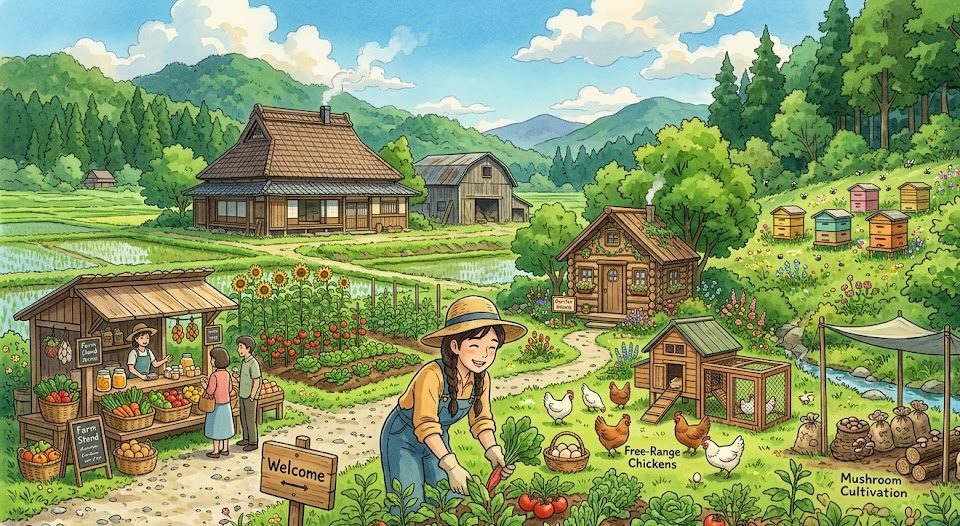
Farming is a business of cycles. For many, the rhythm is dictated by a single harvest, a single crop, and a single window of market opportunity. While specialization has its place, it also carries inherent risk. If weather, pests, or market prices hit your primary crop hard, your entire annual income is threatened.
Diversification is the ultimate insurance policy. It isn’t about abandoning what you do best; it’s about unlocking the “hidden” potential of your existing land, skills, and resources. The good news? You don’t need a massive capital investment to begin. Here are five low-cost ways to diversify your farm and create multiple streams of income.
1. Value-Added Processing: Turn Commodities into Products
The biggest mistake many farmers make is selling raw commodities. When you sell a sack of raw potatoes or a bushel of tomatoes, you are capturing only a fraction of the value. By performing even a basic level of processing, you shift from being a “supplier” to being a “brand.”
- The Concept: Can you turn your surplus produce into shelf-stable goods? Jams, pickles, hot sauces, dried herbs, or even vacuum-sealed frozen portions add significant value.
- Low-Cost Strategy: Start small in your home kitchen (check local food safety regulations first). Use high-quality packaging and simple, clean labels that highlight your farm’s story. Selling “Grandma’s Secret Farm-Fresh Salsa” at a local farmers’ market commands a much higher price per ounce than the raw tomatoes used to make it.
2. Agri-Tourism: Monetize the Experience, Not Just the Harvest
Your farm is more than a plot of dirt; to an urban dweller, it is a sanctuary. Agri-tourism is booming because people are desperate for authentic experiences that connect them to the food source.
- The Concept: Open your doors for “U-Pick” experiences, farm-to-table dinners, or educational workshops.
- Low-Cost Strategy: You don’t need to build a resort. Start with a “Farm Tour” on Saturday mornings. Teach people how to harvest their own vegetables or how to compost. Hosting seasonal events—like a “Pumpkin Patch” in autumn or a “Spring Planting Workshop”—brings customers directly to your farm, eliminating middlemen and increasing your profit margins.
3. Vertical Integration: Micro-Livestock and Synergy
Small-scale farming often suffers from wasted biological resources. Diversification often lies in creating a “closed-loop” system where one enterprise fuels another.
- The Concept: Introduce low-maintenance, high-value animals that complement your existing crops.
- Low-Cost Strategy: If you grow vegetables, consider keeping a small flock of chickens or quail. They provide eggs for sale, but more importantly, their manure becomes a high-value fertilizer for your crops. They also act as natural pest control, eating insects that would otherwise damage your harvest. This “stacking” of enterprises reduces your input costs (you spend less on fertilizer) while creating an entirely new revenue stream (egg sales).
4. Subscription Models: The Community Supported Agriculture (CSA) Pivot
Market volatility is a nightmare for farmers. You never quite know what price you’ll get for your goods on auction day. A subscription model shifts the power balance by securing revenue before the harvest begins.
- The Concept: Instead of chasing buyers, build a community of “members” who pay a flat fee at the start of the season for a weekly box of whatever is fresh from your farm.
- Low-Cost Strategy: Use free social media platforms to build a mailing list. You don’t need a fancy website; a simple Google Form can handle subscriptions. This provides you with immediate cash flow to buy seeds and supplies for the season, removing the need for high-interest operating loans. It also guarantees a buyer for your produce, regardless of market fluctuations.
5. Skill-Based Diversification: Consulting and Teaching
If you have successfully farmed a specific plot of land for years, you possess a knowledge base that is incredibly valuable to others. In an era where many people are turning to home gardening or hobby farming, there is a massive demand for practical, hands-on advice.
- The Concept: Sell your expertise. Whether it’s consulting for new landowners or teaching specialized skills like organic pest management, greenhouse construction, or soil health improvement.
- Low-Cost Strategy: Offer “Consulting Walks” where you visit a neighbor’s property and give them a plan to set up their own vegetable garden. Alternatively, record short, instructional videos and host them on a private platform or YouTube. You are already doing the work—filming it or teaching it requires almost zero extra capital, only your time.
The Mindset Shift
Diversification is not about doing more work; it’s about doing more effective work. It requires moving from a “production-only” mindset to a “resource-optimization” mindset.
When you diversify, you insulate yourself from the unpredictability of agriculture. If the weather ruins your main crop, your value-added jams, your educational workshops, or your egg sales become the safety net that keeps your farm viable.
Small-scale farming is a challenging but rewarding path. By layering these low-cost revenue streams, you aren’t just farming for the harvest—you are building a resilient, multi-faceted business designed to thrive in any season.