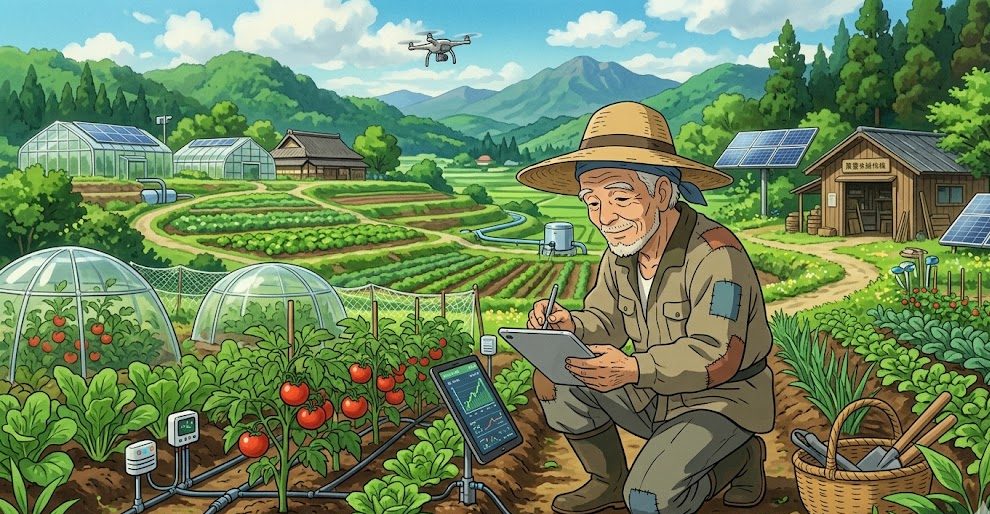
In the 21st century, agriculture is undergoing a seismic shift. The traditional “plow and pray” method is rapidly being replaced by data-driven precision, autonomous technology, and biological breakthroughs. For the modern entrepreneur or progressive farmer, the Farming Innovation Hub is no longer just a physical location—it is a mindset focused on integrating technology to achieve higher yields with lower input costs.
If you are looking to elevate your agricultural operation to a commercial, “smart” standard, this guide outlines the core strategies needed to build a future-proof crop production system.
1. Precision Agriculture: The Data-First Approach
The cornerstone of any smart farming operation is the ability to monitor and manage fields at a granular level. Precision agriculture allows you to move away from treating a whole field as one unit and start treating every square meter as an individual profit center.
Satellite and Drone Monitoring
High-resolution satellite imagery and multispectral drone cameras are essential tools for modern crop scouting. They provide:
- NDVI Mapping: Normalized Difference Vegetation Index (NDVI) maps detect plant stress (from pests, disease, or nutrient deficiency) long before it is visible to the human eye.
- Variable Rate Application (VRA): By integrating these maps with your tractor’s GPS, you can apply fertilizer and water only where the soil actually needs it, reducing waste by up to 25–40%.
2. IoT and Smart Sensor Integration
Efficiency in farming is directly tied to your ability to automate feedback loops. The Internet of Things (IoT) brings real-time connectivity to your fields.
- Soil Moisture Sensors: Forget scheduled watering. Smart sensors track the water tension at the root zone. When the soil hits a specific moisture threshold, your irrigation system triggers automatically. This results in healthier, deeper root growth and significant water savings.
- Weather Stations: Localized weather data allows for hyper-accurate planning. Knowing the exact temperature, humidity, and dew point in your specific field allows you to time your planting and harvesting to maximize quality and prevent crop damage.
3. Advanced Crop Production: Hydroponics and Vertical Farming
For those looking to move into high-value, controlled-environment agriculture (CEA), innovation is found in the removal of environmental variables.
- Vertical Integration: By stacking production layers, you can increase your harvest volume per acre by 10 to 50 times.
- Automated Nutrient Dosing: In hydroponic or aeroponic systems, the nutrient solution is the lifeblood of the crop. Automated dosers maintain the perfect pH and Electrical Conductivity (EC) levels 24/7, ensuring that your crops reach maturity faster than their soil-grown counterparts.
4. Robotic Automation and Labor Optimization
Labor is often the highest cost in farming. Smart crop production aims to automate the most repetitive tasks to free up your time for strategic decision-making.
- Autonomous Field Robots: From robotic weeders that use computer vision to identify and pull weeds, to autonomous harvesters that pick ripe produce with precision, robotics are drastically reducing the need for manual field labor.
- AI-Powered Predictive Analytics: Use machine learning models to analyze your historical crop data. These models can predict which seeds will perform best in your specific soil and climatic conditions, allowing you to optimize your planting strategy months in advance.
5. Building a Sustainable Ecosystem
Innovation is not just about gadgets; it is about building a system that sustains itself. A smart farm must be a circular economy.
- Waste-to-Energy: Convert crop residue and farm waste into bio-fertilizers or energy using on-site biodigesters. This lowers your reliance on external energy sources and turns waste into a valuable asset.
- Integrated Pest Management (IPM) 2.0: Use artificial intelligence to monitor insect patterns. AI models can predict pest outbreaks based on historical data and weather patterns, allowing you to intervene early with biological controls rather than expensive, broad-spectrum chemicals.
6. Financial Management for the Tech-Forward Farm
Smart farming is a business. To ensure profitability:
- Monitor Your ROI: Every piece of technology you purchase must have a clear path to profitability. Calculate the “payback period” for every investment, from sensors to drone mapping software.
- Focus on Scalability: Choose platforms and hardware that can grow with you. If you start with 5 acres, your chosen software should be able to handle 500 without needing a complete overhaul.
Conclusion: The Future is Now
Transitioning to a “Smart Crop Production” model is a journey, not a destination. It starts with a single sensor, a single drone flight, or one small automated irrigation zone. As you collect more data and refine your processes, your farm will evolve into a highly efficient, high-yielding, and resilient enterprise.
Innovation is the most effective tool in your shed. By embracing these advanced strategies, you are not just keeping up with the market—you are setting the standard for the future of agriculture.