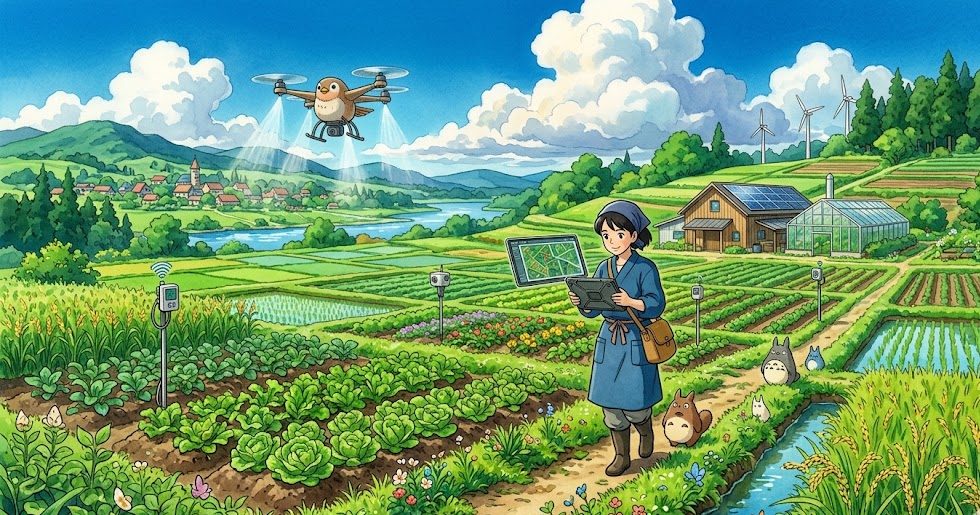
Imagine a farm where a tractor drives itself with millimeter accuracy, drones scan fields from the sky to spot thirsty plants, and underground sensors text a farmer’s phone to report exact soil moisture levels. This isn’t a scene from a science fiction movie. This is the reality of modern agriculture.
For generations, farming relied heavily on guesswork. Farmers looked at the sky, felt the soil, and applied water, seeds, and fertilizers evenly across massive fields. But nature isn’t uniform. One corner of a field might be rich and damp, while another is sandy and dry.
Today, smart crop farming systems and precision cultivation are changing the game. By using technology to give every single plant exactly what it needs—nothing more, nothing less—farmers can grow more food, waste fewer resources, and boost their profits.
Whether you manage a vast commercial farm or you are simply curious about where your food comes from, here is a breakdown of how smart technology is revolutionizing agriculture.
1. What is Precision Cultivation?
At its core, precision cultivation means doing the right thing, in the right place, at the right time. Instead of treating a 100-acre field as one giant block, precision farming treats it as a collection of thousands of individual zones.
By gathering precise data about soil health, weather, and crop growth, farmers can make highly targeted decisions. This minimizes resource waste, protects the surrounding environment from chemical runoff, and ensures that crops reach their maximum yield potential.
2. The Core Technologies Behind Smart Farming
Smart farming isn’t just about one tool; it is an interconnected ecosystem of advanced technologies working together.
IoT Sensors (The Eyes and Ears Underground)
Internet of Things (IoT) sensors are placed directly into the soil or mounted on equipment. These tiny, weather-resistant devices constantly measure:
- Soil moisture: Telling farmers exactly when to turn irrigation on or off.
- Nutrient levels: Tracking nitrogen, phosphorus, and potassium so fertilizers are only used where the soil is depleted.
- Temperature: Warning growers about unexpected frosts or extreme heat waves.
Agricultural Drones (The View from Above)
Equipped with specialized multispectral cameras, drones fly over fields to capture data invisible to the human eye. They read the light reflection of leaves to spot plant stress, disease outbreaks, or pest infestations days before a human walking the field would notice them.
GPS and Automated Guidance Systems
Modern tractors are fitted with satellite-navigation systems. These systems allow machinery to drive along optimal routes automatically. This eliminates overlapping rows during planting or spraying, saving fuel and reducing soil compaction.
3. Smarter Water Management with Automated Irrigation
Water is one of the most precious and expensive resources in agriculture. Traditional flood or overhead sprinkler systems waste massive amounts of water through evaporation and runoff.
Precision Drip Irrigation
Smart crop systems utilize data from soil sensors to trigger automated drip irrigation systems. Water is delivered directly to the base of the plant roots through a network of pipes and tubes.
If the sensor detects that the root zone is perfectly hydrated, the system automatically shuts off. This targeted approach can reduce a farm’s water usage by up to 50% while noticeably improving crop quality.
4. Variable Rate Technology (VRT): Customizing Every Square Foot
In traditional farming, a machine spreads seed or fertilizer at a constant rate across the entire field. Variable Rate Technology (VRT) changes this entirely by linking farm machinery to digital field maps.
How VRT Works in the Field
- Mapping: A drone or satellite maps out the field’s nutrient and soil variations.
- Programming: The farmer loads this map into the tractor’s onboard computer.
- Execution: As the tractor drives across the field, the spreader automatically changes its output. It drops more seeds or fertilizer in high-potential areas and dials back the amount in low-yielding, sandy patches.
[ High-Yield Zone ] ---> Tractor automatically increases seed/fertilizer rate
[ Sandy/Poor Zone ] ---> Tractor automatically drops input rate to save money
This ensures that expensive seeds and fertilizers are never wasted on areas where they won’t grow efficiently.
5. Practical Tips for Adopting Smart Farming Technologies
Transitioning to high-tech farming can feel overwhelming, but you don’t need to purchase a fleet of self-driving tractors to get started.
- Start Small with Data: Begin by investing in a few affordable soil moisture sensors or using free satellite imagery services to monitor your crop health from your smartphone.
- Focus on the Biggest Pain Point: If your water bill is high, prioritize smart irrigation. If fertilizer costs are eating your margins, look into basic variable-rate mapping.
- Keep Equipment Compatible: When upgrading machinery, ensure it supports universal data standards so your sensors, tractors, and software can seamlessly talk to one another.
Conclusion
Smart crop farming systems and precision cultivation are no longer optional luxuries; they are the future of sustainable food production. By swapping guesswork for precise data, farmers can protect the environment, lower their operational costs, and produce healthier, more abundant harvests. The agricultural revolution is digital, and it is helping us build a more food-secure world.
Frequently Asked Questions (FAQs)
1. Is smart farming technology too expensive for small-scale farmers?
Not necessarily. While commercial machinery is costly, basic smart farming tools—like handheld soil sensors, mobile agricultural apps, and affordable drip irrigation kits—are highly accessible and offer an incredible return on investment for small-scale growers.
2. Can precision cultivation help reduce the use of chemical pesticides?
Yes, dramatically. Instead of spraying an entire field to treat a small pest problem, drone mapping allows farmers to identify the exact spot of an infestation. This means they can spot-treat only the affected plants, reducing overall chemical use by up to 80%.
3. Do I need an internet connection out in the fields to use smart systems?
Many advanced IoT sensors use low-frequency radio networks (like LoRaWAN) that can transmit data across miles of farmland without a traditional cellular or Wi-Fi connection. The data is collected at a central base station connected to the internet.
4. How do smart farming systems protect the environment?
By applying water, fertilizer, and pesticides only where they are absolutely needed, smart farming prevents excess chemicals from washing into local rivers and groundwater. It also reduces tractor fuel consumption, lowering the farm’s overall carbon footprint.
5. What kind of training does a farmer need to use these systems?
Most modern smart farming software is designed with beginner-friendly, visual dashboards that look just like everyday smartphone apps. While there is a slight learning curve for configuring hardware, most manufacturers provide simple, plug-and-play setups.