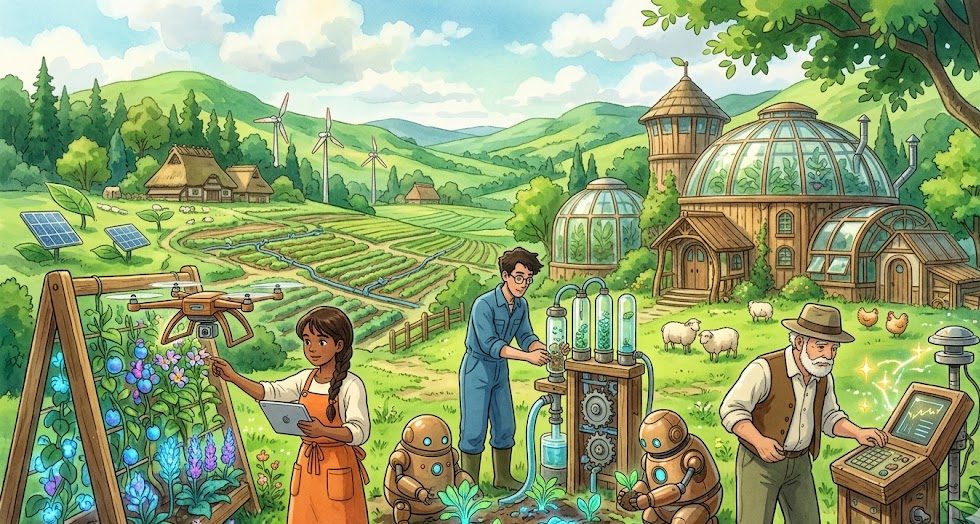
Agriculture is the oldest industry in the world, but it is currently undergoing its most exciting transformation. We are moving away from the days when farming meant simply hoping for good weather and relying entirely on heavy machinery. Today, the intersection of traditional agriculture and smart technology has created a completely new era of food production.
Smart farming is no longer a futuristic concept reserved for massive corporations. It is happening right now in backyard greenhouses, shipping containers, and open fields around the globe. By blending proven growing techniques with modern innovations, today’s growers are producing more food, using fewer resources, and protecting the environment. Let us explore the smartest ideas driving modern agriculture and how you can apply them.
The Shift Toward Smart Farming
Modern agriculture is built on a simple principle: doing more with less. Land is becoming expensive, and clean water is increasingly scarce. To survive and thrive, growers are turning to innovative solutions that maximize crop yields while minimizing their environmental footprint.
This approach takes the guesswork out of farming. Instead of watering a field because the surface looks dry, smart farming uses data and highly efficient systems to deliver exactly what the plant needs, exactly when it needs it. It combines a deep respect for soil management and plant biology with space-saving designs and modern tools. The result is a farming system that is highly resilient to climate changes and incredibly efficient.
Practical Tips for Modernizing Your Farm
You do not need a million-dollar budget to bring innovation to your growing space. By adopting a few smart strategies, you can drastically improve your farm’s efficiency. Here are practical ways to modernize your setup.
1. Go Vertical with Your Crops When you run out of ground space, the smartest direction to go is up. Vertical farming involves stacking layers of crops on specially designed racks. This method is incredibly popular in urban areas where land is limited. By utilizing vertical space, you can grow five to ten times more produce per square foot compared to traditional flat-field farming.
2. Adopt Hydroponic Systems Hydroponics is the science of growing plants without soil, using nutrient-rich water instead. Because the water in a hydroponic system is recirculated, this method uses up to 90% less water than traditional farming. It also completely eliminates soil-borne diseases and weeds, drastically reducing the need for harsh chemical herbicides.
3. Upgrade Your Soil Management If you are growing outdoors in the earth, smart farming means treating your dirt like a living asset. Innovative soil management involves moving away from heavy chemical fertilizers. Instead, modern farmers use cover crops, organic compost, and precise moisture tracking to build a thick, nutrient-dense topsoil that naturally retains water and fights off pests.
4. Automate the Routine Tasks Your time is your most valuable resource. Simple automation can change the way you farm. Installing smart timers for your drip irrigation systems or automated light cycles for indoor growing means your plants get consistent care, even when you are busy with other tasks.
A Real-Life Example: The Urban Lettuce Hub
Consider the story of a traditional vegetable farmer who struggled with unpredictable spring frosts wiping out his delicate leafy greens. Year after year, he lost money trying to fight the weather.
Instead of planting more seeds and hoping for the best, he decided to innovate. He cleared out an old, unused barn on his property and installed a highly efficient vertical farming system. He swapped out the soil for a clean hydroponic water loop and hung energy-efficient LED grow lights above the racks.
The transformation was incredible. Because the climate inside the barn was perfectly controlled, the weather outside no longer mattered. He transitioned from harvesting lettuce twice a year to harvesting fresh, perfect greens every single week. His water bill dropped significantly, and his local restaurant buyers were thrilled with the consistent, year-round supply.
Step-by-Step Guide: Setting Up a Basic Hydroponic System
If you want to experiment with modern farming, building a small Deep Water Culture (DWC) hydroponic system is the perfect starting point. It is inexpensive, highly effective, and great for growing herbs or lettuce.
Step 1: Gather your materials. You will need a dark, opaque plastic storage tote with a lid, a few plastic net pots, clay pebbles (growing medium), a small aquarium air pump with an airstone, and liquid hydroponic nutrients.
Step 2: Prepare the container. Cut holes in the lid of your plastic tote. The holes should be just large enough for your net pots to drop in and rest securely on the rim. The dark color of the tote is crucial because it blocks light from hitting the water, which prevents algae growth.
Step 3: Set up the aeration. Place the airstone at the bottom of the plastic tote and connect it to your air pump outside the box with a plastic tube. Plant roots need oxygen to survive in water, and the bubbling airstone provides this necessary air.
Step 4: Mix the nutrient water. Fill the tote with clean water so that the water level just touches the very bottom of your net pots. Follow the instructions on your liquid hydroponic nutrients to mix the correct amount of food into the water.
Step 5: Plant your seedlings. Take a young seedling, gently wash the soil off its roots, and place it into the net pot. Surround the seedling with clay pebbles to hold it upright.
Step 6: Monitor and maintain. Turn on the air pump and leave it running constantly. Check the water level every few days. As the plants grow and drink, simply top off the tote with fresh nutrient water.
Common Mistakes to Avoid
Bringing new ideas to your farm is exciting, but it is easy to get carried away. Avoid these common traps to ensure your innovations actually work.
- Buying Too Much Technology at Once: Do not buy expensive sensors and automated robots before you understand your basic growing needs. Start small. Upgrade one system, like your irrigation, master it, and then move on to the next.
- Ignoring the Fundamentals: Technology cannot fix bad farming. If your plants do not have enough light, or if your outdoor soil is completely depleted of organic matter, no app or sensor will magically save your harvest.
- Forgetting About Power Backups: If you transition to indoor vertical farming or hydroponics, your plants rely entirely on electricity for light, water circulation, and air. A simple power outage can ruin a crop in hours. Always have a backup generator or battery system ready.
Conclusion
Modernizing your farm is not about abandoning traditional wisdom; it is about giving those old practices a serious upgrade. By adopting smart ideas like vertical stacking, water-saving hydroponics, and precise soil management, you build a growing system that is ready for the future.
The beauty of modern agriculture is its flexibility. You do not need massive fields to be a successful grower anymore. With a bit of innovation and a willingness to learn, you can produce abundant, healthy crops in incredibly small spaces. Embrace these smart farming techniques, and you will quickly see the benefits in your yields, your resource bills, and your overall peace of mind.
Frequently Asked Questions (FAQs)
Q: Is smart farming only for large commercial businesses? A: Not at all. Many of the most innovative farming techniques, such as vertical hydroponics and automated drip irrigation, are easily scaled down for backyard gardens or small urban setups.
Q: Do I need to be a technology expert to use smart farming tools? A: No. Most modern farming tools are designed specifically for everyday growers. Timers, basic nutrient dosers, and soil moisture meters are highly user-friendly and come with simple instructions.
Q: Does hydroponic produce taste the same as soil-grown produce? A: Yes, and sometimes even better. Because hydroponic plants receive exactly the right balance of nutrients at all times, they often grow faster and produce vibrant, highly flavorful fruits and leaves.
Q: Why is vertical farming considered so environmentally friendly? A: Vertical farming requires zero large-scale land clearing, meaning natural forests and habitats are left alone. Additionally, because these systems are enclosed, they use significantly less water and prevent chemical runoff into local rivers.
Q: What is the biggest challenge when switching to modern agricultural methods? A: The initial setup cost and the learning curve are the biggest hurdles. However, the long-term savings on water, chemical inputs, and lost crops usually pay for the upfront investments within the first few growing seasons.