The global agricultural landscape is undergoing a seismic shift. As we navigate through 2026, the traditional image of farming—defined by manual labor and seasonal guesswork—is being replaced by a sophisticated, data-centric ecosystem. At the heart of this transformation lies the Farming Innovation Hub. This is not just a physical location but a conceptual framework where cutting-edge technology, biological science, and sustainable practices converge to ensure food security for a growing global population.
1. The Genesis of the Innovation Hub
For decades, agriculture operated in silos. Engineers built tractors, biologists developed seeds, and software developers created weather apps. A Farming Innovation Hub breaks these silos, integrating them into a single, cohesive “Operating System” for the land.
The primary goal of these hubs is Optimization. In an era of climate volatility and shrinking arable land, the “Innovation Hub” approach focuses on maximizing output while minimizing environmental footprint. It shifts the narrative from “farming harder” to “farming smarter.”
2. The Pillars of Tech-Driven Growth
To understand the future of agriculture, we must look at the specific technologies driving this growth within the hub framework:
A. Artificial Intelligence and Generative Insights
By 2026, AI has moved beyond simple data analysis. Generative AI models now act as “Agronomic Advisors.” By processing trillions of data points—from satellite imagery and soil pH sensors to historical commodity price trends—AI can predict the exact day a crop will reach its peak nutritional value. This allows for “Just-in-Time” harvesting, reducing post-harvest waste significantly.
B. The Rise of the Farm-Bot (Robotics & Automation)
Labor shortages have long been a bottleneck for agricultural expansion. Innovation Hubs solve this through Modular Robotics. Unlike the massive, expensive machinery of the past, today’s robots are smaller, electric, and autonomous.
- Weeding Robots: Use computer vision to identify and laser-neutralize weeds without a single drop of herbicide.
- Swarm Drones: Coordinate in groups to map fields, apply micro-doses of organic fertilizers, and monitor crop health from the sky.
C. Precision Agriculture 2.0 (The Internet of Living Things)
We are no longer just connecting machines; we are connecting the soil itself. IoT sensors buried deep in the earth provide a “heartbeat” of the farm.
- Variable Rate Technology (VRT): This ensures that if one corner of a field is drier than the rest, the irrigation system automatically adjusts the flow to only that specific square meter.
- Soil Health Telemetry: Real-time monitoring of nitrogen, phosphorus, and potassium levels prevents over-fertilization, protecting local water tables from runoff.
3. Sustainable Intensification: Vertical and Hydroponic Integration
The Innovation Hub isn’t restricted to horizontal fields. It embraces Vertical Farming and Controlled Environment Agriculture (CEA). By stacking crops in climate-controlled towers, hubs can produce 365 days a year, regardless of external weather conditions.
This “Urban Hub” model brings food production closer to the consumer, slashing transportation emissions and ensuring that “fresh” truly means harvested only hours ago. Hydroponic and aeroponic systems within these hubs use up to 95% less water than traditional soil-based farming, making them essential in drought-prone regions.
4. Economic Impact: From Farmer to Agri-Entrepreneur
The integration of technology changes the economic profile of the farmer. In the Innovation Hub model, a farmer becomes a data manager and an agri-entrepreneur.
- Transparency through Blockchain: Hubs utilize distributed ledgers to track a crop from seed to supermarket. This transparency allows farmers to command premium prices for “Certified Organic” or “Carbon Neutral” produce, as consumers can verify the claims with a simple QR code scan.
- Direct-to-Consumer (D2C) Channels: Digital marketplaces integrated into the hub eliminate the middleman. Farmers can predict their yield with such high accuracy that they can sell “future harvests” directly to local communities or high-end restaurants, securing cash flow before the first seed is even planted.
5. Overcoming Challenges: The Path to Adoption
While the vision of the Farming Innovation Hub is bright, the transition is not without hurdles.
- High Initial Capital: The “Tech-Stack” for a modern farm is an investment. However, as modular technology becomes more accessible, the Return on Investment (ROI) is becoming clear through reduced input costs (less water, fewer chemicals) and higher yields.
- The Digital Divide: Connectivity is the backbone of the hub. Expanding 5G and satellite internet (like Starlink) to rural heartlands is crucial for these innovations to be inclusive.
- Skill Gap: There is an urgent need for “Agri-Tech” education. The farmer of 2026 needs to understand Python and data sets as much as they understand soil and seasons.
6. The Aesthetic of the Future: A Studio Ghibli Vision
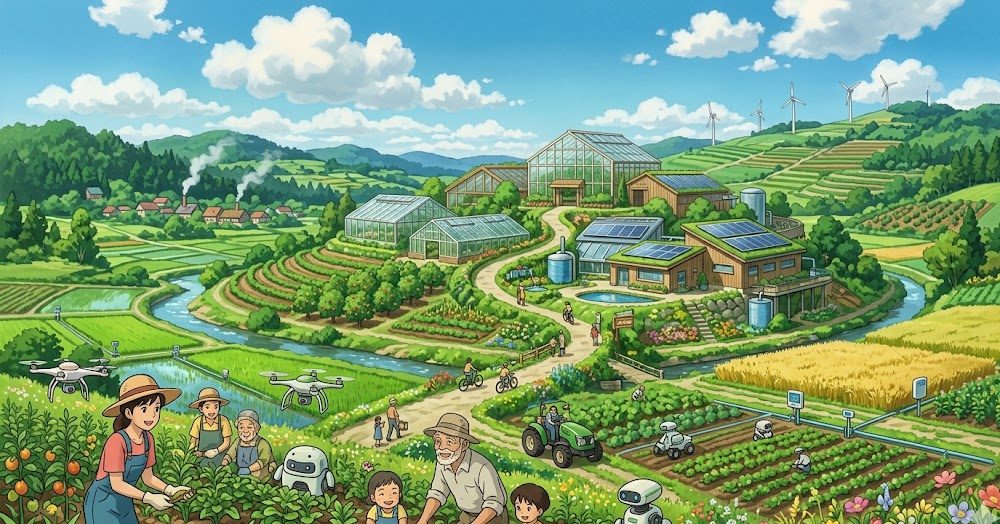
Imagine a landscape where technology doesn’t look “industrial” or “cold,” but blends seamlessly with nature. This is the Studio Ghibli aesthetic of modern farming. Picture rolling green hills dotted with sleek, solar-powered sensors, clear glass greenhouses reflecting the sunset, and small autonomous harvesters moving quietly through high-yield organic crops.
The future isn’t a concrete jungle; it’s a high-tech garden. The Farming Innovation Hub proves that we don’t have to choose between technology and nature—we can use the former to save the latter.
Conclusion: The Hub as a Global Necessity
The Farming Innovation Hub is more than a trend; it is a necessity for the survival of our global food system. By leveraging AI, robotics, and precision data, we are entering an era of “Abundance through Efficiency.”
As we look toward the remainder of the decade, the growth of these hubs will define which nations achieve food sovereignty. For the modern agri-entrepreneur, the message is clear: The future of growth is tech-driven, and the hub is where that future begins.