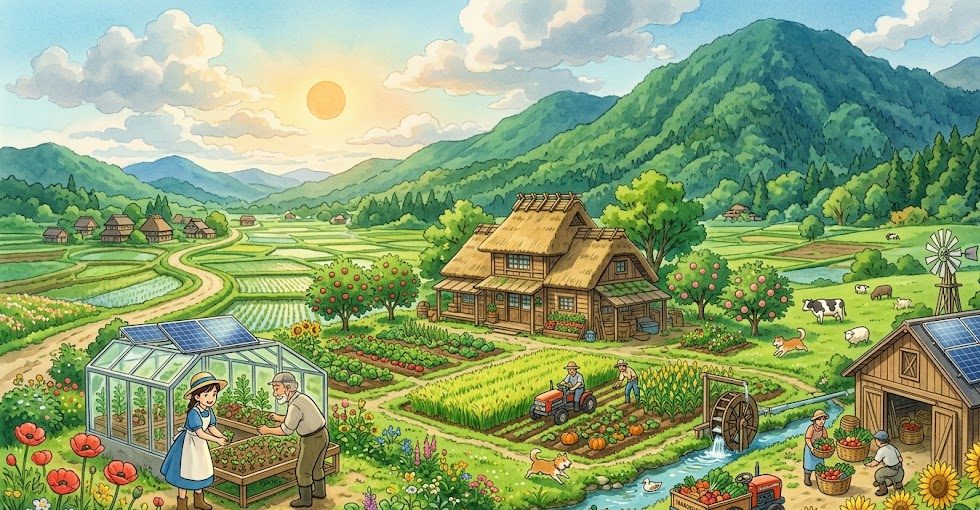
The agricultural sector is no longer just a traditional practice of sowing and reaping; it has evolved into a sophisticated industry driven by rapid growth and innovation. As we look toward a future with a surging global population and changing climate patterns, the “Farming Hub” model—a centralized system of knowledge, technology, and strategic planning—has become essential for any entrepreneur aiming for long-term success.
In this comprehensive guide, we explore the pillars of modern agricultural expansion, the innovations changing the field, and how you can position your farm as a model of growth.
1. The Growth Mindset: Scaling Your Farm
Growth in agriculture isn’t just about adding more acreage. It is about increasing output density—producing more value from every square foot of land you manage.
Why a “Farming Hub” Strategy Works
A “Hub” approach involves consolidating your resources, logistics, and data in one place. Whether you are managing field crops, vertical gardens, or livestock, the hub model ensures that:
- Resources are Centralized: Shared infrastructure (like irrigation control or storage) lowers your overhead costs.
- Knowledge is Cumulative: By documenting your results, you create a “knowledge bank” that prevents the same mistakes from being repeated.
- Efficiency is Scalable: When you systematize a process—such as a specific fertilization schedule—you can apply that same high-efficiency model to new crops or new land.
2. Innovation: The Engine of Agricultural Progress
Innovation is the primary driver of agricultural growth. It is the bridge between average yields and record-breaking production. To be a leader in the space, you must adopt an “innovator’s mindset.”
Breakthrough Technologies You Need to Know
- Hydroponics and Aeroponics: These soilless growing techniques are essential for urban and high-density farming. They allow for year-round production, use up to 90% less water than traditional methods, and eliminate many soil-borne diseases.
- IoT-Integrated Sensors: Internet-of-Things (IoT) devices now monitor soil pH, humidity, temperature, and light levels in real-time. This allows you to manage your farm from your smartphone, ensuring your crops are in an optimal environment 24/7.
- Biotechnology: From drought-resistant seeds to organic bio-fertilizers, biotechnology allows you to work with nature rather than against it, ensuring that your crops have the genetic or biological advantage to thrive.
3. Creating a High-Performance Crop Strategy
Growth is meaningless without a clear strategic plan. You must treat your crops like products in a business portfolio.
The Portfolio Approach to Farming
- The Cash Cow: Identify 2-3 crops that are reliable, high-demand, and have stable market pricing. These provide the consistent revenue needed to cover your daily operations.
- The High-Value Niche: Devote a portion of your land to “specialty” crops—things like exotic vegetables, medicinal herbs, or organic microgreens. These crops often have a lower volume but a massive profit margin.
- The Experimental Plot: Always reserve a small area of your hub for innovation. Test new seed varieties or a new irrigation setup here. If it works, scale it; if it fails, you’ve only lost a small amount of time and resources.
4. Soil Health: The Backbone of Your Hub
Innovation is useless if the ground beneath your feet is dead. The most “innovative” farms today are those that have mastered the science of regenerative soil health.
- The Living Soil Model: Modern farming is moving away from excessive tilling, which destroys soil structure. Focus on “no-till” or “reduced-tillage” practices to keep carbon in the ground and maintain a rich network of fungal and bacterial life.
- Precision Composting: Use the waste from your farm to create high-grade compost. By fine-tuning your compost mix (balancing “greens” and “browns”), you can create a customized fertilizer that targets the specific needs of your high-value crops.
5. Turning Your Farm into an Information Hub
To truly succeed in the digital age, you must also be a content creator. Your farming hub shouldn’t just produce food—it should produce value for others.
- Digital Documentation: By tracking your growth and innovation success, you create content that is highly valuable to other farmers.
- Monetization through Knowledge: Once your hub is established as a center of high-growth innovation, you can monetize your expertise through online guides, video courses, or consulting. This adds a “passive income” stream to your agricultural business, diversifying your revenue beyond just the physical harvest.
6. Overcoming the Challenges of Innovation
Adopting new tech or shifting to a growth model can be intimidating. Here is how to keep your farm moving forward:
- Start Small, Scale Fast: Don’t overhaul your entire farm at once. Pick one category (e.g., “Smart Crop Farming”) and apply your new strategies there first.
- Focus on Data: If you aren’t measuring it, you aren’t managing it. Keep logs of everything—from the cost of seeds to the water used per crop cycle.
- Community Networking: Agriculture is inherently collaborative. Join local or online farming hubs to share findings. Innovation thrives in a community where farmers exchange ideas on what works and what doesn’t.
Conclusion: Planting for the Future
The goal of a modern farming hub is to create an agricultural operation that is self-sustaining, highly productive, and constantly evolving. Through the strategic application of technology, a relentless focus on soil biological health, and a disciplined approach to business management, you can transform your farm into a cornerstone of agricultural growth.
Remember, innovation isn’t just about the latest gadgets; it’s about the consistent, data-driven improvement of your systems. Keep growing, keep innovating, and let your farm be the example of what’s possible in the new era of agriculture.