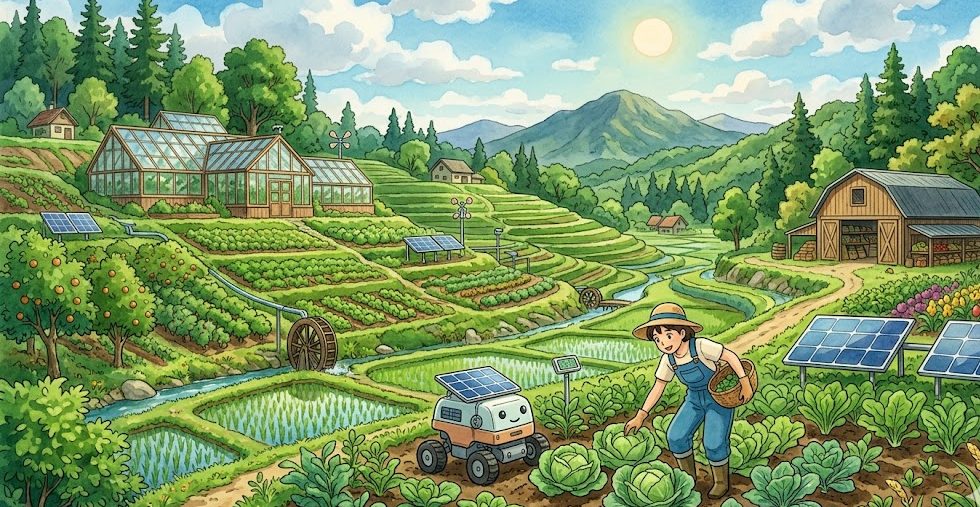
In an era where global food security and economic volatility go hand-in-hand, the agricultural sector is undergoing a massive transformation. We are witnessing the transition from traditional, manual farming to “Smart Crop Farming.” This shift is not merely about using fancy gadgets; it is about integrating data, biology, and intelligent design to create a high-yield, sustainable, and profitable agricultural ecosystem.
For the modern entrepreneur and farmer, smart farming represents the most reliable path to maximizing profit margins while minimizing environmental risk. Whether you are managing an automated facility or a precision-focused outdoor plot, this guide outlines the innovative strategies required to achieve sustainable agricultural growth.
1. Defining Smart Crop Farming
At its core, Smart Crop Farming utilizes technology to optimize every variable of the growth cycle. While traditional farming relies on seasonal intuition, smart farming relies on real-time data. By monitoring variables such as soil temperature, nutrient levels, light intensity, and plant transpiration rates, you can make decisions that prevent crop failure before it occurs.
The goal is simple: Increase output per square meter while reducing the cost of external inputs.
2. Innovative Strategies for Maximizing Yield
Precision Irrigation and Nutrient Management
Water and fertilizers are often the largest variable expenses in farming. Smart farming employs Variable Rate Technology (VRT). Instead of applying water and nutrients uniformly across a field, VRT allows you to target specific zones.
- The Benefit: Plants receive exactly what they need, when they need it. This prevents the “leaching” of expensive fertilizers into the groundwater and ensures plants are not stressed by either over-watering or dehydration.
- The Result: Higher crop quality and significantly lower operational costs.
Controlled Environment Agriculture (CEA)
For high-value crops like herbs, microgreens, or medicinal plants, CEA is the gold standard. By utilizing climate-controlled greenhouses or indoor vertical systems, you remove the “luck” factor from farming.
- Year-Round Production: You are no longer limited by the seasons. You can produce a steady, high-quality supply that attracts premium prices from restaurants and local markets.
- Resource Efficiency: Modern CEA systems often recirculate water and utilize advanced LED spectrums to trigger faster growth cycles, effectively doubling or tripling your annual harvest cycles compared to outdoor farming.
3. Data-Driven Decision Making
Smart farming is a game of numbers. To grow, you must treat your farm like a tech platform.
Predictive Analytics
Modern sensors collect thousands of data points daily. When processed through AI algorithms, this data can predict:
- Harvest Timing: Determining the exact day a crop reaches peak nutritional and flavor density, which is critical for fetching high prices in specialized markets.
- Disease Forecasting: By tracking humidity and temperature patterns, AI can predict the onset of fungal diseases days before they appear. This allows for early intervention, often using biological, non-chemical methods that save the crop without violating organic standards.
IoT-Integrated Operations
The “Internet of Things” (IoT) allows your farm to communicate with you. From a smartphone, you should be able to view soil moisture maps, check climate logs, and even remotely trigger irrigation or ventilation systems. This connectivity reduces the need for constant manual labor and ensures your farm runs at peak efficiency 24/7.
4. The Biological Frontier: Soil Health as an Asset
Technology is only as good as the medium it grows in. Smart farming recognizes that the soil is a living biological engine.
Regenerative Integration
Innovative farmers are now combining “high-tech” with “high-biology.”
- Microbial Inoculants: By introducing beneficial bacteria and fungi, you boost the plant’s immune system, making it more resistant to pests and disease naturally.
- Carbon Sequestration: Smart farming practices that increase soil organic matter not only help the planet but also improve the soil’s ability to hold nutrients, reducing the need for synthetic inputs over the long term.
5. Scaling for Profit: The Business Side of Farming
To make Smart Crop Farming a profitable venture, you must focus on the Return on Investment (ROI).
Selecting High-Margin Crops
Avoid the “commodity trap” where you compete with industrial giants on prices for basic crops like corn or soy. Instead, focus on high-demand, low-footprint crops:
- Exotic Fungi: Oysters, Shiitake, and Lion’s Mane grow in controlled environments and have massive profit margins.
- Specialty Herbs: Fresh basil, cilantro, and mint—when grown sustainably—can be sold directly to local restaurants at a premium.
Direct-to-Consumer (D2C) Strategies
The middleman is the biggest “profit killer” in agriculture. Use your digital presence to connect directly with consumers. A website or app where customers can subscribe to weekly “fresh farm boxes” creates predictable, recurring revenue, which is the cornerstone of any stable business.
6. Overcoming Adoption Challenges
The biggest barrier to smart farming is the fear of complexity. However, you do not need to install every sensor on day one.
- Phase 1: Invest in basic soil monitoring to optimize your water and fertilizer use.
- Phase 2: Once your profit margins improve, reinvest that capital into automated irrigation or climate control.
- Phase 3: Scale your operation once your data proves that your specific model is consistently profitable.
Conclusion: The Future is Cultivated
Smart Crop Farming is the synthesis of human ingenuity and natural processes. By embracing innovation, you move from being a farmer who works against the elements to a business owner who orchestrates them.
The future belongs to those who understand that agriculture is a sophisticated data-and-biology problem. By optimizing your inputs, diversifying your crops, and utilizing modern technology, you can build an agricultural operation that is not only profitable but also resilient enough to thrive in the decades to come.