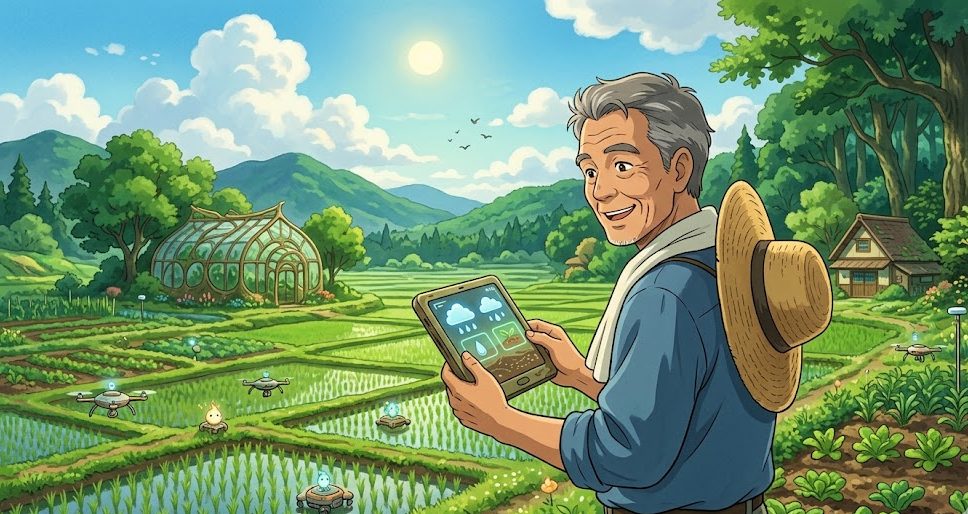
Agriculture is currently undergoing its most significant evolution since the invention of the plow. With the global population rising and climate patterns becoming increasingly unpredictable, the shift from traditional farming to Smart Crop Farming is no longer just an option—it is a necessity for profitability and sustainability.
By integrating technology, data-driven insights, and innovative management techniques, farmers are now transforming their fields into efficient, high-yielding ecosystems. Here is how you can leverage smart solutions to modernize your agricultural operations.
1. What is Smart Crop Farming?
At its core, Smart Crop Farming (or Precision Agriculture) is the practice of using technology to observe, measure, and respond to variability in crops. Instead of treating an entire field as a single unit, smart farming allows you to manage every individual section with precision, ensuring that resources like water, fertilizer, and labor are used only where and when they are needed.
2. Key Pillars of Modern Agriculture
To transform your farm, you must focus on the following innovative pillars:
A. Data-Driven Decision Making
The days of relying solely on intuition are over. Modern farms utilize:
- Soil Sensors: These provide real-time data on soil moisture, temperature, and nutrient levels, accessible directly via your smartphone.
- Weather Intelligence: Localized weather tracking helps you predict exact rainfall patterns, allowing for smarter irrigation scheduling and protection against frost or heat stress.
B. Intelligent Irrigation Systems
Water is often the most expensive input on a farm. Smart irrigation systems—such as automated drip lines connected to IoT controllers—ensure that crops receive the exact amount of water needed based on real-time soil moisture readings. This eliminates over-watering, reduces the risk of root rot, and significantly lowers your electricity or fuel costs for pumping water.
C. Automated Monitoring and Drones
Drones are changing the face of agriculture. In a matter of minutes, a drone equipped with multispectral cameras can fly over your fields, identifying:
- Early signs of pest infestations.
- Areas of nutrient deficiency.
- Hydration stress that isn’t visible to the naked eye. This allows for “spot-treatment” rather than blanket-spraying chemicals, saving you massive costs on inputs.
3. The Power of Integrated Tech in Weed and Pest Control
Smart farming isn’t just about sensors; it’s about better management strategies:
- Robotic Weeders: New-age autonomous tools can identify weeds and remove them mechanically without disturbing the cash crop.
- Biological Controls: Using data to map pest hotspots allows for the targeted release of beneficial insects or organic biopesticides, keeping your produce cleaner and more marketable.
4. Why Smart Farming Boosts Profitability
Many farmers hesitate to adopt new technology due to the initial cost. However, when you look at the Return on Investment (ROI), the benefits are clear:
- Reduced Input Waste: Precision application of fertilizers means you buy less and lose less to runoff.
- Higher Yield Consistency: By eliminating the “guesswork,” you ensure your crops reach their full genetic potential every season.
- Labor Efficiency: Automation reduces the manual effort required for routine monitoring, allowing you to focus on high-level management and marketing.
5. Overcoming Challenges in Adoption
Transitioning to a “Smart Farm” is a journey. Start by:
- Phased Implementation: Don’t try to automate everything at once. Begin with soil sensors or improved drip irrigation in your most valuable crop section.
- Education: Spend time learning the analytics software that accompanies these tools. Data is only powerful if you know how to interpret it to make better farming decisions.
- Infrastructure: Ensure your field has reliable power and connectivity (like 4G/5G or LoRaWAN networks) to support your smart devices.
Conclusion: The Future is Green and Digital
Smart Crop Farming is the bridge between traditional farming wisdom and the technological possibilities of the future. By embracing these innovative solutions, you are not just growing more food—you are building a sustainable, resilient, and highly profitable business model that stands the test of time.
The future of agriculture belongs to those who are willing to observe, analyze, and adapt. Your fields are ready for the next level; the only question is, are you ready to lead the transformation?