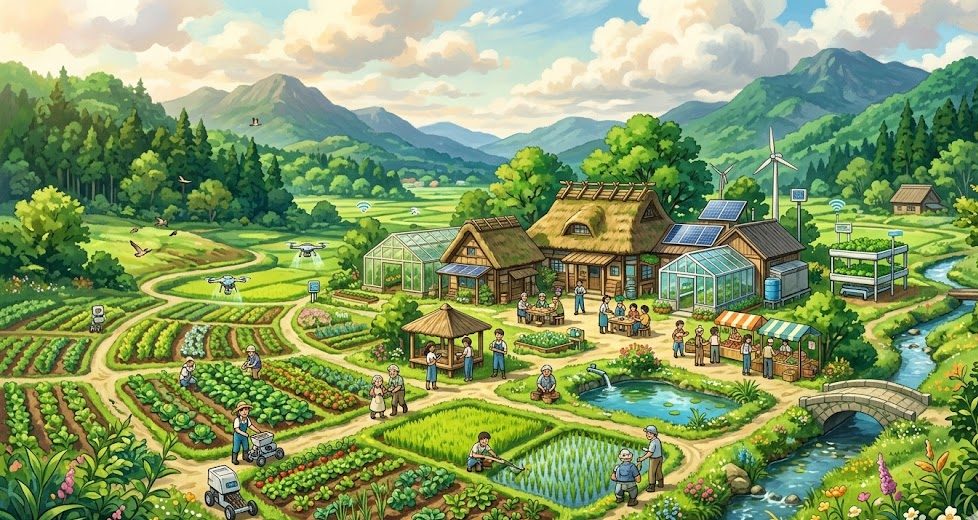
For centuries, farming was guided by a simple rule: work the land as hard as possible to get the highest possible yield. But times have changed. Today’s agricultural landscape faces unprecedented pressures, from extreme weather patterns to depleting water supplies and skyrocketing fertilizer costs.
Because of these modern challenges, the old ways of farming are rapidly evolving.
We are currently witnessing a massive global shift toward sustainable farming innovation. Farmers are no longer forced to choose between protecting the planet and turning a profit. Instead, a new wave of Agricultural Technology (AgTech) is proving that eco-friendly farming can actually be more profitable than traditional, chemical-heavy methods.
Whether you are a commercial grower looking to slash your input costs or a curious observer of the green revolution, here are the major AgTech trends shaping the future of food production.
1. Regenerative Agriculture Enabled by Tech
Regenerative agriculture is all about restoring the health of the soil rather than just depleting it season after season. While the core ideas are deeply rooted in traditional indigenous practices, modern technology is scaling these methods to millions of acres.
Smart Cover Cropping and Seeding Drones
Cover crops—like clover, rye, and radish—are planted during the off-season to protect the soil from erosion and naturally pump nitrogen back into the earth. However, planting them manually over thousands of acres can be incredibly time-consuming.
Enter agricultural drones. Using advanced mapping software, automated heavy-payload drones can fly over a cash-crop field right before harvest and broadcast cover crop seeds perfectly across the landscape. By the time the main crop is harvested, the cover crop is already establishing itself, completely eliminating a tractor pass and saving massive amounts of diesel fuel.
Soil Carbon Sepsors
How do farmers know if their soil is actually recovering? Instead of sending dirt samples to a lab every few months, growers now use IoT soil carbon sensors. These small, buried devices use light-reflecting technology to measure the organic matter and carbon stored in the soil in real time, sending progress updates straight to a smartphone dashboard.
2. Next-Generation Vertical Farming and CEA
Controlled Environment Agriculture (CEA), commonly known as vertical farming, is moving out of its infancy. By stacking crops vertically in indoor warehouses using LED grow lights and precise climate controls, these facilities can produce food 365 days a year, regardless of the weather outside.
The Shift to True Sustainability
Early vertical farms faced a major criticism: they consumed too much electricity. Today’s sustainable farming innovation has solved this problem through two major breakthroughs:
- Hyper-Efficient LED Tuning: Modern lights don’t just shine brightly; they emit exact, customized wavelengths of light (often a mix of specific blues and deep reds) tailored to the exact growth stage of the plant, cutting energy use in half.
- Closed-Loop Hydroponics: These indoor facilities recirculate 95% less water than traditional dirt farms. Every drop of water that evaporates from a plant’s leaf is captured by heavy-duty dehumidifiers, filtered, and pumped right back into the nutrient tanks.
3. Bio-Inputs: Replacing Chemicals with Living Science
For decades, synthetic fertilizers and chemical pesticides were the golden standard for high yields. Unfortunately, they also kill off beneficial soil microbes, pollute local waterways, and lose their effectiveness over time as pests adapt. The hottest trend in AgTech right now is the rise of bio-inputs.
Microbes That Make Their Own Fertilizer
Instead of spraying synthetic nitrogen made from fossil fuels, scientists have isolated specific, natural bacteria that live on plant roots. Once applied to a seed, these specialized microbes absorb nitrogen gas directly out of the air and turn it into a usable food source for the plant.
Natural Pest Control (Biopesticides)
Biopesticides use nature’s own defense mechanisms to target specific crop threats. For example, formulas made from specific fungal spores or plant extracts can target destructive beetles while leaving vital pollinators, like honeybees and butterflies, completely unharmed.
4. Precision Water Management and Micro-Drip Irrigation
Freshwater is our planet’s most precious and finite resource, and agriculture consumes a massive percentage of it. Traditional flood irrigation wastes up to 50% of its water to evaporation and runoff. Sustainable AgTech trends are completely overhauling how we hydrate our crops.
AI-Driven Subsurface Drip Irrigation
Instead of spraying water into the air where the sun evaporates it instantly, subsurface irrigation involves burying flexible pipelines directly under the crop rows.
[Satellite Crop Health Imagery] ➔ [AI Computes Daily Water Evaporation] ➔ [Subsurface Drip Lines Release Exact Milliliters at the Roots]
These lines feature tiny openings that release water directly to the plant’s root zone. When paired with AI weather tracking, the system automatically adjusts the water flow based on current soil humidity and upcoming rain forecasts, ensuring not a single drop is wasted.
5. Circular Farm Systems and Waste-to-Energy Tech
A truly sustainable farm doesn’t have a waste stream; it operates in a closed loop. The final major AgTech trend involves turning farm bypass products—like animal manure, crop residues, and spoiled produce—into valuable assets.
On-Farm Anaerobic Digesters
Large-scale dairy and livestock farms are increasingly installing anaerobic digesters. These massive, sealed tanks take animal waste and use specialized bacteria to break it down in an oxygen-free environment.
This process captures methane gas that would otherwise escape into the atmosphere and pollute the air. The captured methane is clean-burned on-site to generate electricity, powering the entire farm and sometimes even selling green energy back to the local power grid. The leftover solid material inside the tank is sterilized and used as a premium, odor-free organic fertilizer.
Conclusion: The Profitability of Sustainability
The ultimate goal of modern sustainable farming innovation is simple: resilience. By embracing these AgTech trends—whether it’s switching to targeted bio-inputs, optimizing water with micro-drip systems, or utilizing drones for cover cropping—farmers are discovering that eco-friendly methods naturally insulate them from market volatility. The future of agriculture isn’t about dominating nature; it’s about partnering with it through smart technology to ensure we can feed the world securely for centuries to come.
Frequently Asked Questions (FAQs)
1. What is the difference between sustainable farming and regenerative farming?
Sustainable farming focuses on maintaining a balance so that the environment isn’t degraded further, essentially aiming for a “net-zero” impact. Regenerative farming goes a step further by actively healing, restoring, and rebuilding degraded resources, such as improving soil biodiversity and capturing more carbon than the farm emits.
2. Are bio-inputs as effective as traditional chemical fertilizers?
Yes, when used correctly. While chemical fertilizers offer an instant, artificial spike in plant growth, bio-inputs build a long-term, self-sustaining ecosystem. Over a 2 to 3-year period, biological inputs often match conventional yields while significantly lowering the farmer’s overall input costs.
3. Can small-scale family farms afford these new AgTech innovations?
Absolutely. While massive technologies like commercial anaerobic digesters require significant capital, many sustainable innovations are modular and highly affordable. Small-scale farmers can easily adopt smartphone-based crop monitoring apps, basic soil moisture sensors, and affordable biological seed coatings.
4. Do vertical farms replace traditional outdoor farms?
No. Vertical farms are fantastic for growing high-turnover, water-dense crops like leafy greens, herbs, berries, and tomatoes close to urban centers. However, large-scale row crops like wheat, corn, soybeans, and root vegetables will always rely on traditional, open fields managed with sustainable outdoor AgTech.
5. How do smart irrigation systems save money?
Smart irrigation saves money in three ways: it drastically slashes your monthly water utility bills, reduces the electrical energy required to pump thousands of gallons of water across a property, and prevents “over-watering” which can wash away expensive soil nutrients and cause root rot diseases.