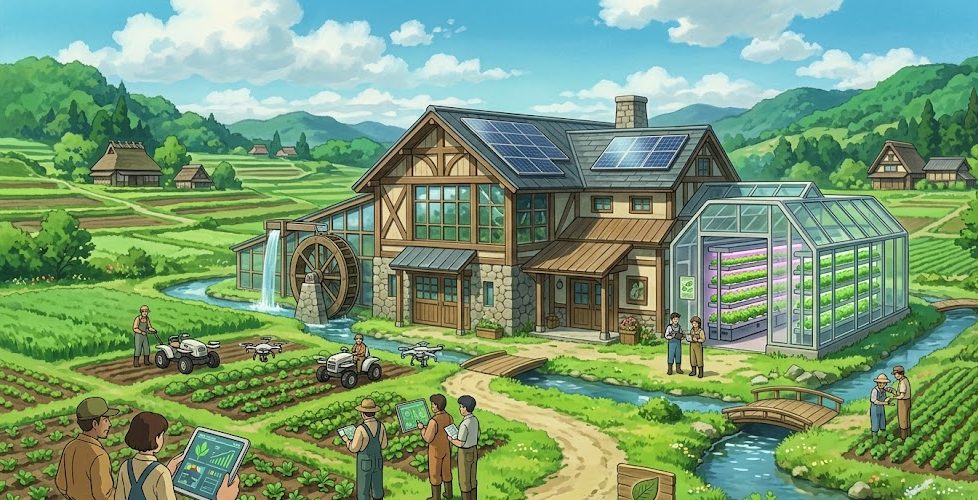
The global agricultural landscape is undergoing a massive paradigm shift. For decades, farming relied on historical calendars, physical intuition, and uniform chemical applications. While these methods powered the green revolutions of the past, they are reaching their structural limits. Today’s growers operate in an environment defined by extreme weather volatility, acute labor shortages, and skyrocketing input costs.
To survive and thrive, the modern farm is transforming into a farming innovation hub.
This evolution replaces generalized, reactionary field management with connected intelligence, automation, and molecular precision. By treating the farm as a data-driven ecosystem, advanced agritech tools allow growers to optimize every square meter of land. Let’s look inside the modern innovation hub to discover the breakthrough technologies redefining how we grow our food.
The Core Pillars of the Modern Innovation Hub
A farming innovation hub is not just a single piece of machinery; it is a unified network where data, robotics, and biological science intersect. When these systems communicate seamlessly, they build an agricultural operation that can anticipate disruptions rather than simply reacting to them.
Traditional Reactive Agriculture:
[Blanket Fertilizer] ──> [Manual Scouting] ──> [Chemical Over-Reliance] ──> [High Waste & Cost]

The Innovation Hub Ecosystem:
[IoT Soil Data] ──> [AI Decision Copilot] ──> [Targeted Robotic Intervention] ──> [High-Yield Efficiency]
By connecting real-time environmental metrics directly to autonomous field tools, the modern innovation hub eliminates human guesswork. This transition minimizes resource waste, protects sensitive regional ecosystems, and maximizes profit margins.
1. Field-Ready AI and Decision Copilots
Artificial intelligence has worked behind the scenes in agriculture for years, quietly processing satellite imagery and refining weather models. However, the latest advancement is the shift from hidden data processing to interactive, conversational decision support at the field level.
- Generative AI Advisory Tools: Modern growers are using localized, voice-enabled AI agents that translate complex agronomic data into clear, natural-language action plans. Instead of clicking through cluttered dashboard metrics, a farm manager can simply ask, “Based on yesterday’s rain and the current soil moisture sensors, should I adjust my HTP pump schedule for the west orchard today?”
- Unified Decision Frameworks: Advanced AI systems function as comprehensive operational operating systems. They seamlessly integrate variables like regional market demand, supply chain shipping logistics, localized weather forecasts, and soil health metrics into a single, unified priority checklist for the morning.
2. Autonomous Field Robotics and Human-in-the-Loop Automation
As labor shortages continue to squeeze operational margins worldwide, autonomous machinery is stepping in to take over repetitive, labor-intensive tasks. Rather than full replacement, the prevailing trend favors a hybrid, human-in-the-loop model, where machines handle the physical labor while humans guide the strategic plans.
                  ┌─────────────────────────────┐
                  │ Human Farm Manager         │
                  │ (Strategic Plan & Decisions)│
                  └──────────────┬──────────────┘
                                 │
                                 ▼
                  ┌─────────────────────────────┐
                  │ Autonomous Drone Fleet      │
                  │ (Hyper-Targeted Field Work) │
                  └──────────────┬──────────────┘
                                 │
                                 ▼
         ┌───────────────────────┴───────────────────────┐
         │                                               │
         ▼                                               ▼
┌──────────────────────────────┐                ┌──────────────────────────────┐
│ Smart Tractors               │                │ Robotic Weeders              │
│ (Seeding & Harvesting)       │                │ (Herbicide-Free Clearing)    │
└──────────────────────────────┘                └──────────────────────────────┘
- Autonomous Tractors and Harvesters: Self-driving machinery guided by high-precision GPS and real-time vision sensors can operate continuously, minimizing compaction by sticking precisely to pre-mapped field tracks.
- Modular Agri-Robots: Smaller, specialized robots now move down crop rows to handle delicate assignments. For instance, robotic weeders target and eliminate invasive plants mechanically or with precision lasers, removing the need for broad-spectrum chemical sprays.
3. Advanced Precision Spraying and Smart Irrigation Systems
Water scarcity and chemical runoff are major environmental hurdles for modern crop management. The innovation hub tackles these challenges by applying liquid inputs exactly where and when they are needed.
| Innovation Category | Specific Field Application | Main Efficiency Advantage | Primary Resource Savings |
| Smart Engine Sprayers | Tractor-mounted, air-assisted sprayers with variable-rate controls. | Applies treatments selectively, skipping open gaps between tree rows. | Reduces chemical and pesticide consumption by up to 30%. |
| High-Throughput Pumps | Intelligent HTP pump networks tied to regional moisture sensors. | Delivers water pressure uniformly across variable terrain. | Prevents water logging and optimizes root zone hydration. |
| Drone-Enabled Spraying | Autonomous multi-rotors deploying low-volume targeted applications. | Treats localized pest hotspots without driving heavy machinery onto wet soil. | Lowers field labor requirements by roughly 35%. |
4. Biotechnology: CRISPR and Rhizosphere Engineering
While physical machines handle surface operations, advanced biotechnology operates on a microscopic scale to fortify crop resilience from within the seed and soil.
The CRISPR Advantage: Modern gene-editing tools allow agricultural engineers to make highly targeted adjustments directly within a plant’s genome. Unlike old-school genetic modification, this precision breeding allows scientists to rapidly develop crop varieties possessing enhanced drought tolerance, high salinity resistance, and natural defense mechanisms against aggressive local pathogens without expanding current farm acreages.
Beyond genetics, companies are actively engineering the soil microbiome. Farmers use targeted microbial seed treatments and biological biofertilizers containing specialized strains of nitrogen-fixing bacteria. These beneficial organisms establish symbiotic relationships with crop roots, drawing natural nitrogen directly from the air and dramatically reducing reliance on synthetic, petroleum-derived fertilizers.
Implementing Innovation: A Scalable Roadmap for Growth
Transitioning a standard agricultural operation into a highly efficient tech hub doesn’t require a massive, multi-million-dollar upfront overhaul. Progressive operations succeed by implementing technologies in modular, ROI-driven steps.
1.Step 1: Deploying Ubiquitous Low-Power IoT Networks:Focus: Infrastructure Foundation.
Install an affordable, low-power wide-area network (such as LoRaWAN) across your entire acreage. Place rugged, battery-powered soil moisture probes, local weather stations, and ambient temperature sensors to begin compiling a clean, localized data stream.
2.Step 2: Activating AI Decision Copilots:Focus: Decision Intelligence.
Connect your field sensor networks to an agricultural AI decision platform. Use this software layer to interpret your raw data, provide early disease alerts, calculate precise water requirements, and streamline day-to-day work schedules.
3.Step 3: Upgrading to Smart Variable-Rate Equipment:Focus: Precision Application.
Equip your existing tractors with smart engine sprayers and variable-rate application controllers. Use the actionable prescription maps generated by your AI platform to apply fertilizers and crop protection solutions with pinpoint spatial accuracy.
4.Step 4: Integrating Modular Robotics and Drones:Focus: Full Automation.
Introduce task-specific autonomous equipment—such as automated weeders or multi-rotor crop scouting drones—into your standard operations to handle repetitive tasks, stabilize labor costs, and enable continuous field monitoring.
Frequently Asked Questions (FAQs)
Can smallholder or mid-sized farms afford to join the farming innovation hub?
Yes. Modern agritech is increasingly modular and accessible. Smaller farms do not need to purchase multi-million-dollar autonomous fleets. They can unlock major efficiency gains by focusing on affordable upgrades, like low-power IoT soil sensors, smartphone-based AI advisory apps, and equipment financing options or service-based drone contracts.
How do smart sprayers differentiate between a crop and a weed?
Smart sprayers utilize high-speed machine vision cameras and deep-learning AI models. The system analyzes the specific leaf shape, color patterns, and structural architecture of every plant in real time, firing the spray nozzle only when it identifies a target weed while leaving the cash crop untouched.
Do autonomous tractors require constant cellular internet connections to operate safely?
While real-time cloud connectivity is helpful for remote monitoring, modern autonomous farm vehicles are built with high levels of localized edge computing. They utilize onboard GPS guidance, localized radar, and LiDAR sensor suites, allowing them to operate safely and follow pre-mapped paths even when working completely offline in remote regions.
What is a “Digital Twin” in modern agriculture?
A digital twin is a virtual replica of a physical farm field. It combines historical soil assays, ongoing sensor metrics, current weather tracking, and biological crop growth models. This allows operators to simulate and test management choices—like adjusting fertilizer rates or shifting irrigation schedules—on a computer before deploying resources in the real field.
Conclusion
The transformation of traditional fields into connected farming innovation hubs is a necessary step forward for global food security. Relying on outdated, broad-spectrum management practices is no longer economically or environmentally viable in an era of climate volatility and rising input costs.
By embracing the pillars of modern agritech—from field-ready AI decision copilots and autonomous robotics to precision spray systems and advanced biotechnology—growers can eliminate waste and shield operations from market risks. These innovations do more than just make farming easier; they rebuild agriculture into a precise, highly profitable, and resilient industry capable of meeting global demands sustainably.