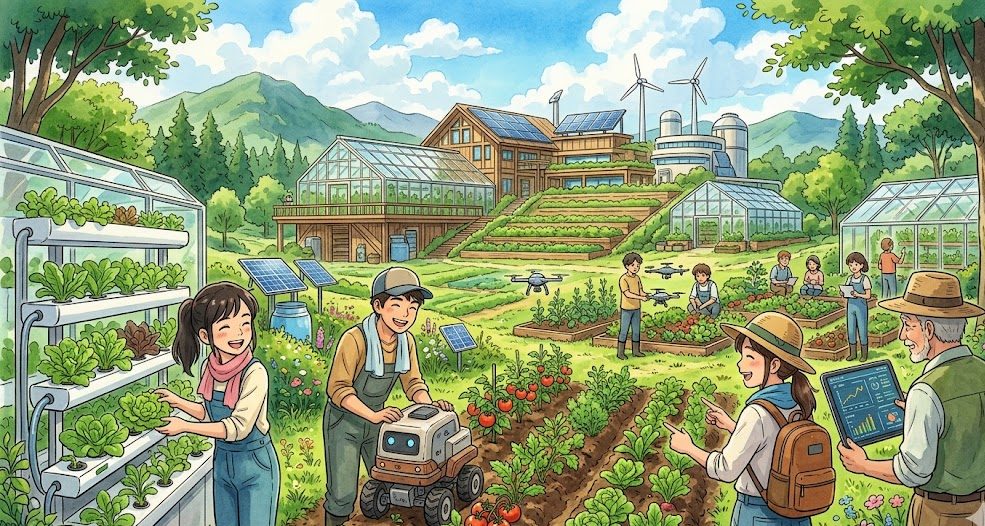
Agriculture, the backbone of human civilization, is currently undergoing its most significant transformation since the Industrial Revolution. As we look toward the mid-21st century, the challenges of climate change, a burgeoning global population, and the migration of youth away from rural areas have created a “perfect storm” for the farming sector. However, amidst these challenges, a new phenomenon is emerging: The Agricultural Innovation Hub.
These hubs are not merely physical spaces; they are vibrant ecosystems—a blend of technology, mentorship, and community—designed specifically to empower the next generation of farmers.
1. What Are Innovation Hubs?
At their core, Innovation Hubs are collaborative environments where technology meets traditional agricultural wisdom. They act as bridges between university research laboratories, private ag-tech startups, government extension services, and, most importantly, the farmers themselves.
Unlike traditional agricultural offices that focus solely on production, Innovation Hubs are focused on viability. They provide access to high-tech machinery, data analytics, soil sensors, drone technology, and, crucially, the training required to operate these tools effectively.
2. Bridging the Digital Divide
One of the greatest barriers for next-gen farmers is the “Digital Divide.” While technology exists, the cost of entry is often prohibitively high for individual farmers.
- Shared Infrastructure: Hubs operate on a “shared economy” model. By providing access to expensive equipment—such as precision planting drones, automated irrigation systems, or advanced post-harvest processing units—they allow young farmers to utilize state-of-the-art tech without the crushing burden of capital expenditure.
- Data-Driven Decision Making: Farming is becoming a game of data. Innovation Hubs offer digital platforms that aggregate local climate data, market prices, and soil health metrics, helping farmers shift from “intuitive farming” to “precision farming.”
3. Creating a Sustainable Ecosystem
Next-gen farmers are increasingly conscious of their environmental footprint. Innovation Hubs are the primary incubators for sustainable practices:
- Regenerative Ag Tech: These hubs teach practices like cover cropping, carbon sequestration, and vertical farming. They provide the science-backed validation that young farmers need to feel confident in moving away from chemical-heavy traditional methods.
- Water Conservation: Through AI-driven irrigation management systems tested at these hubs, farmers are learning to produce more crop with significantly less water—a critical skill for the future of Indian and global agriculture.
4. The Entrepreneurial Shift: Farming as a Business
Perhaps the most empowering aspect of the Innovation Hub movement is the shift in mindset. Many young people have historically shied away from agriculture, viewing it as a “subsistence” lifestyle. Innovation Hubs are rebranding farming as Agri-preneurship.
- Market Linkages: Hubs provide direct access to supply chains, cutting out unnecessary middlemen. This ensures that the farmer captures a larger share of the value chain.
- Value-Added Processing: Instead of just selling raw produce, hubs encourage next-gen farmers to explore processing (e.g., turning raw tomatoes into high-quality organic sauce). This increases profit margins significantly and creates local employment.
5. Fostering Community and Mentorship
Agriculture can be an isolating profession, especially when trying to implement new, unproven methods. Innovation Hubs create a community of practice. When a young farmer encounters a pest outbreak or a supply chain hurdle, they don’t have to figure it out alone. They have a network of peers and mentors within the hub who have likely faced—and solved—the same problem.
This sense of community is the “secret sauce.” It provides the emotional support necessary to withstand the volatile nature of the farming market.
6. The Road Ahead
The success of these hubs depends on a few key factors moving forward:
- Government Policy: Continued support for infrastructure and subsidized access to technology within these hubs.
- Private Sector Participation: Companies must see these hubs as valuable partners, not just customers. They should be testing grounds for new, farmer-friendly technologies.
- Educational Integration: Integrating the curriculum of these hubs with vocational training and agricultural universities.
Conclusion: A New Horizon
The next generation of farmers is not looking to farm exactly as their ancestors did. They are technologically savvy, environmentally conscious, and deeply entrepreneurial. They are looking for a profession that is not only profitable but also purposeful.
Innovation Hubs are providing the platform for this transformation. By democratizing access to technology, providing business mentorship, and creating a supportive community, they are turning the tide. The future of farming is not just about producing food; it is about creating a resilient, intelligent, and sustainable food system. As these hubs continue to multiply, we can look forward to a new era where farming is recognized as the high-tech, high-impact career path it truly is.