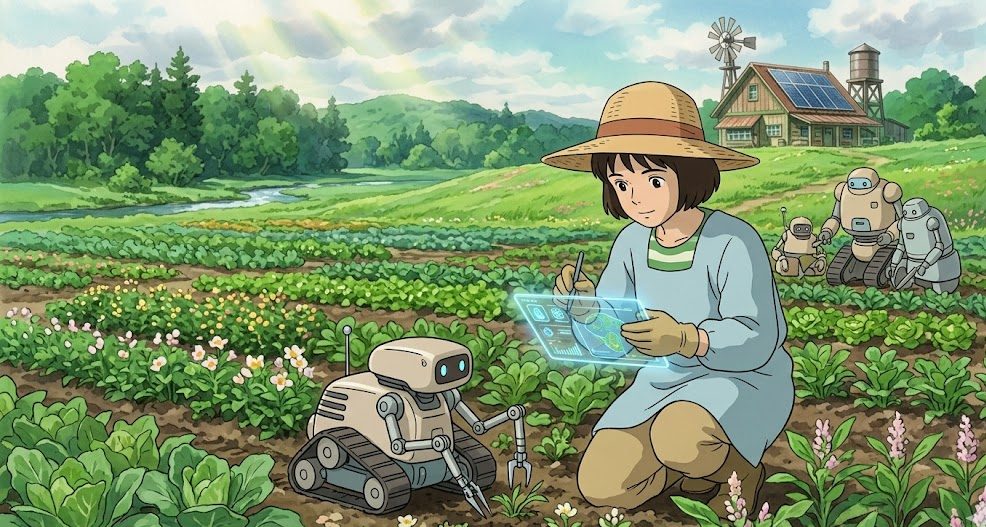
The era of traditional, intuition-based farming is rapidly fading. As we navigate through 2026, agriculture has undergone a radical transformation. The fusion of Artificial Intelligence (AI), the Internet of Things (IoT), and satellite imagery has shifted farming from a game of chance to a science of precision.
In this guide, we explore how you can leverage these cutting-edge tools to maximize yields, optimize resource consumption, and secure the future of your farm.
1. The Core of Smart Farming: Data-Driven Decisions
At its heart, smart farming is about granularity. Instead of treating an entire field as a single unit, precision agriculture treats every square meter according to its specific needs.
In 2026, the workflow is simple:
- Data Collection: IoT sensors embedded in the soil measure moisture, temperature, and nutrient levels in real-time.
- Processing: AI-powered cloud platforms analyze this data against hyper-local weather forecasts and historical crop performance.
- Action: The system pushes actionable insights directly to your smartphone, telling you exactly where and when to intervene.
2. The Essential Tech Stack for 2026
You don’t need to be a tech genius to upgrade your farm. Start with these three pillars:
- IoT Sensor Networks: These act as the eyes and ears of your farm. By monitoring soil moisture, you eliminate the guesswork of irrigation, saving up to 40% of water usage.
- Agricultural Drones (UAVs): Equipped with multispectral cameras, drones can detect crop stress or pest infestations long before they are visible to the human eye. In 2026, autonomous drone spraying is the gold standard for applying inputs only where they are needed, reducing chemical waste by up to 30%.
- Variable Rate Technology (VRT): Modern tractors and irrigation systems are now equipped with VRT. This allows machinery to automatically adjust the seed rate, fertilizer application, or water flow as it traverses different zones of a field based on soil fertility maps.
3. Predictive Analytics: Seeing Around Corners
One of the biggest shifts in 2026 is the move from reactive to predictive farming. AI models today can predict yield outcomes with high accuracy by analyzing satellite imagery and current climate trends.
- Pest Modeling: Instead of spraying preventive pesticides, AI tools now provide “Pest Risk Alerts” based on weather patterns and biological life cycles, helping you spray only when necessary.
- Market Intelligence: Integrated apps now provide real-time demand-supply data, suggesting optimal harvest times to ensure you sell when prices are highest.
4. Overcoming the “High Cost” Myth
A common concern for many farmers is the initial investment. However, the ecosystem in 2026 has matured to make technology accessible:
- As-a-Service Models: You no longer need to own expensive drones or sensor arrays. Many companies now offer “Drone-as-a-Service” or “Sensor-as-a-Service,” where you pay per acre/day.
- Return on Investment (ROI): Precision farming is not an expense; it is a capital investment. With reduced input costs (fewer fertilizers and pesticides) and significantly higher crop quality, most farmers see a full return on their technological investment within two to three harvest cycles.
5. Sustainability: Farming for the Future
Beyond profits, smart farming is the most powerful tool we have for climate resilience. By optimizing resources, we reduce the nitrogen runoff that pollutes our water systems and significantly lower the carbon footprint of our operations. In 2026, being a “smart farmer” is synonymous with being a “responsible steward of the land.”
Conclusion: Your Next Step
The transition to smart farming isn’t about replacing the farmer—it’s about empowering them. The wisdom gained through years of working the land is now complemented by tools that make that work more efficient, less exhausting, and vastly more profitable.
How to start today? Don’t try to digitize everything at once. Start with a soil monitoring system for one section of your farm. Once you see the difference in crop health and water usage, the path forward becomes clear. Precision is no longer a luxury; it is the blueprint for the modern harvest.