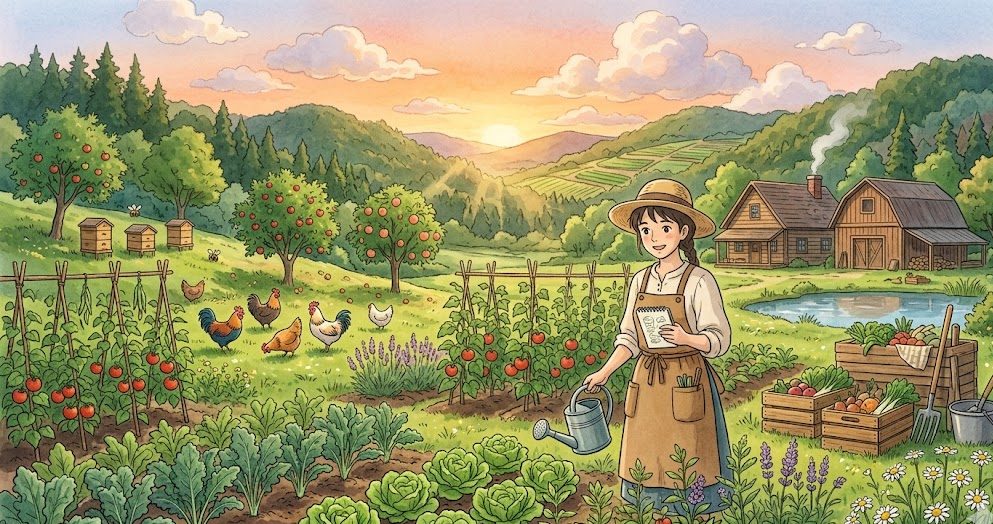
The landscape of modern agriculture is shifting. Gone are the days when a farm’s success was measured solely by the yield of a single monocrop. Today, the most resilient and profitable growers are those embracing diversified farming systems (DFS). By integrating a variety of crops, livestock, and management practices, farmers can buffer themselves against market volatility, combat the effects of climate change, and restore the very soil that sustains them.
However, transitioning to or managing a diversified farm requires a toolkit that goes beyond traditional agronomy. This guide explores the essential resources, strategies, and insights modern growers need to thrive in a diversified agricultural economy.
1. The Philosophy of Diversification: Why Now?
Diversification is not just a trend; it is a risk management strategy. In a globalized market, a price drop in a single commodity can bankrupt a specialized farm. Diversified farming operates on the principle of ecological synergy.
When you diversify, you create a biological backup system. If a pest destroys one crop, another may thrive. If the price of corn drops, perhaps the market for pasture-raised eggs or specialty berries is peaking. Beyond the economics, diversification is the cornerstone of Regenerative Agriculture, focusing on:
- Soil Health: Different root structures and nutrient needs prevent soil exhaustion.
- Biodiversity: Creating habitats for beneficial insects reduces the need for chemical pesticides.
- Water Retention: Diverse cover crops and perennial plantings improve the soil’s ability to hold water.
2. Digital Tools and Precision Ag Resources
Modern growers must leverage technology to manage the complexity of multiple enterprises. Managing five different crops is significantly more data-intensive than managing one.
- Farm Management Software (FMS): Tools like AgWorld or FarmLogs help track inputs, yields, and profitability across different plots. For diversified growers, look for software that allows for “enterprise accounting”—the ability to see exactly which specific crop or animal group is making money.
- GIS and Mapping: Utilizing Geographic Information Systems (GIS) allows farmers to map soil variations. This ensures that the right crop is planted in the right micro-climate of the farm.
- Decision Support Systems (DSS): Resources like the Climate FieldView help predict weather patterns and pest outbreaks, allowing diversified farmers to prioritize which tasks need immediate attention across their various operations.
3. Soil Health: The Ultimate Resource
In a diversified system, the soil is your most valuable employee. Modern growers are moving away from heavy tillage and synthetic fertilizers toward biological solutions.
Key Resources for Soil Management:
- The Haney Test: Moving beyond traditional N-P-K testing, the Haney Test measures soil biological activity. It tells you what nutrients are actually available to plants through microbial activity.
- Cover Crop Charts: Resources from organizations like the SARE (Sustainable Agriculture Research and Education) provide matrices on which cover crops fix nitrogen, which break up compaction, and which suppress weeds.
- Composting and Vermiculture: For small to mid-scale diversified farms, on-site waste cycling through high-quality compost can reduce input costs by up to 30%.
4. Market Diversification and Supply Chain Insights
A diversified farm requires a diversified sales strategy. Relying solely on a grain elevator or a single wholesale buyer limits your power.
- Direct-to-Consumer (DTC) Channels: Community Supported Agriculture (CSA) models, farmers’ markets, and online storefronts (like Barn2Door) allow growers to capture the full retail value of their products.
- Value-Added Processing: Turning raw cucumbers into pickles or berries into jam can significantly increase profit margins. Resources from local university extension offices often provide “Acidified Food” certifications and kitchen incubator contacts.
- Institutional Sales: Farm-to-school and farm-to-hospital programs are growing. These provide stable, high-volume contracts that can anchor a diversified farm’s income.
5. Financial Resources and Grants
Diversification often requires an initial capital layout—new seeds, different equipment, or fencing for livestock integration. Modern growers should look beyond standard bank loans.
- USDA NRCS Programs: The Environmental Quality Incentives Program (EQIP) provides financial and technical assistance to implement conservation practices that often go hand-in-hand with diversification.
- Agricultural Carbon Markets: For growers implementing no-till or cover cropping, companies like Indigo Ag or Nori offer payments for carbon sequestration.
- Microloans: Organizations like Kiva or specialized “slow money” investment groups focus specifically on supporting sustainable, diversified food systems that traditional banks might deem “too complex.”
6. Knowledge Networks: The Human Element
The “lone wolf” farmer is a myth of the past. The most successful modern growers are part of robust peer-to-peer learning networks.
- Extension Services: Land-grant universities remain a goldmine of free, localized research.
- Regenerative Agriculture Alliances: Groups like the Savanna Institute (focusing on agroforestry) or the Rodale Institute offer webinars, field days, and white papers on transition strategies.
- Podcasts and Webinars: In the cab of a tractor, many growers stay updated via podcasts like The Regenerative Agriculture Podcast or Farmer to Farmer. These provide “boots-on-the-ground” insights that textbooks often miss.
7. Overcoming the Challenges of Diversification
While the benefits are clear, the challenges are real. The primary hurdle is Labor and Expertise. Growing ten things well is harder than growing one thing perfectly.
Expert Tip: Start with “Adjacent Diversification.” If you grow corn, consider adding soy or wheat first. If you have an orchard, consider adding honeybees or poultry. Don’t jump from wheat to organic strawberries and dairy cattle in a single season.
The Complexity Trap: More enterprises mean more equipment and more specialized knowledge. To mitigate this, many modern growers utilize Equipment Sharing Cooperatives. Sharing a specialized no-till drill or a mobile poultry processing unit with three neighbors can make diversification financially feasible.
8. Conclusion: The Future is Multi-Faceted
The future of agriculture belongs to the adaptive grower. As climate patterns become more unpredictable and consumer demand for “transparent,” “local,” and “sustainable” food rises, diversified farming systems offer the most viable path forward.
By utilizing the digital tools, soil health resources, and financial programs available today, modern growers can move away from the “get big or get out” mentality and toward a “get smart and diversify” philosophy. Agriculture is no longer just about the harvest; it’s about managing a complex, beautiful, and profitable ecosystem.