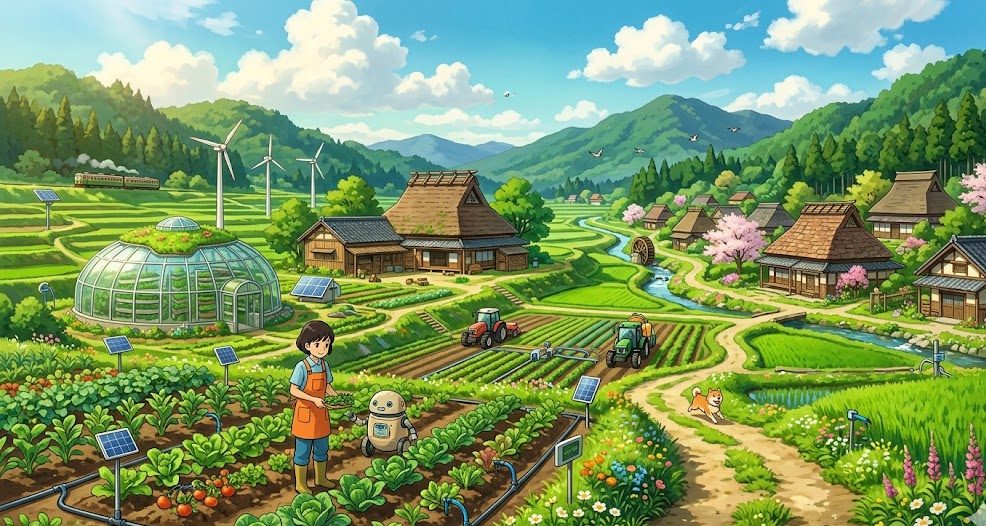
The global agricultural sector is standing on the brink of its fourth industrial revolution—AgTech 4.0. For centuries, farming was a profession dictated entirely by unpredictable weather, grueling manual labor, and historical guesswork. However, as the global population climbs toward an estimated 9.7 billion by 2050, traditional farming practices are hitting their ecological and physical limits.
To feed the world without destroying the planet, agriculture is undergoes a massive digital transformation. The Tomorrow Farm is no longer a concept of science fiction. It is a highly connected, data-driven ecosystem where artificial intelligence, autonomous machinery, biotechnology, and climate-controlled environments converge to produce higher yields with a fraction of the traditional resources.
1. Artificial Intelligence and Predictive Analytics
At the heart of the tomorrow farm sits artificial intelligence (AI). Machine learning algorithms are replacing guesswork with hyper-precise, data-driven decisions.
- Computer Vision for Crop Diagnostics: High-resolution cameras mounted on drones or tractors scan fields in real-time. AI models trained on millions of plant images can spot microscopic signs of fungal disease, nutrient deficiencies, or pest infestations days before they are visible to the human eye.
- Predictive Yield Modeling: By analyzing decades of historical weather logs, real-time satellite imagery, and localized soil sensors, AI platforms provide farmers with highly accurate harvest timelines and yield predictions, optimizing supply chains and preventing market waste.
2. Autonomous Machinery and Robotics
The image of a farmer spending twelve hours a day sitting on a diesel tractor is rapidly changing. Field robotics are tackling labor shortages and reducing the environmental footprint of heavy machinery.
Precision Weeding Drones and Robots
Traditional weed control involves spraying entire fields with chemical herbicides. Next-generation agricultural robots change this entirely. Using AI object recognition, these autonomous machines drive down crop rows and identify weeds individually. They destroy them using targeted, micro-bursts of lasers or ultra-precise mechanical micro-hoes, reducing chemical herbicide usage by up to 90%.
Autonomous Tractors and Swarm Farming
Major agricultural equipment manufacturers have rolled out fully autonomous, driverless tractors guided by hyper-precise GPS systems (RTK navigation) accurate down to the millimeter. Furthermore, the industry is moving toward swarm robotics—instead of using one massive, heavy tractor that compacts the soil, a fleet of small, lightweight autonomous robots work together to plant, monitor, and harvest crops efficiently.
+-----------------------------------------------------------------------+
|                     THE TOMORROW FARM ARCHITECTURE                     |
+-----------------------------------------------------------------------+
|                                                                       |
|   [ DATA SOURCE ]   ---> IoT Soil Sensors & Satellite Imagery         |
|                                                                       |
|   [ CORE ENGINE ]   ---> AI Cloud Platform (Predictive Analytics)     |
|                                                                       |
|   [ EXECUTION ]     ---> Autonomous Drone Sprayers & Field Robots     |
|                             (Ultra-targeted nutrient/pest delivery)   |
|                                                                       |
+-----------------------------------------------------------------------+
3. IoT Sensors and Hyper-Local Precision Farming
The Tomorrow Farm treats every single square meter of land as an individual management zone. This level of granular control is made possible by the Internet of Things (IoT).
- Sub-Surface Soil Probes: IoT sensors buried deep in the root zone constantly measure volumetric water content, electrical conductivity (salinity), and soil temperature. This data feeds directly into automated smart irrigation systems, which open valves to water only the specific sections of a field experiencing moisture stress.
- Livestock Biometrics: Smart collars and ear tags track cattle movement, body temperature, and rumination patterns. An AI system monitors this data to instantly alert the farmer if a specific animal is falling sick or entering its breeding window, preventing the spread of diseases across the herd.
4. Vertical Farming and Controlled-Environment Agriculture (CEA)
Innovation in agriculture is not just changing how we grow, but where we grow. Vertical farming detaches crop production from traditional land and weather dependencies.
By stacking crops vertically in indoor facilities, these farms optimize spatial efficiency. Utilizing advanced hydroponic, aquaponic, or aeroponic setups, vertical farms grow pristine greens and berries inside urban centers.
- Customized Light Recipes: Plants do not need the full spectrum of sunlight; they thrive under specific wavelengths. Vertical farms use specialized LED lighting systems to deliver customized “light recipes” (modulating blue, red, and far-red light) to accelerate photosynthesis, alter plant flavor profiles, and double growth speeds.
- Closed-Loop Water Recycling: Because water inside a CEA facility is captured, condensed, and reused continuously, vertical farms use up to 95% less water than traditional open-field farming setups.
Tech Integration: Comparing Today’s Farms vs. The Tomorrow Farm
The transition to high-tech agricultural infrastructure changes the operational baseline for commercial growers:
| Technological Feature | Standard Contemporary Farming | The Tomorrow Farm Model |
|---|---|---|
| Primary Resource Management | Uniform field application (Blanket watering & spraying). | Variable-rate precision application (Plant-by-plant care). |
| Weed & Pest Defense | Prophylactic chemical spraying across the entire acreage. | AI laser weeding and localized organic biopesticides. |
| Operational Labor | Highly dependent on seasonal, manual field labor. | Managed by autonomous fleets, drones, and remote operators. |
| Data Utilization | Written logs, physical inspections, and seasonal intuition. | Continuous IoT telemetry, cloud dashboards, and AI alerts. |
| Weather Dependency | Highly vulnerable to frost, heatwaves, and droughts. | Climate-insulated via CEA or mitigated by predictive AI models. |
Export to Sheets
5. Biotechnology and Crispr Gene Editing
While digital tech manages the farm environment, biotechnology optimizes the seed itself. The integration of CRISPR-Cas9 gene editing allows scientists to make highly precise tweaks to a plant’s existing DNA without introducing foreign genetic material.
- Drought and Salt Tolerance: Engineers are developing crop varieties capable of thriving in brackish water or surviving extended dry spells, unlocking previously unfarmable arid regions.
- Nutritional Enhancement: Biotech is boosting the vitamin, protein, and antioxidant profiles of staples like rice, wheat, and corn, addressing global micronutrient deficiencies directly at the food source.
Conclusion: The Horizon of Agricultural Innovation
The Tomorrow Farm represents a crucial shift in our relationship with nature. It transitions agriculture away from an extractive industry vulnerable to climate shocks into a highly optimized, sustainable, and predictable tech ecosystem. By deploying AI analytics, autonomous field robotics, hyper-local IoT networks, and vertical farming frameworks, modern ag-tech allows humanity to grow more food with fewer resources.
For tech entrepreneurs, agricultural investors, and forward-thinking farmers, adopting and developing these cutting-edge agricultural technologies is a lucrative business choice—and a foundational step toward securing global food security for generations to come.