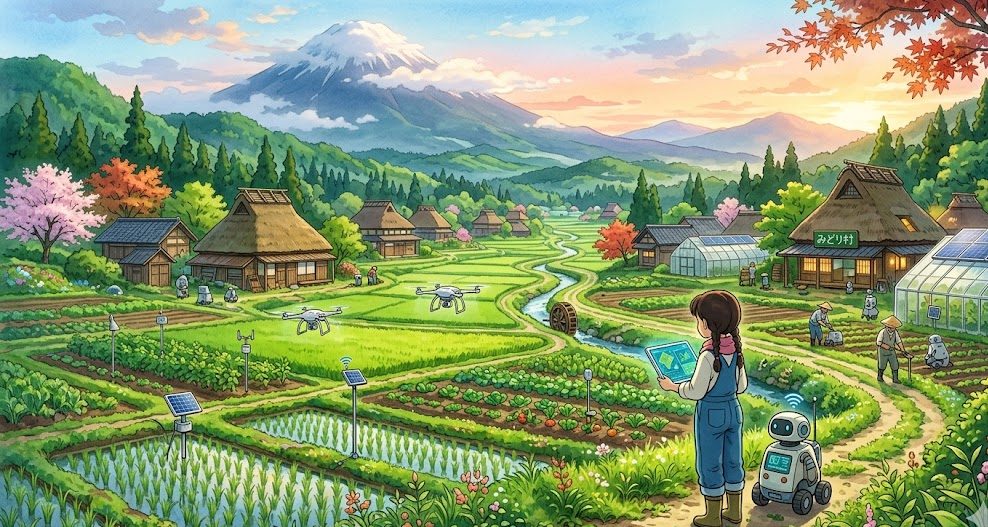
Introduction: The Digitization of the Agronomic Landscape
The global agricultural sector is undergoing a massive structural transformation. Traditional farming, which long relied on historical regional intuition and generalized seasonal calendars, is being systematically replaced by Data-Driven Agriculture. In an era marked by shifting climatic baseline models, volatile supply chains, and rising input costs for fuel and raw chemicals, efficiency is no longer just a metric for scaling profit—it is a baseline requirement for operational survival.
“Next-Gen Cultivation” refers to the integration of specialized technology with agronomic workflows, a discipline broadly categorized as Precision Crop Farming or Agriculture 4.0. The core objective of this modern methodology is to shift farm management from an macro-acreage perspective down to a micro-inch level. By collecting, analyzing, and deploying real-time data fields, modern agricultural enterprises can maximize crop output while minimizing chemical and resource overhead. This strategic guide details the practical, execution-level strategies required to run a data-driven crop cultivation business.
1. The Foundation of Precision: Advanced Soil Telemetry
Maximizing crop yield is impossible without deep, real-time insight into substrate composition and soil biology. For decades, standard practices involved manual, generalized soil sampling performed once every few seasons. This delay frequently led to either a severe under-application of essential trace elements or an expensive over-saturation of chemical fertilizers, which ultimately damages the soil’s natural micro-ecosystem.
Deploying Internet of Things (IoT) Sensor Fields
Modern precision cultivation establishes a continuous data feedback loop directly from the root zone:
- Multi-Depth Soil Sensors: Solar-powered IoT sensor nodes are permanently buried across specific management zones within the acreage. These nodes contain sensor clusters that measure electrical conductivity (EC), moisture percentages, and localized substrate temperatures at varying root depths.
- Cation Exchange Capacity (CEC) Calibration: Real-time EC monitoring gives the farm manager a direct look at nutrient availability. High EC readings can signal a buildup of unabsorbed fertilizer salts, prompting an immediate adjustment to the feeding schedule before root burn or nutrient lockout occurs.
By mapping these data streams to a centralized agricultural management software, operators can identify precise nutrient deficits across different soil zones, establishing a highly accurate baseline before planting begins.
2. Autonomous Aerial Monitoring: Ag-Drones and Multispectral Data
Open-field crop management leaves the plant canopy vulnerable to localized stress factors like insect infestations, fungal spores, and nitrogen deficiencies. Detecting these problems visually through human scouting often happens too late, after significant structural damage to the crop has already occurred.
Utilizing Remote Sensing Architecture
Unmanned Aerial Vehicles (UAVs), or ag-drones, have evolved from basic imaging tools into essential data-gathering instruments:
- Normalized Difference Vegetation Index (NDVI): Equipped with specialized multispectral cameras, automated drones scan entire crop fields on pre-programmed flight paths. These cameras capture light reflections across near-infrared and visible spectrums to calculate precise NDVI charts. Healthy plants absorb visible light and reflect infrared light; stressed plants do the reverse.
- Early Stress Detection: NDVI data maps identify localized drop-offs in chlorophyll absorption days before the physical plant leaves show signs of yellowing or wilting. This allows the farm manager to target individual zones for crop protection, stopping a pest outbreak or fungal infection before it can spread through the entire canopy.
3. Variable Rate Technology (VRT) and Fertigation Systems
Once soil telemetry and aerial data highlight field variations, the next step is executing a targeted resource response. Broadcasting water and raw chemical inputs uniformly across a field is inefficient and financially wasteful. Next-gen cultivation relies on Variable Rate Technology (VRT) to optimize chemical applications.
Automating the Resource Stream
- Prescription Map Integration: Data from NDVI drone flights and soil sensor readings are compiled to create a digital “prescription map.” Modern, GPS-guided tractors and autonomous sprayers read these maps in real time, automatically adjusting the flow valves to apply fertilizers or micro-nutrients strictly where the data indicates a deficiency.
- High-Precision Fertigation Loops: For farms utilizing drip irrigation, data-driven strategies are applied through automated fertigation. Instead of manual fertilizer applications, water-soluble Nitrogen, Phosphorus, and Potassium (NPK) ratios are injected directly into the irrigation water. This delivery is carefully calibrated to match the plant’s exact biological growth phase, keeping resource waste close to zero.
4. Controlled Environment Agriculture (CEA) and Spatial Maximization
For high-density operations or farms focusing on high-value specialty crops, open-field cultivation introduces uncontrollable climate variables. Data-driven strategies achieve their highest precision inside Controlled Environment Agriculture (CEA) facilities, such as commercial greenhouses and vertical indoor farms.
Total Environmental Manipulation
Inside a CEA facility, every single variable affecting plant photosynthesis is captured by data sensors and adjusted automatically:
- Micro-Climate Control: Automated climate systems monitor humidity, ambient temperature, and carbon dioxide (CO2) saturation parts per million (ppm). If CO2 levels drop during peak daytime photosynthesis, automated valves inject precise volumes to keep plant growth tracking at maximum velocity.
- Photosynthetically Active Radiation (PAR) Optimization: Artificial LED grow lights are calibrated to emit specific wavelengths tailored to the crop’s growth phase—blue spectrums for dense vegetative leaf growth, and red spectrums to trigger flowering and fruiting.
By taking soil out of the equation and using hydroponic or aeroponic setups, plants consume up to 95% less water than open-field rows. The absolute control over data variables eliminates seasonal weather risks, allowing for consistent, year-round harvest schedules.
5. Predictive Analytics and Regenerative Integration
Data-driven crop cultivation is not just about real-time reactive management; it relies heavily on forward-looking predictive modeling. Machine learning algorithms can process years of hyper-local weather history, global market pricing indexes, and current crop performance metrics to generate highly accurate operational forecasts.
Data-Backed Predictive Workflows:
- Granular Yield Prediction: By analyzing early-stage canopy density and root zone moisture data, predictive algorithms estimate total harvest volume weeks in advance. This allows the agribusiness to secure processing contracts, transport logistics, and cold-storage facilities ahead of time, preventing post-harvest losses.
- Regenerative Biological Loops: Precision farming uses data to transition away from heavy synthetic chemicals. Soil data guides the targeted application of organic inputs like liquid humic acids, biochar, and compost teas. This rebuilds the soil’s organic carbon structure, preserving long-term fertility and maintaining natural biological resistance to drought.
Conclusion: The New Era of Agricultural Agility
Next-Gen Cultivation represents a permanent shift from traditional manual labor routines to data-driven systems management. It requires treating every acre of agricultural land as an optimized asset that must be managed with absolute mathematical precision.
By combining the real-time insights of IoT soil telemetry and aerial remote sensing with automated VRT execution and predictive analytics, modern growers can build a resilient agricultural business. As market demands scale and resource costs fluctuate, the agricultural operators who leverage data to automate their systems will secure the highest yield efficiencies and long-term financial profitability.