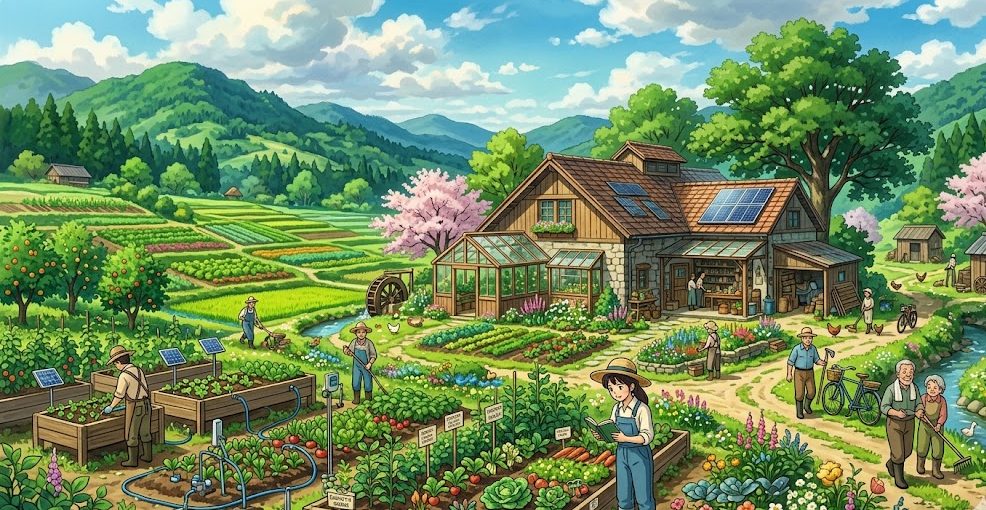
In an era where technology is reshaping every industry, agriculture is arguably experiencing the most profound transformation. We are moving away from traditional, labor-intensive methods toward an era of “intelligent” food production. The Farming Innovation Hub is not just a concept; it is the blueprint for the modern farmer who aims to merge age-old agronomic wisdom with cutting-edge digital intelligence.
Whether you are managing a small-scale farm or overseeing vast industrial fields, the goal remains the same: optimizing growth, increasing resilience, and ensuring consistent profitability through smart crop techniques.
The Modern Farm: A Hub of Innovation
The modern farm is evolving into a tech-enabled innovation hub. This transformation is driven by the need to combat resource scarcity, climate instability, and the rising demand for higher-quality produce. At the heart of this hub are three critical pillars: Data-Driven Decision Making, Automated Precision, and Climate-Smart Adaptation.
1. Data-Driven Growth Guides
Before planting a single seed, the modern farmer uses data to define the strategy. Growth guides are no longer just textbooks; they are dynamic, AI-powered systems.
- Predictive Modeling: By analyzing historical weather patterns, soil pH levels, and localized rainfall data, farmers can now predict the exact window for optimal planting and harvesting.
- Yield Forecasting: AI algorithms allow producers to estimate crop output weeks in advance, enabling better market negotiations and supply chain logistics.
2. Smart Crop Techniques: Precision from Seed to Harvest
Precision agriculture is the “gold standard” of the Farming Innovation Hub. It focuses on the principle of giving crops exactly what they need—nothing more, nothing less.
- Variable Rate Technology (VRT): Instead of applying fertilizer across an entire field equally, VRT systems use sensors to detect nutrient-poor patches. Fertilizer is applied only where the soil needs it, drastically reducing costs and preventing environmental degradation.
- Smart Irrigation Systems: Water is a precious commodity. IoT-enabled soil moisture sensors act as a “nervous system” for your crops. They communicate with automated irrigation valves to ensure that plants receive precise hydration based on real-time evaporation rates and deep-soil moisture readings.
- Robotic Weed Control: Chemical-heavy herbicide usage is being replaced by AI-powered robots. These machines use computer vision to identify weeds and remove them mechanically, keeping the crop rows clean without polluting the soil or harming beneficial pollinators.
The Technology Stack: Building Your Innovation Hub
To build a successful innovation hub on your farm, you don’t need to overhaul everything at once. Adoption should be modular and scalable.
| Technology Layer | Primary Function | Expected ROI |
| IoT Sensor Arrays | Real-time monitoring of soil and weather. | Reduced waste (water/fertilizer). |
| Drone Surveillance | Aerial mapping of crop health and stress. | Early pest and disease detection. |
| AI Farm Management App | Centralized data storage and analytics. | Improved operational efficiency. |
| Autonomous Machinery | Labor-free planting and harvesting. | Reduced long-term labor costs. |
Climate-Smart Strategies for Long-Term Resilience
An innovation hub is only as good as its ability to withstand the changing climate. Integrating “Climate-Smart” practices ensures that your farm remains productive regardless of external weather volatility.
No-Till and Conservation Agriculture
Disturbing the soil through heavy tilling releases carbon and destroys the natural microbial life that helps crops grow. By adopting no-till techniques, farmers can maintain soil structure, improve water infiltration, and increase organic carbon levels, which acts as a buffer against droughts.
Multi-Cropping and Agroforestry
Monoculture farming is high-risk. Innovation hubs are increasingly diversifying by planting multiple crops in the same area or integrating trees and shrubs into the agricultural landscape. This creates a balanced ecosystem where different species support each other, naturally suppressing pests and enriching the soil profile.
Overcoming the Challenges of Innovation
Transitioning to a “Farming Innovation Hub” mindset is not without hurdles. The primary barriers are often technological literacy and initial capital requirements.
- The Connectivity Gap: Many rural areas lack the high-speed internet required for cloud-based IoT solutions. However, the rise of Low-Power Wide-Area Networks (LPWAN) and satellite-based internet (like Starlink) is bridging this gap rapidly.
- The Knowledge Curve: Technology is only as effective as the person using it. Investing in professional training—or utilizing “Farm-as-a-Service” providers—can help bridge the expertise gap.
- Collaborative Scaling: You don’t have to go it alone. Small and medium-sized farmers are forming “Innovation Co-ops” to share the costs of expensive drone technology, data analysts, and automated harvesting machinery.
The Bottom Line: Farming as a High-Value Business
The Farming Innovation Hub is ultimately about shifting the perception of agriculture from a risky, low-margin endeavor to a high-value, technology-driven business. By leveraging smart crop techniques, you are essentially “de-risking” your farm.
When you know exactly what your soil needs, when the peak harvest time is, and how to protect your crops from environmental stressors, your farm becomes a predictable, efficient, and highly profitable machine.
Your Next Step
The future of food will be determined by those who act today. Whether you start by installing a few basic moisture sensors or by digitizing your entire planting schedule, every step toward innovation moves you closer to a more resilient, sustainable, and prosperous farming future.