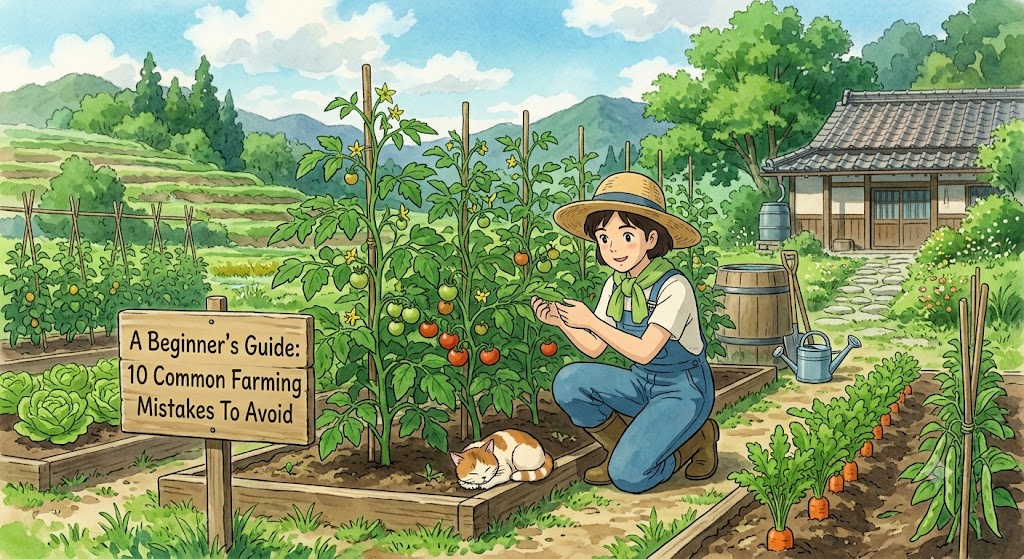
Farming is a rewarding profession, but it is also one of the most demanding. Every season presents new challenges, from unpredictable weather and changing market prices to pest outbreaks and soil fertility issues. While some factors are beyond a farmer’s control, many crop failures and financial losses occur because of avoidable management mistakes.
Both beginner and experienced farmers can make decisions that reduce productivity, increase production costs, or affect crop quality. Fortunately, understanding these common mistakes and learning how to prevent them can significantly improve farm performance. Small improvements in planning, soil management, irrigation, and crop care often lead to healthier harvests and higher profits.
This guide explains the most common farming mistakes and provides practical solutions to help farmers build productive and sustainable agricultural systems.
Starting Without a Proper Farm Plan
One of the biggest mistakes many farmers make is planting crops without careful planning.
A successful farming season begins with a clear strategy that considers available resources, expected costs, labor requirements, and market opportunities.
A good farm plan should include:
- Crop selection
- Budget estimates
- Planting schedule
- Irrigation plan
- Fertilizer requirements
- Pest management strategy
- Marketing options
Planning ahead reduces unexpected problems and improves decision-making throughout the season.
Choosing the Wrong Crop
Many farmers select crops simply because market prices appear attractive.
However, crops that are unsuitable for local conditions often produce disappointing yields.
Before planting, evaluate:
- Climate
- Rainfall
- Soil type
- Water availability
- Market demand
- Growing season
Growing crops that naturally suit local conditions usually results in better productivity and lower production costs.
Ignoring Soil Health
Healthy soil is the foundation of profitable farming.
Poor soil management leads to:
- Weak crop growth
- Nutrient deficiencies
- Poor water retention
- Increased disease pressure
- Lower yields
Improve soil naturally by:
- Applying compost
- Adding well-rotted manure
- Growing cover crops
- Practicing crop rotation
- Reducing unnecessary tillage
Healthy soil supports stronger plants throughout the growing season.
Skipping Soil Testing
Applying fertilizers without understanding soil conditions often wastes money.
Regular soil testing helps determine:
- Nutrient levels
- Soil pH
- Organic matter
- Fertility status
This information allows farmers to apply only the nutrients that crops actually require.
Using Poor-Quality Seeds
Low-quality seeds reduce productivity before the crop even begins growing.
Certified seeds generally provide:
- Better germination
- Uniform plant growth
- Strong disease resistance
- Higher yield potential
Investing in quality seeds is one of the most cost-effective farming decisions.
Planting at the Wrong Time
Every crop has an ideal planting window.
Planting too early or too late may expose crops to:
- Heat stress
- Frost
- Heavy rainfall
- Poor pollination
- Increased pest pressure
Following local agricultural recommendations improves crop establishment and productivity.
Overusing Fertilizers
More fertilizer does not always produce better crops.
Excessive fertilizer application can:
- Damage roots
- Reduce soil health
- Increase production costs
- Pollute water sources
- Encourage excessive vegetative growth
Balanced nutrient management based on soil testing produces healthier crops.
Poor Irrigation Management
Both overwatering and underwatering reduce crop performance.
Common irrigation mistakes include:
- Watering too frequently
- Allowing prolonged drought stress
- Ignoring soil moisture
- Poor drainage
Efficient irrigation methods such as drip systems and soil moisture monitoring improve water use while protecting crops.
Delaying Weed Control
Weeds compete aggressively with crops for:
- Water
- Nutrients
- Sunlight
- Growing space
Waiting too long to remove weeds allows them to spread rapidly.
Effective weed management includes:
- Mulching
- Crop rotation
- Cover crops
- Mechanical cultivation
- Early hand weeding
Early action reduces labor and protects crop growth.
Ignoring Pest and Disease Problems
Small pest infestations can quickly become major outbreaks if left untreated.
Farmers should regularly inspect fields for:
- Damaged leaves
- Insect activity
- Leaf spots
- Wilting plants
- Unusual discoloration
Early detection allows farmers to take timely corrective action before serious damage occurs.
Depending Too Much on Chemicals
Excessive use of pesticides and fertilizers can create long-term problems.
Possible consequences include:
- Soil degradation
- Water contamination
- Pest resistance
- Harm to beneficial insects
- Increased production costs
Integrated Pest Management (IPM) and natural soil improvement practices provide more sustainable alternatives.
Neglecting Crop Rotation
Growing the same crop every season gradually reduces soil fertility and encourages pests and diseases.
Crop rotation helps:
- Restore nutrients
- Improve soil health
- Break pest cycles
- Increase biodiversity
Including legumes naturally improves soil nitrogen levels.
Ignoring Weather Forecasts
Weather greatly influences farming success.
Monitoring forecasts helps farmers schedule:
- Planting
- Irrigation
- Fertilizer application
- Pest control
- Harvesting
Using weather information reduces production risks and improves field management.
Poor Record Keeping
Many farmers rely only on memory when managing their farms.
Keeping records of:
- Expenses
- Fertilizer applications
- Irrigation
- Harvest yields
- Market prices
helps evaluate profitability and improve future planning.
Good records support better business decisions.
Harvesting Too Early or Too Late
Harvest timing directly affects quality and income.
Early harvesting may reduce crop quality, while delayed harvesting increases the risk of:
- Weather damage
- Pest attacks
- Grain losses
- Reduced market value
Understanding crop maturity indicators improves harvest quality.
Ignoring Post-Harvest Management
Good production can still result in losses if harvested crops are handled improperly.
Important post-harvest practices include:
- Careful handling
- Proper drying
- Clean storage
- Pest protection
- Moisture control
Reducing post-harvest losses increases farm profitability.
Failing to Diversify Farm Income
Relying on one crop increases financial risk.
Diversification may include:
- Vegetables
- Fruits
- Livestock
- Beekeeping
- Herbs
- High-value cash crops
Multiple income sources provide greater financial stability.
Avoiding New Knowledge and Technology
Agriculture continues evolving through research and innovation.
Farmers who stop learning may miss opportunities to improve productivity.
Stay updated through:
- Agricultural training
- Demonstration farms
- Extension services
- Farming publications
- Digital farming tools
Continuous learning supports long-term success.
Sustainable Farming Prevents Future Problems
Many common farming mistakes become less severe when sustainable practices are adopted.
Helpful approaches include:
- Compost application
- Efficient irrigation
- Crop rotation
- Cover cropping
- Reduced tillage
- Biodiversity conservation
Healthy ecosystems naturally support healthier crops.
Conclusion
Every farmer makes mistakes, but successful farmers learn from them and continuously improve their management practices. Poor planning, unhealthy soil, incorrect crop selection, inefficient irrigation, delayed weed control, excessive fertilizer use, and weak record keeping are among the most common causes of reduced productivity. By recognizing these challenges early and adopting practical solutions, farmers can improve crop performance, reduce production costs, and build stronger agricultural businesses.
Long-term farming success depends on careful planning, healthy soil, efficient resource management, continuous learning, and sustainable practices. Small improvements made consistently each season often lead to healthier crops, higher yields, and greater profitability for years to come.
Frequently Asked Questions
1. What is the most common farming mistake?
Poor planning is one of the most common mistakes because it affects crop selection, budgeting, irrigation, fertilization, and marketing decisions.
2. Why is soil testing important before planting?
Soil testing identifies nutrient levels, soil pH, and fertility conditions, allowing farmers to apply fertilizers accurately and avoid unnecessary expenses.
3. How can farmers reduce production costs?
Improving soil health, using quality seeds, managing water efficiently, rotating crops, and monitoring pests early can significantly reduce farming costs.
4. Why should farmers keep farm records?
Farm records help track expenses, crop performance, irrigation schedules, fertilizer use, harvest yields, and profitability, making future planning easier.
5. How does sustainable farming help prevent common mistakes?
Sustainable farming improves soil health, conserves water, reduces pest pressure, increases biodiversity, and promotes long-term productivity while lowering dependence on expensive external inputs.