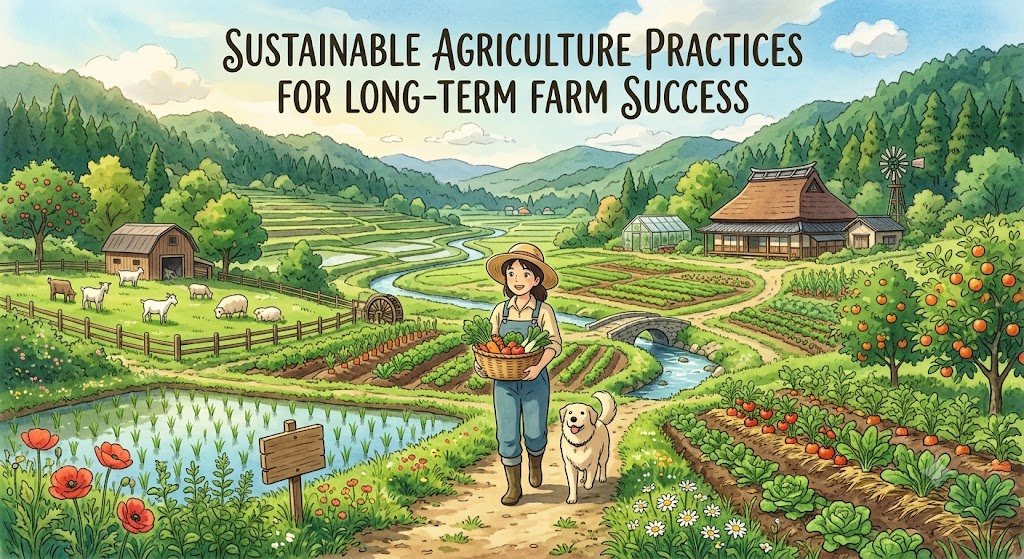
Agriculture is more than producing food—it is about protecting the land that makes food production possible. Around the world, farmers face growing challenges such as soil degradation, water shortages, unpredictable weather, rising production costs, and increasing demand for high-quality crops. These challenges have made sustainable agriculture one of the most important approaches to modern farming.
Sustainable agriculture focuses on producing healthy crops while preserving natural resources for future generations. Instead of exhausting the soil or relying heavily on chemical inputs, sustainable farming emphasizes efficient resource management, healthy ecosystems, and long-term productivity. Farmers who adopt sustainable practices often experience improved soil fertility, lower production costs, better crop quality, and greater resilience against climate change.
This guide explores practical sustainable agriculture practices that help farmers build productive, profitable, and environmentally responsible farming systems.
What Is Sustainable Agriculture?
Sustainable agriculture is a farming approach that balances productivity with environmental protection and economic viability.
Its primary goals are to:
- Maintain healthy soil
- Conserve water
- Protect biodiversity
- Reduce environmental pollution
- Improve crop productivity
- Support long-term farm profitability
Rather than focusing only on immediate yields, sustainable farming aims to keep land productive for decades.
Why Sustainability Matters in Farming
Healthy natural resources are essential for successful agriculture.
Unsustainable farming practices may lead to:
- Soil erosion
- Nutrient depletion
- Water pollution
- Declining biodiversity
- Increased pest problems
- Lower crop yields
- Higher production costs
Sustainable methods help prevent these problems while improving farm resilience.
Build Healthy Soil
Healthy soil is the foundation of sustainable farming.
Good soil supports:
- Strong root systems
- Better nutrient availability
- Improved water retention
- Beneficial microorganisms
- Higher crop yields
Farmers can improve soil naturally by:
- Applying compost
- Using well-rotted manure
- Growing cover crops
- Practicing crop rotation
- Reducing excessive tillage
Healthy soil remains productive even under challenging weather conditions.
Practice Crop Rotation
Growing the same crop repeatedly can reduce soil fertility and encourage pests and diseases.
Crop rotation improves farming by:
- Restoring nutrients
- Breaking pest cycles
- Improving soil structure
- Increasing biodiversity
- Reducing fertilizer needs
Including legumes in the rotation naturally adds nitrogen to the soil.
Use Cover Crops
Cover crops protect fields when commercial crops are not growing.
Popular cover crops include:
- Clover
- Rye
- Cowpea
- Mustard
- Oats
- Sunn hemp
Their benefits include:
- Preventing soil erosion
- Suppressing weeds
- Increasing organic matter
- Improving soil fertility
- Supporting beneficial microorganisms
Cover crops help maintain productive soils throughout the year.
Conserve Water Efficiently
Water conservation is becoming increasingly important as rainfall patterns become less predictable.
Sustainable irrigation practices include:
- Drip irrigation
- Rainwater harvesting
- Soil moisture monitoring
- Mulching
- Efficient irrigation scheduling
Using water wisely reduces costs while protecting local water resources.
Reduce Soil Erosion
Topsoil contains the highest concentration of nutrients and organic matter.
Protecting this valuable resource requires:
- Contour farming
- Terracing
- Windbreaks
- Permanent ground cover
- Mulching
- Cover cropping
Preventing erosion preserves long-term soil productivity.
Improve Soil Organic Matter
Organic matter plays a vital role in sustainable agriculture.
It improves:
- Soil fertility
- Water-holding capacity
- Nutrient cycling
- Microbial activity
- Soil structure
Excellent organic matter sources include:
- Compost
- Crop residues
- Animal manure
- Green manure
- Vermicompost
Regular additions gradually improve soil quality over time.
Use Integrated Pest Management
Integrated Pest Management (IPM) reduces dependence on chemical pesticides.
An IPM program combines:
- Crop monitoring
- Resistant varieties
- Biological control
- Crop rotation
- Healthy soil management
- Targeted pesticide use only when necessary
This balanced approach protects beneficial insects while maintaining crop health.
Encourage Biodiversity
A biologically diverse farm is often healthier and more resilient.
Biodiversity can be increased by:
- Growing multiple crops
- Planting flowering borders
- Protecting pollinators
- Maintaining trees
- Supporting beneficial insects
Healthy ecosystems naturally reduce pest problems and improve productivity.
Reduce Excessive Chemical Use
Responsible input management protects both crops and the environment.
Farmers can reduce chemical dependence by:
- Improving soil fertility naturally
- Monitoring nutrient needs
- Using biological pest control
- Applying fertilizers based on soil tests
- Following recommended application rates
Efficient input use lowers production costs while protecting natural resources.
Practice Conservation Tillage
Frequent deep plowing damages soil structure and accelerates erosion.
Reduced tillage offers several advantages:
- Better moisture retention
- Increased soil carbon
- Improved microbial activity
- Lower fuel costs
- Reduced erosion
Conservation tillage supports healthier soils over the long term.
Recycle Farm Waste
Agricultural waste can become a valuable resource.
Instead of burning residues, farmers can convert them into:
- Compost
- Organic mulch
- Vermicompost
- Livestock bedding
- Biogas
Recycling nutrients strengthens the farm ecosystem while reducing waste.
Plant Climate-Resilient Crops
Changing weather conditions require adaptable farming systems.
Climate-resilient crop varieties often provide:
- Better drought tolerance
- Improved heat resistance
- Strong disease resistance
- Stable yields
Selecting suitable varieties reduces production risks.
Use Renewable Energy on the Farm
Renewable energy helps reduce operating expenses while supporting environmental sustainability.
Examples include:
- Solar-powered irrigation
- Solar lighting
- Biogas systems
- Wind-powered equipment where appropriate
Renewable energy can provide reliable long-term savings.
Keep Accurate Farm Records
Good management begins with accurate information.
Farm records should include:
- Planting dates
- Crop varieties
- Fertilizer applications
- Irrigation schedules
- Pest management
- Harvest yields
- Production expenses
These records help farmers evaluate performance and improve future planning.
Support Pollinators
Many crops depend on pollinating insects for successful fruit and seed production.
Farmers can encourage pollinators by:
- Planting flowering species
- Reducing unnecessary pesticide use
- Preserving natural habitats
- Maintaining diverse vegetation
Healthy pollinator populations contribute to higher yields and better crop quality.
Continue Learning and Adapting
Agriculture continues evolving through research and innovation.
Farmers benefit from:
- Agricultural training
- Demonstration farms
- Extension services
- Online learning resources
- Farmer-to-farmer knowledge sharing
Continuous learning strengthens long-term farming success.
Economic Benefits of Sustainable Agriculture
Sustainable farming is not only good for the environment—it also supports stronger farm businesses.
Long-term advantages include:
- Lower production costs
- Improved soil fertility
- Higher crop quality
- Better water efficiency
- Reduced erosion
- Greater resilience during extreme weather
- Stable long-term productivity
Healthy natural resources reduce future farming expenses.
Common Mistakes That Reduce Sustainability
Some farming practices weaken long-term productivity.
Avoid:
- Continuous monocropping
- Excessive tillage
- Over-irrigation
- Burning crop residues
- Ignoring soil health
- Applying unnecessary fertilizers
- Overusing pesticides
Replacing these practices with sustainable alternatives protects both profits and the environment.
Conclusion
Sustainable agriculture is one of the most effective ways to secure long-term farm success while protecting the natural resources that support food production. Practices such as improving soil health, rotating crops, conserving water, reducing erosion, encouraging biodiversity, recycling farm waste, adopting integrated pest management, and using renewable energy help create productive and resilient farming systems. These methods not only improve crop yields but also reduce production costs and strengthen environmental sustainability.
As agriculture continues to face climate challenges and growing food demand, sustainable farming will become increasingly important for farmers of every size. By investing in healthy soil, efficient resource management, and continuous learning, farmers can build profitable businesses that remain productive for generations while contributing to a healthier environment.
Frequently Asked Questions
1. What is sustainable agriculture?
Sustainable agriculture is a farming approach that protects natural resources while producing healthy crops and maintaining long-term farm profitability.
2. How does crop rotation improve sustainability?
Crop rotation improves soil fertility, reduces pest and disease problems, enhances biodiversity, and lowers fertilizer requirements.
3. Why is soil health important in sustainable farming?
Healthy soil improves nutrient availability, water retention, root development, and microbial activity, resulting in stronger crops and better yields.
4. Can sustainable farming reduce production costs?
Yes. Efficient water management, healthy soils, crop rotation, composting, and integrated pest management often reduce long-term input costs.
5. What is the biggest benefit of sustainable agriculture?
The greatest benefit is maintaining productive farmland while protecting soil, water, biodiversity, and farm profitability for future generations.