Introduction
The agriculture industry is undergoing a remarkable transformation. Traditional farming methods that once relied heavily on manual labor and experience are now being enhanced by advanced technologies that make farming more efficient, productive, and sustainable. This modern approach, known as Smart Crop Farming, combines digital technology with agricultural practices to help farmers grow healthier crops while using fewer resources.
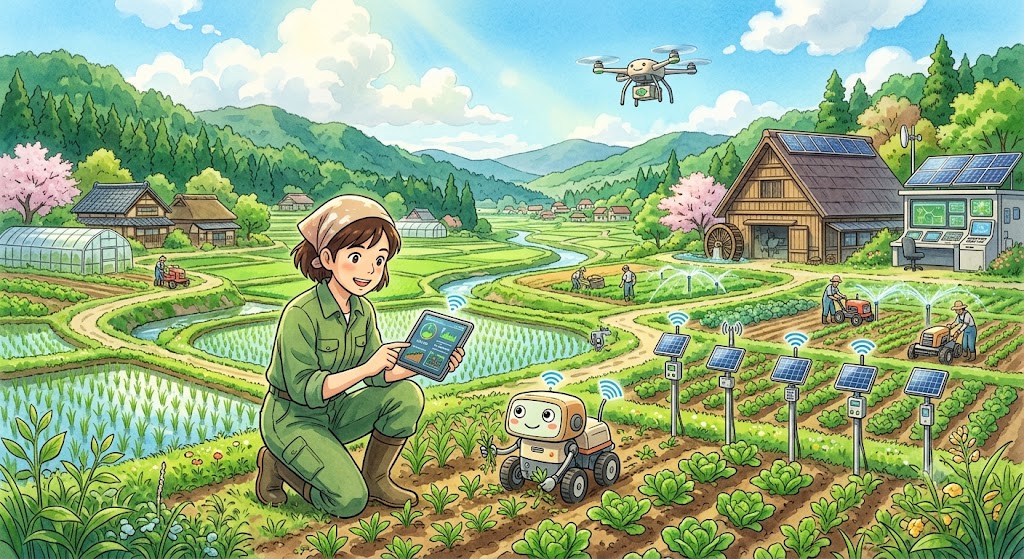
Smart crop farming integrates technologies such as Artificial Intelligence (AI), the Internet of Things (IoT), drones, GPS-guided machinery, satellite imagery, smart irrigation systems, and data analytics. These tools provide real-time information about soil conditions, crop health, weather patterns, and water requirements, allowing farmers to make accurate decisions throughout the growing season.
As the global population continues to increase and climate challenges become more severe, smart crop farming offers practical solutions that improve food production, reduce environmental impact, and increase farm profitability. It is becoming an essential part of modern agriculture and the future of sustainable food production.
The Evolution of Crop Farming
For centuries, farming depended mainly on traditional knowledge, seasonal weather patterns, and manual observation. While these methods helped feed generations, they often resulted in unpredictable harvests due to changing weather, pests, diseases, and limited access to information.
Today’s farmers have access to technologies that provide detailed insights into every stage of crop production. Instead of relying on guesswork, they can monitor their fields with precision and respond quickly to changing conditions. This shift from conventional farming to smart crop farming has significantly improved agricultural efficiency and productivity.
What Makes Crop Farming “Smart”?
Smart crop farming focuses on collecting accurate data and using technology to make informed farming decisions. Rather than treating an entire field the same way, farmers can manage each section according to its specific needs.
A smart farming system typically includes:
- Soil monitoring sensors
- Weather forecasting tools
- GPS-enabled farm equipment
- Agricultural drones
- AI-powered crop analysis
- Automated irrigation systems
- Farm management software
- Satellite imaging
These technologies work together to improve decision-making while reducing waste and increasing crop performance.
Core Technologies Behind Smart Crop Farming
Artificial Intelligence (AI)
Artificial Intelligence has become one of the most valuable tools in modern agriculture.
AI helps farmers:
- Detect plant diseases at an early stage
- Predict crop yields
- Analyze weather conditions
- Recommend fertilizer application
- Identify pest infestations
- Improve planting schedules
Machine learning continuously improves the accuracy of these recommendations by analyzing historical and real-time agricultural data.
Internet of Things (IoT)
IoT devices connect farms through smart sensors that continuously collect important environmental information.
These sensors monitor:
- Soil moisture
- Temperature
- Humidity
- Nutrient availability
- Water levels
- Crop growth conditions
Farmers receive instant updates on their mobile devices, allowing them to manage farms remotely.
Agricultural Drones
Modern drones provide farmers with an aerial view of their fields.
Drones are commonly used for:
- Crop health monitoring
- Field mapping
- Pest detection
- Fertilizer spraying
- Irrigation inspection
- Plant growth assessment
Large farms can be inspected within minutes, saving both time and labor.
Precision Irrigation
Water management is critical in agriculture.
Smart irrigation systems automatically adjust watering schedules based on:
- Soil moisture levels
- Weather forecasts
- Crop growth stages
- Temperature conditions
This ensures crops receive the right amount of water while conserving valuable resources.
GPS and Precision Agriculture
GPS-guided tractors and farming equipment increase operational accuracy.
Benefits include:
- Uniform planting
- Accurate fertilizer placement
- Reduced fuel consumption
- Lower operating costs
- Better field efficiency
Precision agriculture minimizes input waste while improving crop productivity.
Benefits of Smart Crop Farming
Increased Productivity
Farmers can grow more crops by using accurate information to optimize every farming activity.
Better Resource Utilization
Water, fertilizers, pesticides, and energy are applied only where needed, reducing unnecessary waste.
Improved Crop Quality
Continuous monitoring helps maintain healthier plants, resulting in higher-quality produce.
Lower Farming Costs
Automation reduces labor requirements while improving overall operational efficiency.
Environmental Protection
Reduced chemical usage and efficient water management contribute to sustainable farming practices.
Faster Decision-Making
Real-time information enables farmers to respond immediately to changing field conditions.
Smart Farming Throughout the Crop Cycle
Technology supports every stage of crop production.
Before Planting
- Soil testing
- Land mapping
- Seed selection
- Weather analysis
During Crop Growth
- Irrigation management
- Nutrient monitoring
- Weed detection
- Disease identification
- Pest control
Harvesting Stage
- Yield estimation
- Harvest scheduling
- Machinery optimization
- Crop quality monitoring
Post-Harvest
- Storage management
- Supply chain tracking
- Market analysis
- Digital inventory management
This complete technological support improves overall farm performance.
Sustainable Agriculture Through Smart Farming
One of the greatest advantages of smart crop farming is its contribution to environmental sustainability.
Sustainable practices include:
- Drip irrigation
- Precision fertilizer application
- Reduced pesticide use
- Organic soil improvement
- Crop rotation
- Water conservation
- Carbon footprint reduction
These methods protect natural resources while maintaining long-term agricultural productivity.
Challenges Farmers Face
Despite its many advantages, adopting smart farming technologies can present certain challenges.
Initial Investment
Modern equipment and digital systems require financial investment.
Technical Training
Farmers must learn how to operate advanced technologies effectively.
Internet Connectivity
Many smart farming systems rely on stable internet access, which may not always be available in rural areas.
Equipment Maintenance
Regular maintenance is necessary to ensure sensors, drones, and automated systems continue functioning efficiently.
Emerging Innovations
Agriculture continues to evolve rapidly through technological innovation.
Future developments include:
- Autonomous farming vehicles
- AI-powered harvesting robots
- Smart greenhouses
- Vertical farming
- Blockchain-based food traceability
- Satellite crop monitoring
- Climate-smart agriculture
- Digital farm twins
These innovations will make agriculture even more efficient and sustainable in the coming years.
Best Practices for Smart Crop Farming
Farmers can improve success by following these recommendations:
- Conduct regular soil analysis.
- Choose high-quality certified seeds.
- Install moisture sensors where possible.
- Use weather forecasting applications.
- Maintain digital farm records.
- Monitor fields regularly using drones or satellite imagery.
- Apply fertilizers based on soil requirements.
- Adopt efficient irrigation systems.
- Continue learning about modern agricultural technologies.
- Review farm performance after every growing season.
Why Smart Crop Farming Matters for the Future
With increasing global food demand, shrinking agricultural land, and unpredictable climate conditions, farming must become more efficient than ever before. Smart crop farming helps solve these challenges by combining technology with sustainable agricultural practices.
It enables farmers to produce more food using fewer resources while protecting soil, water, and biodiversity. As technology becomes more affordable and accessible, smart farming will continue to improve the lives of farmers and strengthen food security around the world.
Conclusion
Smart crop farming represents the next generation of agriculture. By integrating Artificial Intelligence, IoT devices, drones, GPS technology, smart irrigation, and precision farming techniques, farmers can improve productivity, reduce operational costs, and manage natural resources more responsibly.
Although adopting modern technologies requires investment and training, the long-term benefits far outweigh the challenges. Higher crop yields, better-quality produce, efficient resource management, and environmental sustainability make smart crop farming one of the most promising innovations in agriculture.
As agriculture continues to evolve, embracing smart crop farming will help farmers remain competitive, resilient, and prepared for future challenges while ensuring a secure and sustainable food supply for generations to come.