Introduction
Agriculture has always been the foundation of human civilization, providing food, raw materials, and employment for billions of people worldwide. However, as the global population grows and natural resources become more limited, traditional farming methods alone are no longer enough to meet future food demands. This has led to the rise of Advanced Agriculture, a modern approach that combines science, technology, innovation, and sustainable farming practices to improve agricultural productivity and efficiency.
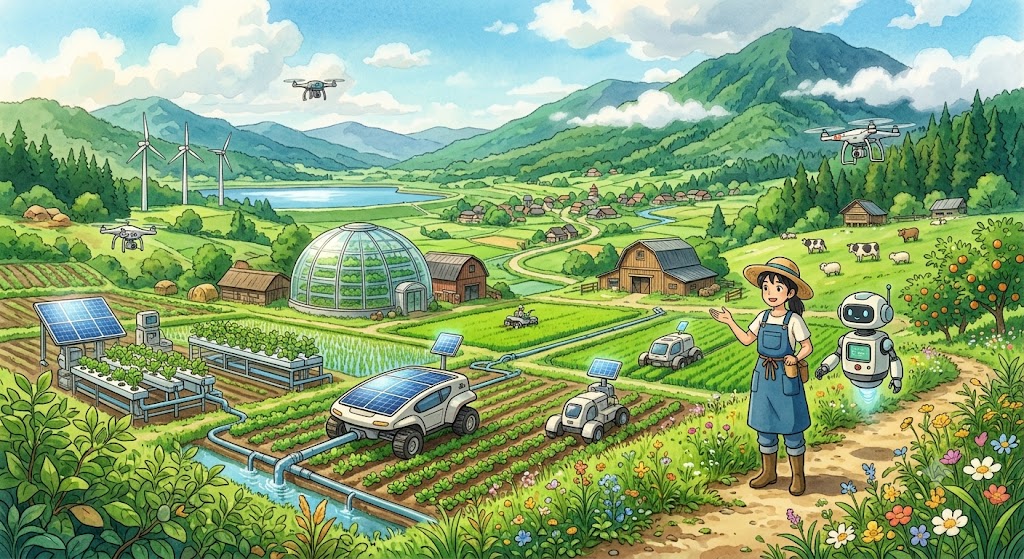
Advanced agriculture goes beyond conventional farming by integrating technologies such as Artificial Intelligence (AI), precision farming, smart irrigation, drones, robotics, biotechnology, satellite monitoring, and data analytics. These innovations help farmers make better decisions, reduce production costs, conserve resources, and produce healthier crops.
The future of agriculture depends on adopting advanced farming techniques that increase yields while protecting the environment. By embracing innovation, farmers can build more resilient and profitable farming systems capable of feeding future generations.
What is Advanced Agriculture?
Advanced agriculture refers to the use of modern technology, scientific research, and innovative farming methods to improve crop production, livestock management, and overall farm efficiency.
Unlike traditional agriculture, advanced farming focuses on data-driven decision-making, automation, and sustainable resource management. Farmers use digital tools to monitor crops, analyze soil conditions, predict weather patterns, and optimize irrigation and fertilization.
Key components of advanced agriculture include:
- Artificial Intelligence (AI)
- Precision agriculture
- Internet of Things (IoT)
- Agricultural drones
- Smart irrigation systems
- Robotics and automation
- Satellite imaging
- Farm management software
These technologies work together to increase productivity while minimizing environmental impact.
Why Advanced Agriculture is Important
Modern agriculture faces numerous challenges that require innovative solutions.
Some major challenges include:
- Climate change
- Water scarcity
- Soil degradation
- Rising production costs
- Labor shortages
- Pest and disease outbreaks
- Increasing food demand
Advanced agriculture provides practical solutions that help farmers produce more food using fewer resources while maintaining environmental sustainability.
Modern Technologies Transforming Agriculture
Artificial Intelligence (AI)
Artificial Intelligence helps farmers analyze agricultural data and make informed decisions.
AI applications include:
- Crop disease detection
- Weather prediction
- Yield forecasting
- Pest identification
- Fertilizer recommendations
- Smart irrigation management
Machine learning continuously improves farming recommendations based on historical and real-time information.
Internet of Things (IoT)
IoT devices connect farms through smart sensors.
These sensors monitor:
- Soil moisture
- Temperature
- Humidity
- Water levels
- Nutrient content
- Crop growth
Real-time monitoring allows farmers to respond quickly to changing field conditions.
Agricultural Drones
Drones have become an essential part of modern farming.
Farmers use drones for:
- Crop monitoring
- Field mapping
- Fertilizer spraying
- Pest detection
- Irrigation inspection
- Plant health assessment
Drone technology saves labor while improving farming accuracy.
Precision Agriculture
Precision agriculture uses GPS technology, satellite imagery, and digital mapping to manage fields more efficiently.
Benefits include:
- Reduced fertilizer waste
- Better irrigation efficiency
- Accurate seed placement
- Improved crop productivity
- Lower fuel consumption
Robotics and Automation
Agricultural robots perform repetitive farming tasks automatically.
Common applications include:
- Harvesting fruits
- Planting seeds
- Weed removal
- Livestock feeding
- Greenhouse automation
Automation improves efficiency while reducing labor requirements.
Sustainable Farming Practices
Advanced agriculture strongly supports environmentally responsible farming.
Popular sustainable practices include:
Crop Rotation
Growing different crops each season helps maintain soil fertility and reduce pest populations.
Organic Fertilization
Using compost and natural fertilizers improves soil health while reducing chemical dependency.
Water Conservation
Drip irrigation, rainwater harvesting, and moisture sensors reduce water consumption.
Integrated Pest Management
Combining biological, cultural, and mechanical pest control minimizes pesticide use.
Soil Conservation
Mulching, cover crops, and conservation tillage protect soil from erosion.
Benefits of Advanced Agriculture
Modern agricultural technologies offer numerous advantages.
Higher Productivity
Farmers can produce more crops using better farming practices and precise resource management.
Better Crop Quality
Continuous monitoring helps maintain healthier crops with improved market value.
Lower Production Costs
Automation and precision farming reduce unnecessary expenses.
Environmental Protection
Efficient use of water, fertilizers, and pesticides minimizes environmental pollution.
Improved Farm Management
Digital tools simplify planning, record keeping, and decision-making.
Increased Profitability
Higher yields and reduced costs improve farm income.
Challenges of Advanced Agriculture
Despite its advantages, advanced farming faces several challenges.
High Investment Costs
Modern machinery and digital systems require significant initial investment.
Technical Skills
Farmers need training to operate advanced technologies effectively.
Internet Access
Many rural areas still have limited digital infrastructure.
Equipment Maintenance
Advanced equipment requires regular maintenance and technical support.
Future Trends in Agriculture
Agriculture will continue evolving through innovation.
Future developments include:
- AI-powered autonomous farms
- Vertical farming systems
- Smart greenhouses
- Blockchain food traceability
- Climate-smart agriculture
- Renewable energy-powered farms
- Gene-edited crop varieties
- Fully automated harvesting machines
These innovations will improve productivity while reducing environmental impact.
Practical Tips for Farmers
Farmers can begin adopting advanced agriculture with these simple steps:
- Conduct regular soil testing.
- Use certified, high-quality seeds.
- Install efficient irrigation systems.
- Monitor weather forecasts before planting.
- Keep digital farm records.
- Learn precision farming techniques.
- Use drones or satellite imagery when possible.
- Reduce excessive fertilizer use.
- Practice crop rotation and soil conservation.
- Stay updated on emerging agricultural technologies.
The Economic Impact of Advanced Agriculture
Advanced agriculture contributes significantly to rural development and national economies. Higher productivity increases farmers’ incomes, creates employment opportunities, strengthens food supply chains, and supports agricultural exports. Technology-driven farming also attracts young entrepreneurs to agriculture, encouraging innovation and improving the long-term sustainability of the sector.
Governments, research institutions, and private companies continue investing in advanced agricultural solutions to ensure food security while protecting natural resources.
Conclusion
Advanced agriculture represents the future of farming by combining technology, scientific research, and sustainable agricultural practices. Through Artificial Intelligence, IoT, drones, robotics, precision farming, and smart irrigation, farmers can produce more food while conserving valuable resources and protecting the environment.
Although adopting modern technologies requires investment and continuous learning, the long-term benefits include higher productivity, better crop quality, lower production costs, and increased profitability. As agriculture continues to evolve, advanced farming will play a vital role in ensuring global food security, promoting environmental sustainability, and creating stronger agricultural communities for future generations.