Introduction
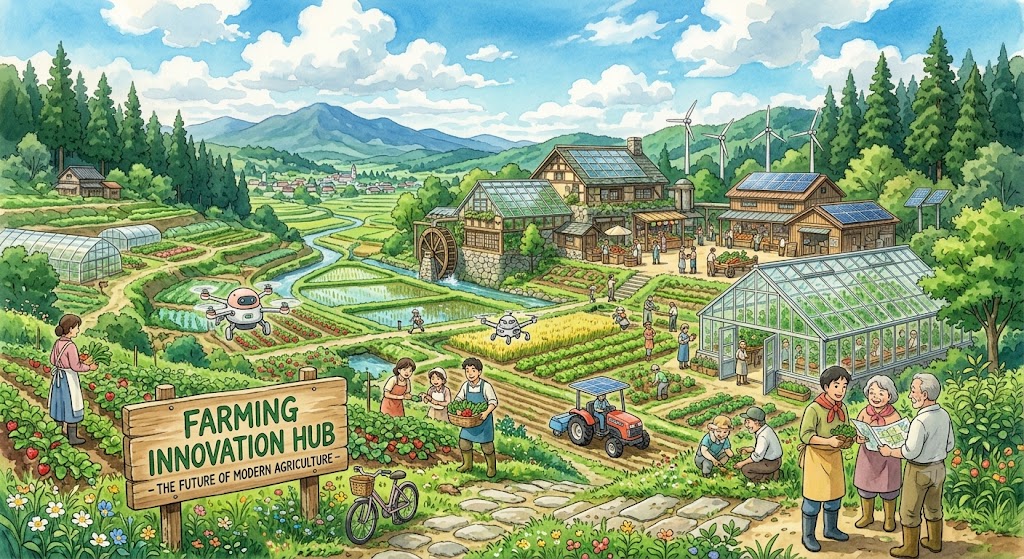
Agriculture is evolving faster than ever before. Farmers around the world are adopting new technologies, advanced machinery, sustainable farming methods, and digital solutions to increase productivity while protecting natural resources. At the center of this transformation is the concept of a Farming Innovation Hub—a collaborative platform where technology, research, education, and agriculture come together to develop smarter and more efficient farming practices.
A Farming Innovation Hub is more than just a research center. It is a place where farmers, agricultural scientists, startups, universities, technology companies, and policymakers work together to solve agricultural challenges. These hubs promote innovation by testing new farming techniques, developing smart agricultural tools, and providing training to farmers.
As climate change, population growth, and food security become global concerns, farming innovation hubs are playing a critical role in building a sustainable and resilient agricultural future.
What is a Farming Innovation Hub?
A Farming Innovation Hub is an ecosystem designed to encourage agricultural innovation through research, technology, collaboration, and education. It helps bridge the gap between scientific discoveries and practical farming applications.
Instead of relying only on traditional methods, farmers can access modern solutions that improve crop production, reduce costs, and increase farm efficiency.
A typical innovation hub may include:
- Agricultural research centers
- Technology demonstration farms
- Training facilities
- Startup incubation programs
- Digital farming laboratories
- Smart irrigation projects
- Soil testing services
- Crop advisory platforms
These resources help farmers adopt innovative practices that improve productivity and sustainability.
Why Farming Innovation Hubs Matter
Agriculture faces numerous challenges that require innovative solutions.
Some of these challenges include:
- Climate change
- Water shortages
- Soil degradation
- Pest and disease outbreaks
- Labor shortages
- Rising production costs
- Increasing global food demand
Innovation hubs provide farmers with access to modern technologies and expert guidance, helping them overcome these issues more effectively.
Core Objectives of a Farming Innovation Hub
Every farming innovation hub focuses on improving agriculture through practical and sustainable solutions.
Encouraging Research
Researchers continuously develop improved crop varieties, better farming methods, and environmentally friendly technologies.
Supporting Farmers
Innovation hubs provide technical support, workshops, demonstrations, and expert advice to help farmers improve productivity.
Promoting Technology
Farmers learn how to use modern tools such as drones, sensors, Artificial Intelligence, and automated machinery.
Improving Sustainability
Innovation hubs encourage farming practices that conserve water, protect soil health, and reduce environmental pollution.
Technologies Driving Agricultural Innovation
Modern innovation hubs introduce farmers to advanced agricultural technologies.
Artificial Intelligence (AI)
AI helps farmers analyze weather patterns, monitor crop health, detect diseases, and optimize irrigation schedules.
Benefits include:
- Better crop management
- Improved yield prediction
- Faster disease detection
- Smarter resource allocation
Internet of Things (IoT)
Smart sensors continuously monitor field conditions.
IoT devices collect information about:
- Soil moisture
- Temperature
- Humidity
- Water usage
- Nutrient levels
Real-time monitoring allows farmers to respond quickly to changing conditions.
Agricultural Drones
Drones have become valuable tools for crop monitoring.
They help farmers:
- Inspect fields
- Detect crop stress
- Monitor irrigation
- Spray fertilizers
- Apply pesticides
- Create digital field maps
Drone technology improves efficiency while reducing labor requirements.
Smart Irrigation
Innovation hubs promote efficient irrigation systems that use sensors and weather data to deliver water only when needed.
This approach conserves water while supporting healthy crop growth.
Precision Agriculture
Precision farming combines GPS, satellite imagery, and digital mapping to manage fields with greater accuracy.
Farmers can:
- Plant more efficiently
- Reduce fertilizer waste
- Apply pesticides only where necessary
- Improve overall productivity
Services Offered by Farming Innovation Hubs
Innovation centers provide numerous services for farmers.
Soil Testing
Laboratories analyze soil quality and recommend proper nutrient management.
Crop Advisory
Experts guide farmers on crop selection, pest control, irrigation, and harvesting practices.
Farmer Training
Workshops teach modern farming techniques and digital agriculture skills.
Technology Demonstrations
Farmers observe new equipment and technologies before making investments.
Startup Support
Entrepreneurs receive guidance for developing innovative agricultural products and services.
Benefits for Farmers
Joining a farming innovation hub offers many advantages.
Increased Productivity
Modern technologies improve crop yields and overall farm efficiency.
Reduced Production Costs
Efficient use of water, fertilizers, and pesticides lowers operational expenses.
Better Decision-Making
Data-driven farming enables more accurate management throughout the growing season.
Higher Farm Income
Improved productivity and better crop quality increase profitability.
Continuous Learning
Farmers stay updated with the latest agricultural developments and best practices.
Sustainable Farming Through Innovation
Environmental sustainability is a major priority for farming innovation hubs.
Recommended practices include:
- Organic farming
- Crop rotation
- Water conservation
- Drip irrigation
- Rainwater harvesting
- Compost application
- Renewable energy
- Precision fertilizer management
These methods improve long-term soil health while protecting natural ecosystems.
Challenges Faced by Innovation Hubs
Although innovation hubs provide many benefits, they also face challenges.
Funding Requirements
Developing research facilities and modern technologies requires significant investment.
Farmer Awareness
Some farmers may be unfamiliar with advanced agricultural technologies.
Technology Costs
Modern equipment can be expensive for small-scale farmers.
Digital Infrastructure
Reliable internet and electricity are essential for many smart farming systems.
Future of Farming Innovation Hubs
Agricultural innovation will continue expanding as technology advances.
Future developments may include:
- AI-powered autonomous farms
- Robotic harvesting systems
- Climate-smart agriculture
- Digital twin farming models
- Blockchain-based food traceability
- Vertical farming
- Smart greenhouses
- Advanced biotechnology
Innovation hubs will remain essential in helping farmers adopt these new technologies successfully.
Practical Tips for Farmers
Farmers interested in benefiting from agricultural innovation should:
- Attend agricultural training programs regularly.
- Conduct routine soil testing.
- Use certified seeds and quality inputs.
- Install efficient irrigation systems.
- Monitor weather forecasts before planting.
- Keep digital farm records.
- Learn about precision farming tools.
- Explore government support for agricultural technology.
- Network with agricultural experts and fellow farmers.
- Continuously adopt sustainable farming practices.
The Growing Role of Innovation in Agriculture
Innovation is no longer optional—it has become a necessity for modern farming. As agricultural challenges become more complex, farmers need access to knowledge, technology, and practical solutions that improve efficiency without harming the environment.
Farming innovation hubs create an ecosystem where ideas become real-world solutions. By connecting research institutions, technology developers, and farming communities, these hubs accelerate the adoption of smarter agricultural practices that benefit both producers and consumers.
Conclusion
Farming Innovation Hubs are transforming agriculture by bringing together technology, research, education, and practical farming experience. They empower farmers with modern tools, expert guidance, and sustainable techniques that improve productivity, reduce costs, and protect natural resources.
From Artificial Intelligence and smart irrigation to drones, precision agriculture, and digital farm management, innovation hubs help farmers embrace the future of agriculture with confidence. As global food demand continues to rise and environmental challenges become more significant, these hubs will play an increasingly important role in building a resilient, productive, and sustainable agricultural sector for generations to come.