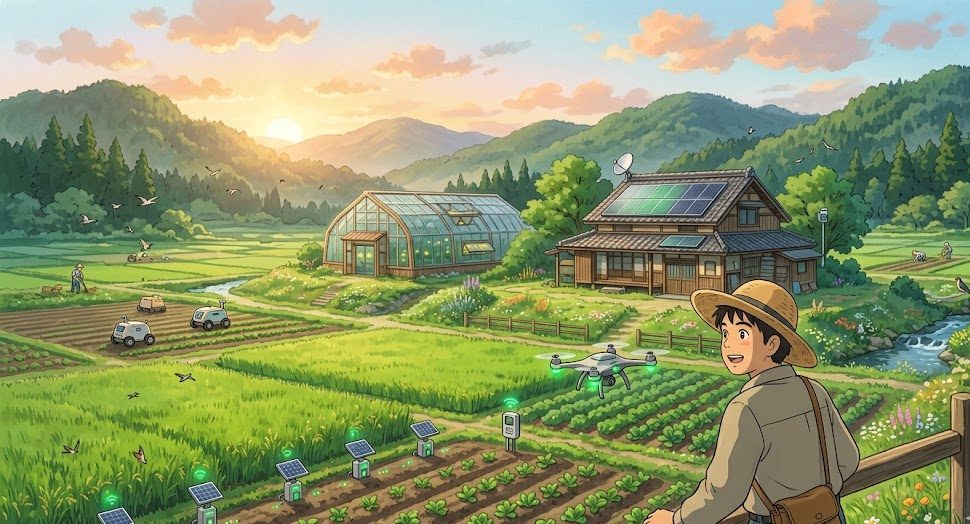
Introduction: The Agricultural Tech Revolution
The year 2026 marks a significant turning point in agricultural history. We are no longer just talking about tractors and irrigation; we are in the era of Smart Farming or Agriculture 4.0. Just as the internet changed how we do business, Artificial Intelligence (AI), Internet of Things (IoT), and Drones are changing how we grow food. This article explores the cutting-edge categories of modern agriculture that every progressive farmer needs to know about.
1. Precision Agriculture: Managing by the Inch, Not the Acre
The traditional method of farming treats an entire field as a single unit. Precision farming flips this. By using GPS, sensors, and satellite imagery, farmers can now monitor the exact health of every square meter of their land.
- Variable Rate Technology (VRT): Instead of spraying fertilizer across the whole field, VRT allows machinery to apply it only where the soil specifically needs it.
- Economic Impact: This reduces fertilizer wastage by up to 30%, saving massive costs while preventing soil degradation.
2. The Rise of Ag-Drones (The Sky Watchers)
Drones are arguably the most visible sign of the tech revolution in farming. By 2026, drones have become as common as traditional sprayers.
- Crop Monitoring: Drones equipped with multispectral cameras can detect plant stress, diseases, or hydration levels long before the human eye can see them.
- Automated Spraying: Drone swarms can cover hectares of land in minutes, performing targeted spraying of pesticides or liquid nutrients without the need for manual labor, reducing human exposure to chemicals.
3. Greenhouse & Vertical Farming: Producing More in Less Space
With urban land becoming expensive and rural land being converted for housing, Controlled Environment Agriculture (CEA) is booming.
- Vertical Farming: Using hydroponics (growing plants in nutrient-rich water) and aeroponics, farmers are stacking crops vertically in indoor facilities. This system uses 95% less water than traditional farming.
- Year-Round Production: Since the environment is controlled, crops like strawberries, herbs, and exotic vegetables can be grown 365 days a year, regardless of the outside climate.
4. IoT and Sensor Networks: The Farm That Talks
Internet of Things (IoT) sensors are the “eyes and ears” of the modern farm. These small devices are buried in the soil or placed around the farm to collect real-time data.
- Soil Moisture Sensors: These talk directly to the irrigation system. When the soil moisture hits a certain threshold, the water turns on automatically. No human intervention needed.
- Livestock Monitoring: Smart collars for cattle and goats track their location, health, and even reproductive cycles, sending alerts to the farmer’s smartphone.
5. AI-Driven Analytics: The Brain of the Farm
Data is useless unless you analyze it. AI models in 2026 can predict weather patterns with granular accuracy for a specific village, identify plant pests from a photo, and even recommend the best time to sell the harvest based on global market trends.
- Predictive Yield: Farmers can now predict how much harvest they will get weeks in advance, allowing them to book transportation and storage facilities in advance.
6. The Regenerative Farming Renaissance
Technology is not just about machines; it is also about returning to the roots. Regenerative farming focuses on soil health as the ultimate asset.
- Cover Cropping: Keeping the soil covered with plants year-round prevents erosion and traps carbon.
- No-Till Farming: By avoiding turning the soil too much, farmers maintain the complex network of fungi and microorganisms that naturally nourish the plants.
How to Start Integrating Smart Farming?
You don’t need a million dollars to start. The journey to smart farming is incremental:
- Digitize Your Records: Start by keeping a log of your farm expenses, yields, and soil test results on a simple mobile app.
- Start Small with Sensors: Investing in a basic soil-moisture sensor can be the first step towards water efficiency.
- Join Farmer Collectives: Tech is cheaper when farmers pool their resources. Join a cooperative to share the cost of drones or expensive machinery.
The Challenges Ahead
Despite the promise, two hurdles remain:
- Digital Literacy: The need for simplified training programs for farmers to use these tools effectively.
- Initial Capital: Some tech, like AI-integrated drones, still has high upfront costs. Government subsidies and farmer-centric tech-leasing models are the solution.
Conclusion: A Brighter Future
Agriculture in 2026 is becoming a high-tech profession that demands knowledge, data management, and strategic thinking. While the technology is exciting, the goal remains the same as it has been for thousands of years: to nurture the land so it can nurture us. Smart farming is not about replacing the farmer; it is about giving the farmer superpowers to feed a growing population.