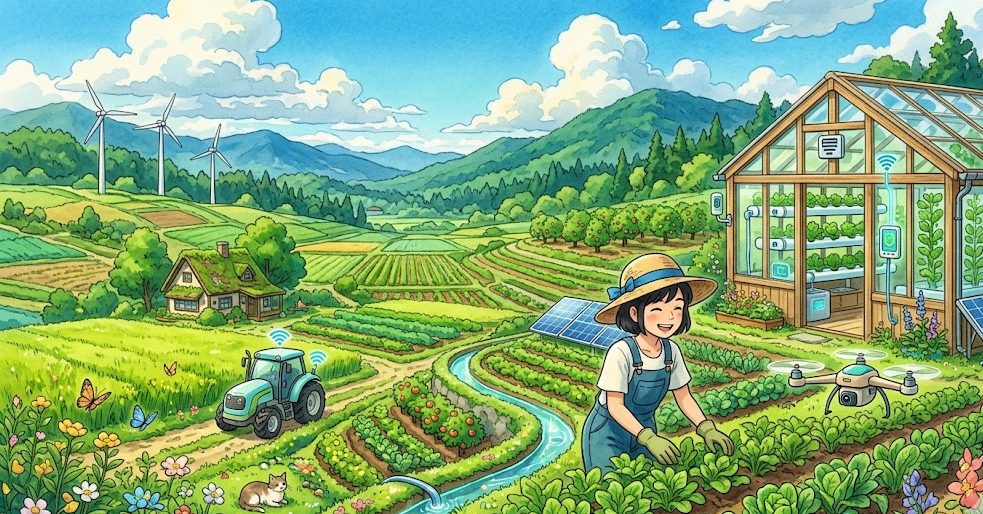
Agriculture, the oldest profession in human history, is currently undergoing its most significant transformation since the Industrial Revolution. We are entering the era of Modern Agriculture Mastery, a landscape where tradition meets cutting-edge innovation. For today’s farmer, the goal is no longer just about harvesting crops; it is about managing a high-tech, data-rich ecosystem that balances growth with long-term sustainability.
In this guide, we dive deep into how you can transition your farm into a smart, profitable enterprise by leveraging technology, precision practices, and modern management solutions.
1. The Pillar of Innovation: Smart Farming Solutions
Smart farming is the integration of Information and Communication Technologies (ICT) into the farm lifecycle. It is about removing the guesswork from your daily operations.
Precision Agriculture
Precision agriculture is the practice of managing field variability to improve crop performance. Instead of treating your entire field as a single unit, precision tech allows you to manage it zone-by-zone.
- Variable Rate Technology (VRT): Use sensors to map soil nutrients and apply fertilizer exactly where it is needed, at the exact concentration required. This reduces input waste by up to 20–30%.
- Automated Irrigation: Smart sensors placed in the root zone monitor moisture levels in real-time, automatically triggering irrigation systems to ensure optimal water use. This prevents over-watering, which is a leading cause of soil leaching and crop disease.
The Role of IoT and Drones
Internet of Things (IoT) devices—such as soil pH sensors, temperature probes, and humidity trackers—provide constant, live updates to your smartphone. When paired with drone imagery, you can identify “stressed” crop patches weeks before they show up to the naked eye, allowing for early, targeted interventions.
2. Sustainable Growth: Balancing Yield and Ecology
Innovation is useless if it degrades the very resource it relies on: the soil. True agricultural mastery lies in achieving high growth while regenerating the environment.
The Biological Shift
Modern mastery involves replacing harsh synthetic chemicals with biological inputs.
- Bio-Stimulants and Bio-Pesticides: These products, often derived from natural sources like seaweed, beneficial bacteria, or neem, bolster a plant’s natural immunity. A stronger plant is naturally resistant to pests and pathogens, meaning you don’t need to rely on toxic chemicals to keep your yields high.
- Regenerative Soil Practices: Practices such as no-till farming, cover cropping, and complex crop rotation are essential. These methods trap carbon in the soil, increase water retention, and foster the microbial life necessary to unlock soil-bound nutrients.
Closing the Loop
Think of your farm as a closed-loop system. Use livestock to produce fertilizer, utilize crop waste to create compost, and use renewable energy sources (like solar-powered pumps) to run your infrastructure. This lowers your dependency on external, price-volatile markets and increases your bottom-line profit.
3. Financial Mastery: Transforming Your Farm into a Business
Many farmers work incredibly hard but struggle to see profit because they manage their farm as a lifestyle rather than a business. Modern agriculture requires a “CEO Mindset.”
Digital Financial Records
You cannot optimize what you do not measure. Keep a rigorous digital ledger of:
- Cost-per-Acre: Track every single input, including seed quality, fuel, labor, and water.
- Market Trend Analysis: Use digital tools to track the price fluctuations of your crops. Sometimes, waiting two weeks to harvest can result in a significantly higher market price.
- Value-Added Processing: The most profitable farms aren’t just selling raw grains or fruits. They are drying, grading, packaging, or processing them into secondary goods. Moving one step up the supply chain often doubles or triples your profit margin.
Scaling Through Data
Use your historical data to predict future performance. By comparing yield logs from the last three years against your input records, you can identify the exact combination of seeds, nutrients, and timing that yields your highest ROI.
4. Overcoming Implementation Barriers
The transition to “Smart Farming” can feel overwhelming. The key is to start small:
- Phase 1: Digitization. Start by logging all your activities in a spreadsheet or a simple farm management app.
- Phase 2: Targeted Tech. Invest in one piece of technology—like an automated irrigation controller or a soil sensor—and master it for one crop cycle.
- Phase 3: Integration. Once you are comfortable, link your financial tracking to your biological performance data.
Conclusion: The Path Forward
Modern Agriculture Mastery is not a destination; it is a commitment to continuous improvement. By blending the precision of AI and IoT with the foundational wisdom of regenerative biology, you create a farm that is not just productive today, but resilient for decades to come.
The future belongs to the farmer who embraces the data, nurtures the soil, and runs the farm like the complex, high-performance business that it is.
Frequently Asked Questions (FAQ)
Q: Is “Smart Farming” only for large-scale corporate farms? A: Absolutely not. While large farms have more capital, small-scale farmers benefit more from “smart” tools because their margins are tighter. Simple tech, like smartphone-connected weather sensors, provides a massive competitive advantage for small farmers.
Q: How do I know which technology to invest in first? A: Identify your biggest “bottleneck.” Is it water loss? Is it high fertilizer costs? Is it pest damage? Choose the technology that addresses your biggest expense first to get the fastest Return on Investment (ROI).
Q: Can organic methods really compete with conventional yields? A: Yes, provided the system is managed correctly. High yields in organic systems come from superior soil biology and intensive management rather than chemical “boosters.” It takes a transition period of 2–3 years, but the long-term results are more stable and higher in quality.