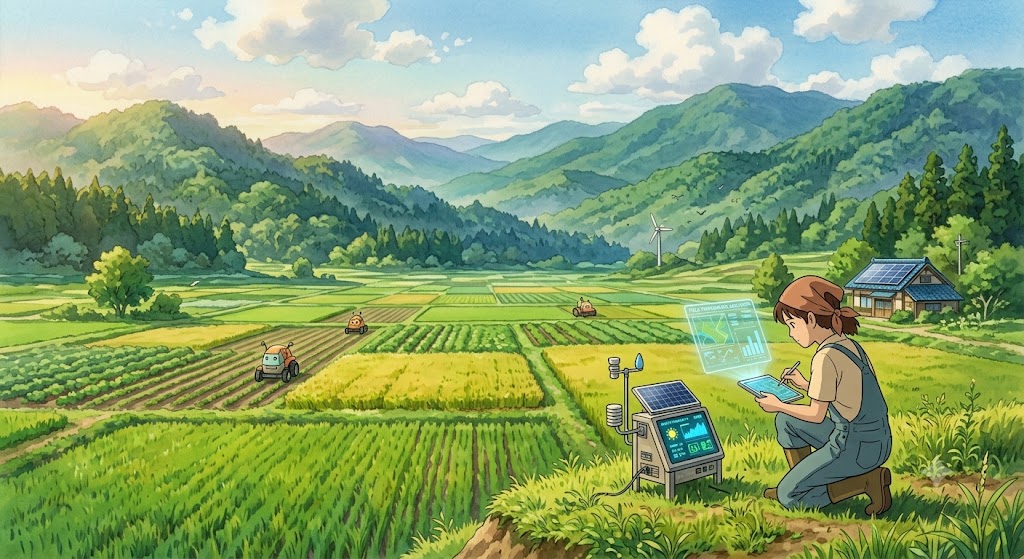
Modern agriculture is rapidly evolving from traditional experience-based decision-making to a more precise and information-driven approach. As farmers face increasing pressure to improve productivity, reduce costs, conserve resources, and adapt to changing environmental conditions, data has become one of the most valuable tools in modern farming.
Data-driven farming uses information collected from fields, equipment, weather systems, and crop monitoring technologies to support better agricultural decisions. Rather than relying solely on observation and historical practices, farmers can use accurate data to identify problems early, optimize resource use, and maximize crop performance.
By integrating technology with agricultural knowledge, data-driven farming helps improve efficiency, profitability, and sustainability across farming operations.
Understanding Data-Driven Agriculture
Data-driven farming involves collecting, analyzing, and applying information to improve agricultural management.
Sources of farm data may include:
- Soil sensors
- Weather stations
- Satellite imagery
- Drones
- GPS systems
- Farm machinery
- Yield monitors
- Irrigation systems
This information helps farmers understand field conditions more accurately and make informed decisions throughout the growing season.
The goal is simple: use better information to achieve better results.
Why Data Matters in Modern Farming
Agricultural production is influenced by numerous variables.
These include:
- Weather conditions
- Soil fertility
- Water availability
- Pest pressure
- Crop genetics
- Management practices
Without reliable information, it can be difficult to optimize these factors effectively.
Data-driven farming provides several advantages:
- Improved crop yields
- Better resource efficiency
- Lower production costs
- Enhanced risk management
- Increased profitability
- Greater sustainability
Farmers who utilize data effectively often gain a significant competitive advantage.
Precision Agriculture: The Foundation of Data-Driven Farming
Precision agriculture is one of the most important applications of agricultural data.
This approach focuses on managing fields according to specific conditions rather than treating entire farms uniformly.
Precision farming technologies include:
- GPS-guided equipment
- Variable-rate application systems
- Yield mapping tools
- Geographic Information Systems (GIS)
Benefits include:
- More accurate fertilizer placement
- Improved irrigation management
- Reduced input waste
- Better crop performance
Precision agriculture allows farmers to apply resources where they are needed most.
Soil Data and Nutrient Management
Soil is the foundation of crop production.
Collecting and analyzing soil information helps farmers make informed nutrient management decisions.
Important soil data includes:
- Soil pH
- Organic matter content
- Nutrient levels
- Moisture conditions
- Soil texture
Regular soil testing helps identify deficiencies and avoid unnecessary fertilizer applications.
This improves both crop performance and cost efficiency.
Weather Monitoring and Forecasting
Weather significantly influences agricultural outcomes.
Modern weather monitoring tools provide valuable information about:
- Rainfall
- Temperature
- Humidity
- Wind conditions
- Frost risks
Access to accurate weather data helps farmers:
- Schedule planting operations
- Plan irrigation
- Manage pest risks
- Protect crops from adverse conditions
Weather-based decision-making reduces uncertainty and improves field performance.
Remote Sensing Technologies
Remote sensing allows farmers to monitor crop conditions across large areas.
Common technologies include:
- Satellite imagery
- Drone-based imaging
- Aerial photography
These tools help identify:
- Nutrient deficiencies
- Water stress
- Disease outbreaks
- Pest infestations
- Uneven crop growth
Early detection allows corrective actions before problems become severe.
Drone Applications in Crop Management
Agricultural drones have become valuable data collection tools.
Drones can:
- Capture high-resolution images
- Monitor crop health
- Assess irrigation efficiency
- Identify field variability
- Evaluate pest damage
Drone data provides farmers with detailed field insights that may not be visible from ground level.
This technology improves monitoring efficiency while reducing labor requirements.
Yield Mapping and Harvest Analysis
Yield monitors installed on harvesting equipment collect valuable production data.
Yield maps help farmers understand:
- High-performing areas
- Low-performing zones
- Soil variability
- Management effectiveness
This information can guide future decisions regarding:
- Fertilizer applications
- Crop selection
- Irrigation improvements
- Soil management practices
Yield analysis supports continuous improvement across farming operations.
Smart Irrigation Systems
Water management is a major factor affecting crop performance.
Data-driven irrigation systems use information from:
- Soil moisture sensors
- Weather forecasts
- Crop growth stages
Benefits include:
- Reduced water waste
- Improved crop health
- Lower energy costs
- Enhanced drought resilience
Smart irrigation ensures crops receive the right amount of water at the right time.
Internet of Things (IoT) in Agriculture
The Internet of Things connects devices and sensors throughout the farm.
IoT systems can monitor:
- Soil conditions
- Equipment performance
- Weather changes
- Livestock activity
- Storage environments
Real-time monitoring improves responsiveness and operational efficiency.
Farmers can access critical information remotely and make timely management decisions.
Artificial Intelligence and Predictive Analytics
Artificial Intelligence (AI) is expanding the capabilities of data-driven agriculture.
AI systems can analyze large datasets to:
- Predict yields
- Identify disease risks
- Forecast weather impacts
- Recommend management actions
- Optimize resource allocation
Predictive analytics helps farmers anticipate challenges and respond proactively.
This reduces risks and improves productivity.
Variable-Rate Technology
Variable-rate technology allows farmers to apply inputs according to field-specific needs.
Applications include:
- Fertilizers
- Seeds
- Irrigation
- Crop protection products
Benefits include:
- Reduced input costs
- Improved efficiency
- Better environmental outcomes
- Enhanced crop performance
This targeted approach improves overall field productivity.
Farm Management Software
Digital farm management platforms help organize and analyze agricultural data.
These systems can track:
- Planting schedules
- Input applications
- Field activities
- Equipment maintenance
- Financial performance
Centralized information supports more effective planning and decision-making.
Modern software platforms are becoming essential tools for commercial farming operations.
Managing Risks Through Data
Agriculture involves many uncertainties.
Data helps farmers reduce risks associated with:
- Weather variability
- Pest outbreaks
- Disease pressure
- Market fluctuations
- Resource shortages
Better information allows farmers to make proactive decisions rather than reactive ones.
Risk management is one of the most valuable benefits of data-driven farming.
Improving Sustainability with Data
Data-driven approaches support sustainable agriculture by promoting efficient resource use.
Benefits include:
- Reduced fertilizer waste
- Lower water consumption
- Improved soil health
- Reduced environmental impact
- Enhanced biodiversity protection
Sustainability and profitability often go hand in hand when data is used effectively.
Building a Data-Driven Farming Strategy
Farmers interested in adopting data-driven practices should focus on:
- Regular soil testing
- Weather monitoring
- Precision agriculture technologies
- Remote sensing tools
- Smart irrigation systems
- Farm management software
- Yield analysis and record keeping
Gradual adoption often produces the best results while allowing farmers to gain experience with new technologies.
The Future of Data-Driven Agriculture
As technology continues to advance, data will become even more important in agriculture.
Future developments may include:
- Fully autonomous machinery
- Advanced AI decision-support systems
- Real-time field monitoring networks
- Enhanced predictive analytics
- Greater integration of farm technologies
These innovations will continue improving agricultural productivity and efficiency.
Conclusion
Data-driven farming is transforming modern agriculture by providing farmers with accurate information that supports better decision-making. Through technologies such as precision agriculture, remote sensing, smart irrigation, drones, AI-powered analytics, and farm management software, farmers can improve field performance while reducing costs and conserving resources.
As agricultural challenges continue to evolve, the ability to collect, analyze, and apply data will become increasingly important. Farmers who embrace data-driven approaches are better positioned to achieve higher yields, stronger profitability, and long-term sustainability in an increasingly competitive agricultural environment.