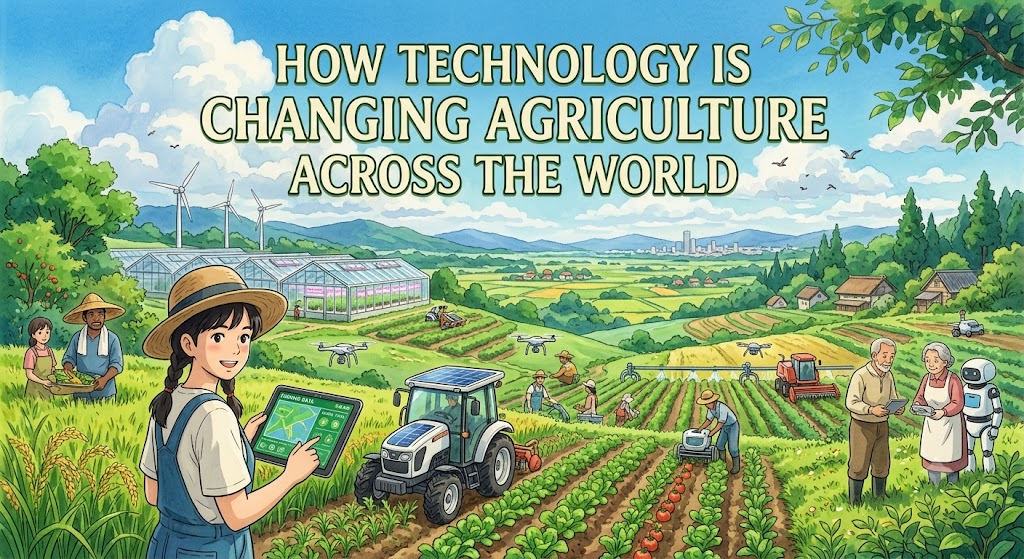
Agriculture has always evolved alongside human innovation, but the pace of change has accelerated dramatically in recent decades. From advanced machinery and precision farming tools to artificial intelligence and automated irrigation systems, technology is transforming how food is produced, managed, and distributed worldwide. Farmers today have access to solutions that would have seemed impossible only a generation ago.
As the global population continues to grow and agricultural resources become increasingly limited, technology is helping farmers produce more food while using fewer inputs. Modern innovations are improving efficiency, reducing waste, enhancing sustainability, and supporting better decision-making across farms of all sizes.
This article explores how technology is reshaping agriculture around the world and why these innovations are becoming essential for the future of food production.
The Growing Importance of Agricultural Technology
Modern agriculture faces several major challenges.
These include:
- Population growth
- Climate change
- Water scarcity
- Labor shortages
- Rising production costs
- Soil degradation
Technology provides farmers with tools to address these challenges more effectively.
By improving efficiency and resource management, technological innovations help support sustainable agricultural growth.
Precision Agriculture: Farming With Data
One of the most significant developments in modern farming is precision agriculture.
Precision agriculture uses technology to collect and analyze data that supports better management decisions.
Tools commonly used include:
- GPS systems
- Soil sensors
- Yield monitors
- Satellite imagery
- Farm management software
Benefits include:
- More accurate resource use
- Reduced input waste
- Improved productivity
- Better profitability
Data-driven farming allows producers to manage fields with greater precision than ever before.
GPS-Guided Machinery
GPS technology has transformed field operations.
Modern equipment can use satellite guidance systems to perform tasks such as:
- Planting
- Fertilizer application
- Spraying
- Harvesting
Advantages include:
- Improved accuracy
- Reduced overlap
- Lower fuel consumption
- Better operational efficiency
GPS-guided systems help farmers save time and reduce unnecessary input costs.
Drones in Agriculture
Agricultural drones have become valuable tools for monitoring crop performance.
Drones can provide:
- Field imagery
- Crop health assessments
- Pest detection
- Irrigation monitoring
- Plant stress identification
Benefits include:
- Faster field inspections
- Improved decision-making
- Reduced labor requirements
Drone technology allows farmers to evaluate large areas quickly and efficiently.
Soil Sensors and Monitoring Systems
Understanding soil conditions is critical for successful crop production.
Modern sensors can measure:
- Soil moisture
- Temperature
- Nutrient levels
- Electrical conductivity
Real-time information helps farmers make informed decisions regarding:
- Irrigation
- Fertilization
- Crop management
Accurate data improves resource efficiency and crop performance.
Smart Irrigation Technologies
Water management is becoming increasingly important in agriculture.
Smart irrigation systems use technology to optimize water application.
Features may include:
- Automated scheduling
- Moisture sensors
- Weather integration
- Remote monitoring
Benefits include:
- Reduced water waste
- Improved crop growth
- Lower irrigation costs
Efficient irrigation supports both productivity and sustainability.
Artificial Intelligence in Farming
Artificial intelligence is beginning to play a major role in agricultural decision-making.
AI systems can analyze large amounts of data to support:
- Yield predictions
- Pest detection
- Disease identification
- Weather forecasting
- Resource planning
Benefits include:
- Faster analysis
- Improved accuracy
- Better management decisions
As AI technologies continue to advance, their role in agriculture is expected to expand significantly.
Automated Farm Equipment
Automation is helping address labor shortages in many agricultural regions.
Examples include:
- Autonomous tractors
- Robotic harvesters
- Automated feeding systems
- Self-guided machinery
Benefits include:
- Reduced labor dependence
- Improved efficiency
- Consistent operations
Automation allows farmers to complete tasks more accurately and efficiently.
Agricultural Robotics
Robots are increasingly being used for specialized farming activities.
Applications include:
- Harvesting fruits and vegetables
- Weed control
- Crop monitoring
- Greenhouse management
Robotic systems can often operate continuously while maintaining high levels of precision.
These technologies are becoming more important as labor costs increase.
Farm Management Software
Digital platforms help farmers organize and analyze farm information.
Software systems may track:
- Crop performance
- Financial records
- Input usage
- Equipment maintenance
- Field activities
Benefits include:
- Better planning
- Improved record keeping
- More informed decision-making
Technology helps transform farm data into actionable insights.
Satellite Technology
Satellites provide valuable information for agricultural management.
Satellite imagery can help monitor:
- Crop growth
- Soil moisture
- Vegetation health
- Field variability
Benefits include:
- Large-scale monitoring
- Early problem detection
- Improved management efficiency
Satellite technology supports precision agriculture on both small and large farms.
Climate-Smart Agriculture
Technology is helping farmers adapt to changing environmental conditions.
Climate-smart tools include:
- Weather forecasting systems
- Drought monitoring technologies
- Risk assessment platforms
Benefits include:
- Improved preparedness
- Better resource management
- Reduced production risks
Technology helps farmers respond more effectively to climate challenges.
Controlled Environment Agriculture
Controlled environment systems allow crops to be grown under carefully managed conditions.
Examples include:
- Greenhouses
- Hydroponics
- Vertical farms
- Indoor growing facilities
Advantages include:
- Year-round production
- Reduced weather risks
- Improved resource efficiency
- Higher yields
These systems are becoming increasingly important in areas with limited arable land.
Blockchain and Food Traceability
Consumers increasingly want information about how food is produced.
Blockchain technology can improve:
- Supply chain transparency
- Product traceability
- Food safety monitoring
Benefits include:
- Greater consumer confidence
- Improved quality control
- Better record accuracy
Traceability systems are becoming more important throughout the agricultural industry.
Renewable Energy in Agriculture
Technology is also helping farms reduce energy costs.
Renewable energy solutions include:
- Solar-powered irrigation systems
- Wind energy installations
- Energy-efficient equipment
Benefits include:
- Lower operating expenses
- Reduced environmental impact
- Improved sustainability
Renewable energy technologies support both profitability and resource conservation.
Digital Market Access
Technology is transforming how farmers connect with buyers.
Online platforms allow producers to:
- Market products directly
- Access pricing information
- Reach wider customer bases
Digital tools improve market transparency and create new sales opportunities.
Better market access can significantly improve farm profitability.
Benefits for Small and Medium-Sized Farms
Technology is not limited to large commercial operations.
Many affordable innovations now support:
- Smallholder farmers
- Family farms
- Medium-sized enterprises
Benefits include:
- Improved productivity
- Better resource efficiency
- Enhanced decision-making
Accessible technologies help smaller farms remain competitive in modern agriculture.
Challenges of Technology Adoption
Despite its advantages, agricultural technology presents certain challenges.
These may include:
- Initial investment costs
- Technical training requirements
- Infrastructure limitations
- Connectivity issues
Successful adoption often requires education, support, and long-term planning.
Farmers should evaluate technologies based on their specific needs and objectives.
The Future of Agricultural Technology
Emerging innovations are expected to further transform agriculture.
Future developments may include:
- Advanced artificial intelligence
- Autonomous farming systems
- Improved robotics
- Enhanced precision agriculture
- Smart sensor networks
These technologies have the potential to improve productivity while supporting sustainable food production.
Conclusion
Technology is changing agriculture across the world by helping farmers improve efficiency, reduce waste, conserve resources, and make more informed decisions. Innovations such as precision agriculture, artificial intelligence, drones, automation, smart irrigation, and digital management systems are transforming the way food is produced and managed.
As global agricultural challenges continue to evolve, technology will play an increasingly important role in supporting productivity, sustainability, and food security. Farmers who embrace practical and effective innovations are better positioned to remain competitive, profitable, and resilient in the rapidly changing future of agriculture.