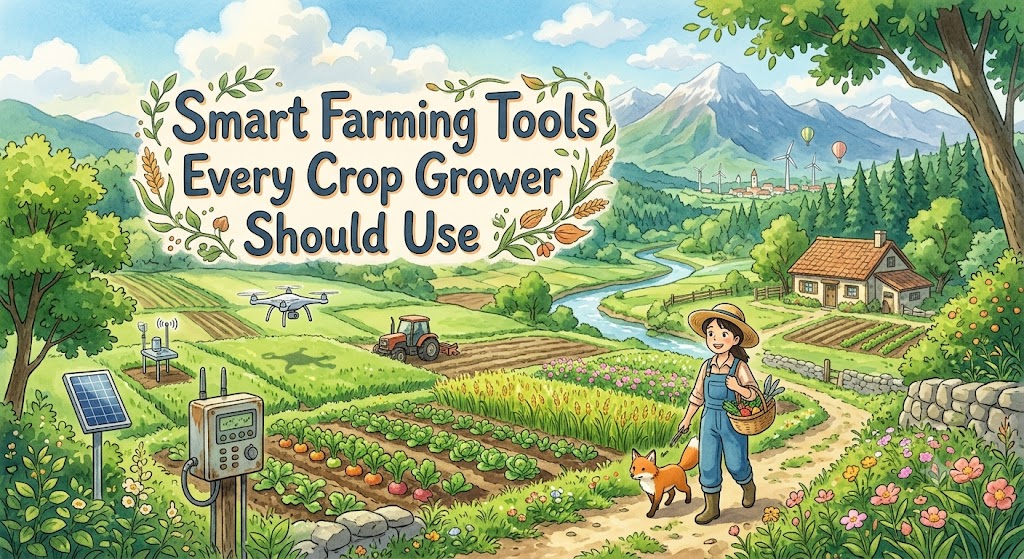
Modern agriculture is rapidly evolving as technology becomes more accessible to farmers of all sizes. Today’s crop growers are no longer relying solely on traditional experience to make farming decisions. Instead, they are using smart farming tools to monitor crops, manage resources efficiently, reduce production costs, and increase yields. These tools help farmers collect real-time information about their fields, allowing them to respond quickly to changing conditions and improve overall farm performance.
Smart farming does not always require expensive machinery or advanced technical knowledge. Many practical tools, from soil testing kits to mobile farm management applications, are affordable and easy to use. By selecting the right technologies, farmers can improve crop quality, conserve natural resources, and build more profitable farming businesses.
This guide introduces the most valuable smart farming tools that every crop grower should consider using.
Why Smart Farming Tools Matter
Traditional farming often relies on observation and experience, but modern agriculture benefits from accurate data and timely decisions.
Smart farming tools help growers:
- Increase crop yields
- Improve product quality
- Reduce input costs
- Save water
- Monitor crop health
- Improve resource efficiency
- Support sustainable farming
Better information leads to better farming decisions throughout the growing season.
Soil Testing Kits
Healthy soil is the foundation of successful crop production.
A soil testing kit allows farmers to measure:
- Soil pH
- Nutrient levels
- Organic matter
- Fertility status
Regular testing helps farmers apply fertilizers according to actual crop requirements instead of relying on guesswork.
Benefits include:
- Lower fertilizer costs
- Improved nutrient management
- Better crop growth
- Healthier soil
Soil Moisture Sensors
Efficient irrigation begins with understanding how much water is available in the soil.
Moisture sensors provide real-time information about:
- Soil water content
- Root zone moisture
- Irrigation timing
Advantages include:
- Reduced water waste
- Lower pumping costs
- Healthier roots
- Better crop development
Farmers can irrigate only when crops actually need water.
Weather Monitoring Stations
Weather conditions directly influence planting, irrigation, fertilization, and harvesting.
Modern weather stations monitor:
- Rainfall
- Temperature
- Humidity
- Wind speed
- Solar radiation
Accurate weather information helps farmers schedule field activities more effectively and reduce weather-related risks.
GPS Technology
Global Positioning System (GPS) technology improves field accuracy during many farming operations.
GPS supports:
- Straight planting rows
- Field mapping
- Machinery guidance
- Precise fertilizer application
- Efficient harvesting
Reducing overlaps saves fuel, labor, and agricultural inputs.
Agricultural Drones
Drones have become one of the most useful monitoring tools in modern agriculture.
They help growers:
- Inspect large fields quickly
- Detect nutrient deficiencies
- Monitor irrigation performance
- Identify pest infestations
- Observe crop development
Regular aerial inspections allow farmers to identify problems before they become serious.
Mobile Farm Management Apps
Smartphones have become valuable farming tools.
Farm management applications help organize:
- Planting schedules
- Fertilizer records
- Irrigation planning
- Weather updates
- Expense tracking
- Harvest records
Keeping digital records improves planning and supports better financial decisions.
Drip Irrigation Systems
Water efficiency is becoming increasingly important in agriculture.
Drip irrigation delivers water directly to plant roots.
Major advantages include:
- Reduced evaporation
- Lower water consumption
- Better nutrient absorption
- Healthier crops
- Reduced weed growth
Drip systems improve productivity while conserving valuable water resources.
Automatic Irrigation Controllers
Modern irrigation controllers automatically adjust watering schedules based on field conditions.
These systems consider:
- Soil moisture
- Weather forecasts
- Crop growth stage
- Temperature
Automation reduces labor while improving irrigation efficiency.
Crop Monitoring Cameras
Field cameras allow farmers to monitor crop development without visiting every section of the farm.
They help observe:
- Plant growth
- Pest activity
- Wildlife damage
- Irrigation performance
- Weather effects
Continuous monitoring supports faster management decisions.
Digital Thermometers and Humidity Meters
Temperature and humidity influence crop growth, disease development, and irrigation needs.
These simple tools help farmers monitor environmental conditions accurately.
They are particularly valuable in:
- Greenhouses
- Nurseries
- Storage facilities
- Mushroom farms
Proper environmental management improves crop quality.
Precision Fertilizer Spreaders
Modern fertilizer equipment applies nutrients more accurately than traditional broadcasting methods.
Advantages include:
- Reduced fertilizer waste
- Uniform application
- Lower production costs
- Better crop nutrition
Precision application improves both productivity and environmental protection.
Composting Systems
One of the most valuable low-cost farming tools is an organized composting system.
Composting converts:
- Crop residues
- Animal manure
- Kitchen waste
- Leaves
- Organic farm waste
into nutrient-rich organic fertilizer.
Benefits include:
- Improved soil fertility
- Better moisture retention
- Increased microbial activity
- Reduced fertilizer expenses
Solar-Powered Water Pumps
Renewable energy is becoming increasingly popular on farms.
Solar-powered pumps provide:
- Reliable irrigation
- Lower fuel costs
- Reduced electricity expenses
- Environmentally friendly operation
Although installation requires investment, long-term savings are substantial.
Pest Monitoring Traps
Monitoring pests before they become widespread reduces unnecessary pesticide use.
Useful tools include:
- Sticky traps
- Light traps
- Pheromone traps
These tools help farmers:
- Detect early infestations
- Monitor insect populations
- Improve Integrated Pest Management (IPM)
Early detection prevents major crop losses.
Satellite-Based Crop Monitoring
Satellite imagery allows growers to evaluate crop performance across entire fields.
Satellite monitoring helps identify:
- Uneven crop growth
- Water stress
- Nutrient deficiencies
- Disease outbreaks
Large commercial farms increasingly rely on satellite data for precision management.
Harvest Moisture Meters
Harvesting crops at the correct moisture level improves storage quality.
Moisture meters help determine when grains are ready for:
- Harvest
- Drying
- Safe storage
Proper moisture management reduces post-harvest losses.
Farm Record Books or Digital Software
Keeping accurate farm records remains one of the simplest yet most powerful management tools.
Important records include:
- Planting dates
- Fertilizer use
- Irrigation schedules
- Pest management
- Harvest yields
- Production costs
- Sales income
These records help farmers evaluate performance and improve future planning.
Choosing the Right Tools for Your Farm
Not every farm requires the same equipment.
When selecting smart farming tools, consider:
- Farm size
- Crop type
- Budget
- Labor availability
- Water resources
- Technical knowledge
Starting with affordable, high-impact tools often provides the greatest return on investment.
Benefits of Smart Farming Technology
Farmers who adopt smart tools often experience:
- Higher yields
- Better crop quality
- Lower production costs
- Improved water efficiency
- Better pest management
- More accurate decision-making
- Higher profitability
- Greater environmental sustainability
Technology works best when combined with sound farming practices.
Conclusion
Smart farming tools are transforming agriculture by helping crop growers make informed decisions based on accurate field data rather than assumptions. Soil testing kits, moisture sensors, weather stations, drones, GPS technology, mobile farm management apps, drip irrigation systems, and pest monitoring tools all contribute to healthier crops, higher yields, and more efficient resource use. These innovations allow farmers to reduce waste, lower production costs, and improve overall farm productivity.
The future of successful farming lies in combining traditional agricultural knowledge with practical technology. Farmers do not need to adopt every innovation at once. By gradually introducing the right tools based on their farm size, budget, and crop requirements, they can build more productive, sustainable, and profitable farming systems for years to come.
Frequently Asked Questions
1. What is the most useful smart farming tool for beginners?
A soil testing kit and a reliable weather forecasting app are excellent starting tools because they help farmers make better decisions about fertilization and field operations.
2. How do moisture sensors help farmers?
They measure soil water levels, allowing farmers to irrigate only when necessary, reducing water waste and improving crop health.
3. Are drones suitable for small farms?
Yes. Small farmers can use drones through service providers or cooperatives to monitor crop health without purchasing expensive equipment.
4. Why are digital farm records important?
Digital records help track expenses, crop performance, irrigation schedules, fertilizer applications, and harvest yields, improving future planning.
5. Can smart farming tools reduce production costs?
Yes. By improving irrigation, fertilizer management, pest monitoring, and overall efficiency, smart farming tools help reduce unnecessary expenses while increasing crop productivity.