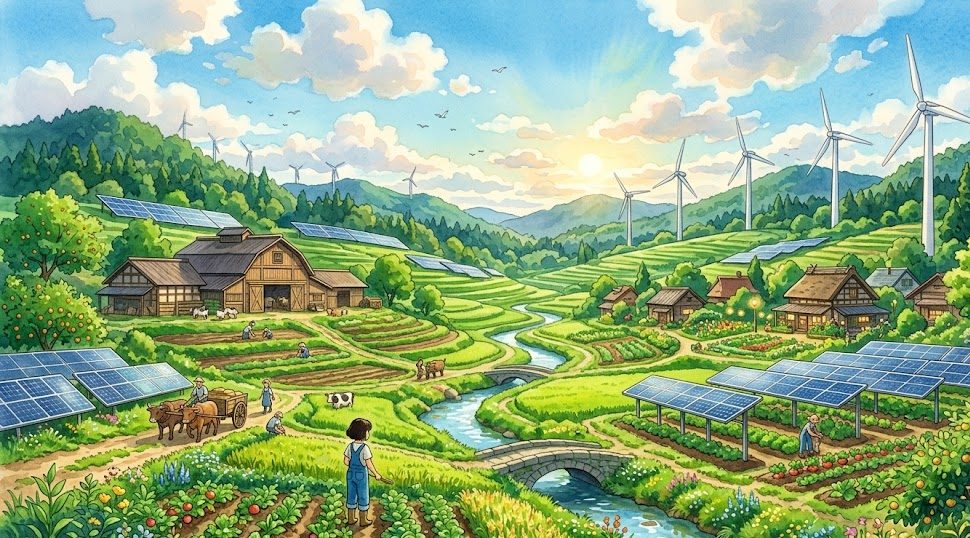
Traditional agriculture has always been synonymous with food security. However, as the world grapples with the dual challenges of climate change and surging energy demands, a paradigm shift is underway. Farms are no longer just patches of land for crop cultivation; they are evolving into decentralized power plants. This transformation—often called “Agrivoltaics” or “Energy-Positive Farming”—marks the next big revolution in sustainable agriculture, turning farmers into key players in the global energy transition.
The Convergence of Agriculture and Energy
Historically, agriculture and energy production were viewed as separate sectors. Agriculture consumed energy (fuel for tractors, electricity for irrigation), while energy production was centralized in massive, distant power stations. Today, the integration of renewable energy technologies—solar, wind, and biomass—directly into the farm landscape is bridging this gap.
By leveraging underutilized land, farmers can generate clean energy that supports their operations while contributing to the national grid. This synergy provides a dual income stream, increases resilience against volatile food markets, and reduces the carbon footprint of the entire food supply chain.
Key Technologies Leading the Charge
1. Agrivoltaics: Farming Under the Sun
Agrivoltaics is perhaps the most exciting frontier. It involves installing solar panels elevated above crops.
- The Benefit: It is a perfect symbiotic relationship. The panels generate electricity while providing partial shade to the crops below, which reduces water evaporation, protects plants from extreme heat, and improves soil moisture.
- Efficiency: Certain crops, like leafy greens, berries, and some medicinal herbs, actually thrive in the partial shade provided by solar arrays.
2. Biomass and Anaerobic Digesters
Farms are massive producers of organic waste—crop residues, livestock manure, and food processing byproducts. Instead of letting this waste decompose and release methane (a potent greenhouse gas) into the atmosphere, farmers are using anaerobic digesters.
- The Process: These systems break down organic matter in an oxygen-free environment to produce biogas.
- The Output: The biogas can be converted into electricity, heat, or even refined into renewable natural gas (RNG) for transport. The leftover byproduct, known as digestate, serves as a nutrient-rich organic fertilizer, closing the nutrient loop.
3. Wind Power
Wind energy is a natural fit for wide-open farmland. Wind turbines have a relatively small physical footprint, allowing farmers to continue planting crops or grazing livestock right up to the base of the tower. This allows the land to remain productive for agriculture while generating substantial revenue through land-lease payments from energy developers.
The Economic and Environmental Advantages
The shift toward energy-producing farms offers profound benefits:
- Financial Diversification: Agricultural income is often at the mercy of weather patterns and fluctuating global commodity prices. Energy production provides a stable, long-term, and passive income source, which can act as a financial safety net during poor harvest years.
- Energy Independence: By generating their own electricity, farmers can insulate themselves from rising utility costs. This is particularly crucial for energy-intensive operations like indoor vertical farming, greenhouses, and cold storage facilities.
- Carbon Sequestration: When energy production is coupled with regenerative agricultural practices—like cover cropping and no-till farming—the farm can become a carbon sink. The goal is to move from “net-zero” to “carbon-negative,” where the farm removes more CO2 from the atmosphere than it emits.
Challenges to Overcome
Despite the potential, the revolution faces hurdles:
- Policy and Zoning: Many regions have outdated zoning laws that make it difficult to install energy infrastructure on agricultural land. Policymakers need to create clear guidelines that encourage “Dual-Use” land management.
- Initial Capital Investment: While the ROI (Return on Investment) is strong, the upfront cost for solar arrays or digester units can be daunting for small-scale farmers. Access to low-interest green financing is critical.
- Grid Infrastructure: Rural areas often have older grid infrastructure that cannot handle the bidirectional flow of electricity generated by localized farms. Investment in “Smart Grids” is essential to integrate these distributed energy resources.
A Vision for the Future
Imagine a future where a farm is a self-sustaining ecosystem. The sun powers the irrigation pumps, the livestock manure powers the heating systems in the winter, and the surplus energy is shared with the local village through a microgrid. This model doesn’t just reduce emissions; it revitalizes rural economies by creating high-tech jobs in maintenance, engineering, and data management.
The transition to energy-producing farms is more than just a technological upgrade—it is a philosophical shift. It treats land not as an infinite resource to be exploited, but as a dynamic asset to be managed for both food and power.
As we look toward 2030 and beyond, the most successful farmers will be those who see themselves not just as stewards of the soil, but as the primary architects of our clean energy future. The fields of tomorrow will shimmer with solar glass and turn with the wind, feeding the world while keeping the lights on. The energy revolution has arrived, and it is growing from the ground up.