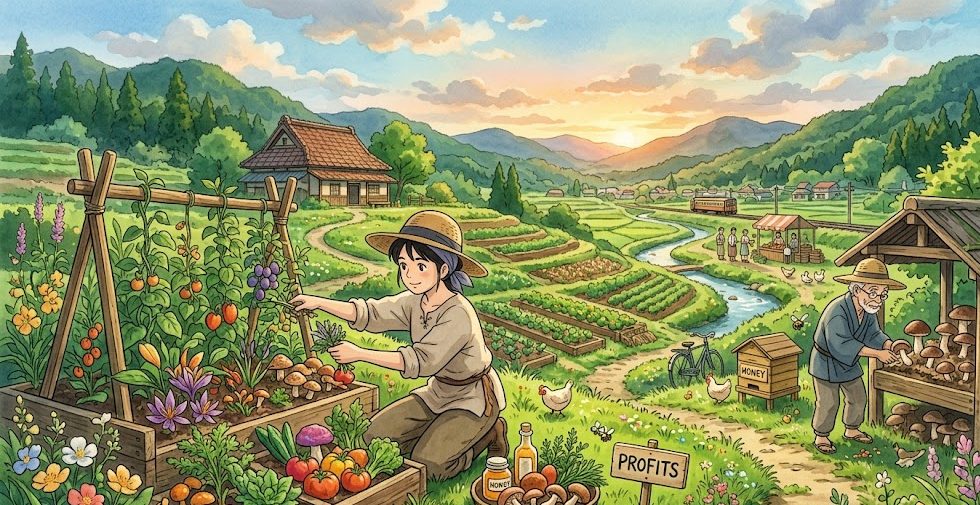
For decades, traditional agriculture followed a predictable script. Farmers dedicated hundreds of acres to staple commodity crops like wheat, rice, corn, or soybeans. While these crops form the backbone of the global food supply, they come with significant vulnerabilities: razor-thin profit margins, heavy dependence on unpredictable global markets, and vulnerability to severe weather shifts.
The modern agricultural landscape is undergoing a massive transformation. Forward-thinking farmers, urban growers, and agri-entrepreneurs are realizing that you do not need vast tracts of land to run a highly profitable farming business. Instead, they are turning their attention to what industry experts call the Extra Agriculture Category—a specialized sector focused entirely on high-value, niche farming opportunities.
IIFL Finance
Niche farming focuses on cultivating specialized products that cater to premium, health-conscious, or luxury markets. Because these products are unique and often in short supply, they command premium prices, allowing small-scale operations to generate exceptional returns per square foot.
FarmKeep
This comprehensive guide explores the most profitable niche farming opportunities available today, breaking down how you can diversify your income and achieve sustainable financial growth.
Why Diversify Into Niche Agriculture?
The mathematical reality of traditional commodity farming can be harsh. To turn a substantial profit with standard grain or vegetable crops, you generally need massive acreage to leverage economies of scale. Input costs for synthetic fertilizers, heavy machinery, and seed patents continue to rise, leaving small to mid-sized family farms vulnerable.
Niche farming completely flips this economic model. Rather than focusing on maximum volume, niche farmers focus on maximum value.
- Premium Pricing: Consumers are willing to pay a substantial premium—often 50% to 200% more—for organic, hyper-local, exotic, or therapeutic agricultural products.
- Space Efficiency: Many high-value niche categories can be operated indoors, on vertical racks, or on less than half an acre of marginal land.
- Bypassing the Middleman: Niche products open direct-to-consumer pipelines via high-end restaurants, local farmers’ markets, specialty grocery stores, and e-commerce platforms, allowing you to keep 100% of the retail margin.
Top Profitable Niche Farming Segments
To enter the “Extra Agriculture Category” successfully, you must select a niche that aligns with your available space, climate, investment capital, and proximity to urban consumer hubs. Below are the most lucrative specialized farming fields driving the market forward.
1. Gourmet and Medicinal Mushroom Cultivation
Mushroom farming is arguably the king of low-space, high-profit agribusinesses. Traditional button mushrooms dominate the commercial grocery aisles, but gourmet varieties like Oyster, Shiitake, Lion’s Mane, and King Oyster are highly sought after by culinary chefs and health-conscious shoppers.
IIFL Finance+ 1
Mushrooms grow on agricultural waste products like pasteurized straw, hardwood sawdust, or recycled coffee grounds. Because they grow vertically on racks in humidity-controlled indoor environments, you can produce thousands of pounds of gourmet mushrooms annually in a space as small as a spare room, basement, or insulated shipping container.
Organic Monk
2. Microgreens and Sprouts Production
Microgreens—the young, tender seedlings of vegetables and herbs harvested just 7 to 14 days after germination—are a nutritional powerhouse and a visual staple in upscale restaurant plating. Varieties like sunflower shoots, pea shoots, radish microgreens, and purple broccoli greens are incredibly fast-moving products.
The operational turnaround time is unbeatable. You can go from seed to cash in under two weeks. Grown in shallow plastic trays using soil-less media or hydroponic mats under LED grow lights, a well-managed vertical microgreens setup can generate consistent, weekly cash flow year-round.
3. Apiculture (Beekeeping) and Superfood Byproducts
While raw honey is a steady commodity, advanced apiculture focuses on tapping into high-value pharmaceutical and cosmetic superfoods.
LegalRaasta
A single beehive does not just yield honey. It yields Bee Pollen, Propolis (natural bee glue used in throat sprays and skin care), Royal Jelly, and Beeswax. These secondary byproducts carry enormous profit margins and are eagerly purchased by natural health brands and artisan soap makers. Furthermore, honey bees provide invaluable pollination services that drastically improve the fruit and seed yields of surrounding farms.
LegalRaasta
Economic Comparison of Niche vs. Traditional Farming
Choosing the right venture requires looking closely at the relationship between setup costs, production timelines, and market value. Niche options generally require far less land but call for precision climate management and active local marketing.
| Agricultural Venture | Minimum Land Required | Production Cycle Duration | Primary Target Market | Profit Margin Potential |
|---|---|---|---|---|
| Traditional Wheat/Rice | 5+ Acres (Minimum for viability) | 120–150 Days | Wholesale Grain Hubs, Government Mandated Buyers | Low to Moderate (Volume dependent) |
| Gourmet Mushrooms | Indoor Room / Shipping Container | 30–35 Days | Fine Dining Restaurants, Organic Food Boutiques | Exceptionally High |
| Vertical Microgreens | Indoor Racks / Small Greenhouse | 7–14 Days | Local Supermarkets, Juice Bars, Gyms, Cafes | Exceptionally High |
| Medicinal Herbs | 0.5 to 1 Acre | 90–180 Days (Variable) | Herbal Extractors, Ayurvedic & Pharma Firms | High (Often contract-backed) |
Step-by-Step Blueprint for Launching a Niche Farm
Transitioning into the Extra Agriculture Category requires shifting your mindset from a traditional grower to an agile boutique business owner. Follow this sequential operational plan to establish your niche enterprise safely.
1
Identify Local Market Gaps and Demand
Market Validation
1.Identify Local Market Gaps and Demand:Market Validation.
Do not plant a single seed or buy equipment until you know who will buy your harvest. Visit local high-end restaurants and speak directly with head chefs. Tour local organic specialty shops and farmers’ markets to see which premium items are consistently out of stock or imported from far away.
2
Secure Certification and Food Safety Compliance
Regulatory Check
2.Secure Certification and Food Safety Compliance:Regulatory Check.
Niche agricultural items often intersect with health, wellness, or ready-to-eat culinary fields. Research your local food safety guidelines. If you plan to sell organic vegetables or medicinal herbs at a premium, initiate the official organic or food-handling certification process early to add instant credibility to your brand name.
3
Build Controlled Environment Agriculture (CEA) Systems
Infrastructure Setup
3.Build Controlled Environment Agriculture (CEA) Systems:Infrastructure Setup.
Configure your growth space based on your chosen niche. For microgreens or mushrooms, set up vertical shelving units, install energy-efficient LED grow lights, and implement automated temperature, ventilation, and humidity monitors to create the perfect microclimate regardless of outdoor weather.
4
Establish a Direct-to-Consumer Supply Chain
Launch & Logistics
4.Establish a Direct-to-Consumer Supply Chain:Launch & Logistics.
Start production with small, high-quality trial batches. Set up a professional digital presence, such as a localized website or an active WhatsApp business profile, allowing neighborhood buyers to pre-order fresh items. Establish tight delivery schedules to ensure your perishable gourmet items reach customers within hours of harvest.
Crucial Pitfalls to Avoid in Niche Farming
While the high profit margins of the Extra Agriculture Category are highly attractive, niche businesses have unique operational risks that traditional commodity growers rarely encounter.
Pitfall 1: Overproducing Without a Secured Contract Traditional grain or potato farmers can always dump their excess harvest at a regional cooperative elevator if local buyers disappear. Niche items like fresh oyster mushrooms or tender microgreens are highly perishable. If your local restaurant partner suddenly changes their seasonal menu, you need secondary immediate channels like farmers’ markets or processing options (such as dehydration) ready to go.
Pitfall 2: Underestimating Climate Automation Requirements Because niche crops are often grown in dense, high-humidity indoor environments, a brief failure in ventilation or temperature control can prove disastrous. An unchecked spike in humidity can trigger widespread green mold (Trichoderma) outbreaks in mushroom logs, or root-rot (Pythium) in crowded microgreen trays. Invest in reliable backup power and environmental alarms.
Pitfall 3: Failing to Build a Distinct Brand Identity Niche farming is as much about marketing as it is about biology. If you pack your premium gourmet mushrooms in plain, unbranded plastic bags, you reduce your product to a basic commodity. Design professional, eco-friendly packaging that tells your story, highlights your hyper-local origin, and justifies your premium price tag.
FAQs: Frequently Asked Questions
1. How much initial capital do I need to start a niche farming business?
Unlike traditional farming, which requires heavy upfront investments in tractors and large tracts of land, many indoor niche operations can be launched with very small budgets. A functional home-based microgreens or gourmet mushroom business can be started for less than $500 to $1,000, covering basic shelves, lighting, trays, and high-quality starter cultures or seeds.
Eicher Tractors
2. Can I run a niche farming operation while working a full-time job?
Yes. Certain niche categories are incredibly well-suited for part-time entrepreneurs or side-hustlers. Beekeeping, medicinal herb cultivation, and small-scale gourmet mushroom blocks require focused daily monitoring, but the tasks can easily be managed during mornings, evenings, or weekends.
3. What are the best medicinal herbs to grow for contract farming?
High-demand options include adaptive plants like Ashwagandha, Holy Basil (Tulsi), Aloe Vera, Rosemary, and Stevia. Many pharmaceutical and wellness brands offer contract farming agreements for these crops, providing growers with specialized seeds and an assured, pre-negotiated buy-back price upon harvest.
Agro Potli+ 1
4. How do I pitch my niche agricultural products to local restaurant chefs?
Never turn up empty-handed during a busy lunch or dinner rush. Visit restaurants during their quiet prep hours (usually between 2:00 PM and 4:00 PM) and bring pristine, free sample boxes of your freshest harvest. Chefs are highly visual and deeply passionate about quality; once they see and taste the freshness of hyper-local produce, they will gladly talk pricing.
5. What is “Value-Added Processing” in niche farming?
Value-added processing involves transforming a raw agricultural harvest into a shelf-stable, higher-margin product. For example, instead of just selling fresh chilis, you grind them into a specialized hot sauce. Instead of selling fresh herbs, you dry and package them into organic tea blends. This drastically extends your product shelf life and multiplies your profit margins.
Conclusion
FarmKeep
Exploring the Extra Agriculture Category through niche farming offers an inspiring alternative to the high-capital, high-stress world of industrial commodity farming. By focusing your operational energy on specialty items like gourmet mushrooms, crisp vertical microgreens, or medicinal herbs, you shift the focus of your business from pure physical acreage to smart ecological efficiency.
While niche farming requires precision, careful market research, and active local relationship building, the financial rewards, space-saving benefits, and year-round resilience make it one of the fastest-growing trends in modern agriculture. Start small, validate your local market, perfect your indoor or micro-plot growing environment, and watch your niche agricultural venture blossom into a highly profitable, sustainable business.