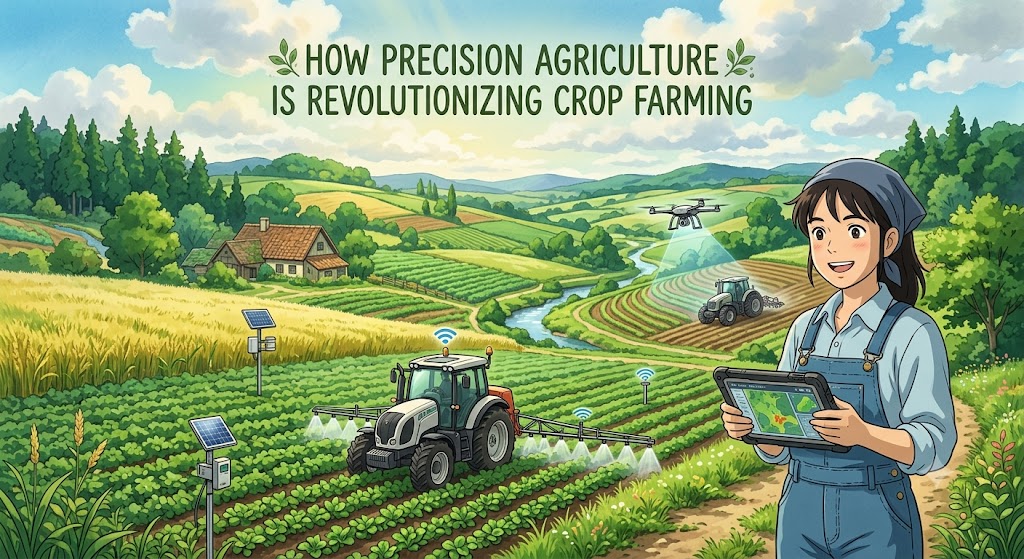
Agriculture has always depended on experience, observation, and hard work. However, today’s farmers have access to powerful technologies that allow them to make faster, smarter, and more accurate decisions than ever before. Precision agriculture is one of the biggest innovations transforming modern farming by helping growers manage crops with greater efficiency while reducing waste and production costs.
Unlike traditional farming, where entire fields often receive the same treatment, precision agriculture recognizes that every section of a field has different needs. Soil fertility, moisture levels, nutrient availability, and crop health can vary even within a single farm. By collecting and analyzing field data, farmers can apply water, fertilizers, and crop protection products only where they are truly needed.
This modern farming approach improves productivity, protects natural resources, and helps farmers produce healthier crops with higher yields and better quality.
What Is Precision Agriculture?
Precision agriculture is a farming system that uses technology, real-time data, and accurate field monitoring to manage crops more efficiently.
Instead of treating an entire field equally, farmers make decisions based on specific field conditions.
Precision farming focuses on:
- Improving crop productivity
- Reducing input costs
- Conserving water
- Protecting soil health
- Increasing profitability
- Supporting environmental sustainability
It combines traditional farming knowledge with modern digital tools to optimize every stage of crop production.
Why Precision Agriculture Is Becoming Essential
Modern farmers face several challenges, including:
- Rising fertilizer prices
- Water shortages
- Labor shortages
- Climate change
- Soil degradation
- Increasing food demand
Precision agriculture helps solve these problems by improving resource efficiency and reducing unnecessary waste.
Farmers can produce more while using fewer inputs.
Collecting Accurate Field Data
Successful precision farming begins with understanding field conditions.
Farmers collect valuable information about:
- Soil moisture
- Nutrient levels
- Crop growth
- Temperature
- Humidity
- Pest activity
- Weather conditions
This information forms the foundation for better farm management decisions.
Soil Testing Improves Fertility Management
Every field contains areas with different nutrient levels.
Regular soil testing allows farmers to identify:
- Nitrogen deficiencies
- Phosphorus shortages
- Potassium levels
- Soil pH
- Organic matter content
Instead of applying fertilizers uniformly, nutrients can be supplied according to actual crop requirements.
This improves efficiency while reducing fertilizer costs.
GPS Technology Improves Field Accuracy
Global Positioning System (GPS) technology has become an important tool in modern agriculture.
GPS helps farmers:
- Create accurate field maps
- Maintain straight planting rows
- Monitor machinery movement
- Reduce overlaps during fertilizer application
- Improve planting precision
Accurate positioning minimizes wasted inputs and increases operational efficiency.
Drones Provide a Bird’s-Eye View of Crops
Agricultural drones allow farmers to inspect fields quickly without walking through every acre.
They help identify:
- Poor crop growth
- Water stress
- Pest infestations
- Disease outbreaks
- Nutrient deficiencies
- Uneven plant populations
Early detection allows problems to be corrected before they spread across the field.
Soil Moisture Sensors Improve Irrigation
Water is becoming one of agriculture’s most valuable resources.
Soil moisture sensors provide real-time information about how much water crops actually need.
Benefits include:
- Reduced water waste
- Better root development
- Lower irrigation costs
- Healthier crop growth
- Improved water-use efficiency
Applying water only when necessary protects both crops and groundwater resources.
Precision Fertilizer Application
Traditional fertilizer programs often treat entire fields the same way.
Precision agriculture allows nutrients to be applied according to local field conditions.
Advantages include:
- Reduced fertilizer waste
- Better nutrient uptake
- Lower production costs
- Improved crop quality
- Reduced environmental pollution
Balanced nutrition leads to healthier plants and higher yields.
Smart Pest and Disease Monitoring
Early identification is one of the biggest advantages of precision agriculture.
Farmers use:
- Drones
- Field sensors
- Mobile applications
- Satellite imagery
to detect pest or disease problems before serious damage occurs.
Targeted treatment reduces pesticide use while protecting beneficial organisms.
Satellite Monitoring Supports Better Decisions
Satellite images provide valuable information throughout the growing season.
Farmers can monitor:
- Crop health
- Vegetation growth
- Moisture stress
- Nutrient deficiencies
- Field variability
Satellite data helps farmers prioritize field operations and respond quickly to changing conditions.
Artificial Intelligence Assists Farm Management
Artificial intelligence processes large amounts of agricultural information in seconds.
AI systems help predict:
- Weather conditions
- Crop growth
- Disease risks
- Irrigation schedules
- Harvest timing
- Yield potential
Instead of replacing farmers, AI improves decision-making through accurate analysis.
Farm Management Software Simplifies Operations
Digital record-keeping has become an essential part of precision agriculture.
Modern software helps organize:
- Planting schedules
- Fertilizer records
- Irrigation plans
- Machinery maintenance
- Harvest information
- Financial data
Better organization improves efficiency and long-term planning.
Reducing Environmental Impact
Precision agriculture supports environmental conservation by minimizing unnecessary input use.
Benefits include:
- Lower fertilizer runoff
- Reduced pesticide application
- Better water conservation
- Improved soil protection
- Reduced fuel consumption
Healthy ecosystems support sustainable farming for future generations.
Higher Crop Quality
Precision farming improves more than just yield.
Better management often results in:
- Uniform crop growth
- Larger grains
- Better fruit size
- Improved color
- Higher nutritional quality
- Better market value
Quality improvements frequently increase farm income.
Challenges Farmers May Face
Although precision agriculture offers significant benefits, adoption may involve certain challenges.
These include:
- Initial investment costs
- Technical training
- Equipment maintenance
- Internet connectivity
- Learning new technologies
Many farmers begin with simple tools and gradually expand their precision farming systems over time.
Precision Agriculture for Small Farms
Precision farming is no longer limited to large commercial farms.
Affordable technologies now available include:
- Soil testing kits
- Mobile weather applications
- Drip irrigation systems
- GPS-enabled smartphones
- Digital farm record systems
- Moisture sensors
Small farmers can improve productivity without investing in expensive equipment immediately.
The Future of Precision Farming
Precision agriculture continues evolving rapidly.
Future developments may include:
- Fully autonomous tractors
- Advanced agricultural robots
- AI-powered crop diagnosis
- Automated irrigation networks
- Improved satellite monitoring
- More affordable smart farming equipment
These innovations will continue improving efficiency while reducing production costs.
Best Practices for Getting Started
Farmers interested in precision agriculture can begin gradually.
Recommended first steps include:
- Conduct regular soil testing.
- Monitor weather forecasts.
- Improve irrigation efficiency.
- Keep detailed farm records.
- Use quality seeds.
- Learn basic digital farm management.
- Introduce new technology one step at a time.
Small improvements often deliver significant long-term benefits.
Conclusion
Precision agriculture is transforming crop farming by helping farmers make more informed decisions based on real field conditions rather than assumptions. Technologies such as GPS, drones, soil sensors, satellite monitoring, artificial intelligence, and digital farm management allow growers to optimize irrigation, fertilizer use, pest control, and overall crop management. The result is healthier crops, higher yields, lower production costs, and improved environmental sustainability.
Although adopting precision farming requires planning and continuous learning, the long-term advantages far outweigh the challenges. Farmers who gradually integrate precision agriculture into their operations can improve productivity, conserve valuable resources, and build resilient farming systems capable of meeting future agricultural demands.
Frequently Asked Questions
1. What is precision agriculture?
Precision agriculture is a modern farming approach that uses technology, field data, and digital tools to manage crops more accurately and efficiently.
2. How does precision farming increase crop yields?
It improves irrigation, fertilizer application, pest management, and crop monitoring by providing accurate information about field conditions.
3. Are drones useful in agriculture?
Yes. Drones help farmers monitor crop health, identify diseases, detect water stress, and assess field conditions quickly and efficiently.
4. Can small farmers benefit from precision agriculture?
Yes. Affordable technologies such as soil testing, weather apps, drip irrigation, and mobile farm management tools make precision farming accessible to farms of all sizes.
5. What is the biggest advantage of precision agriculture?
The greatest advantage is improved efficiency. Farmers can produce higher-quality crops while reducing waste, conserving resources, and lowering production costs.