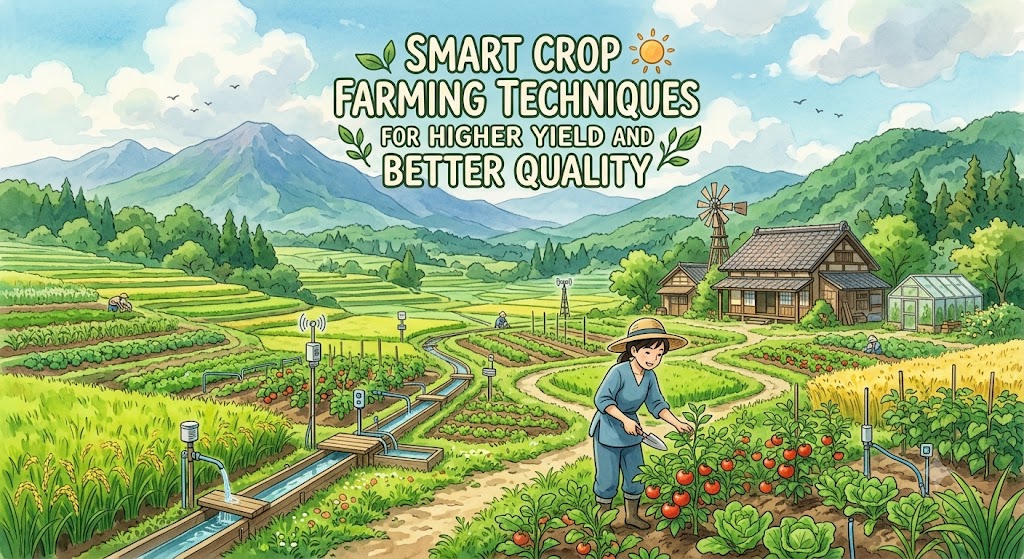
Modern agriculture is no longer based solely on hard work—it is increasingly driven by smart decisions. As production costs continue to rise and weather conditions become less predictable, farmers are looking for efficient ways to grow healthier crops while reducing waste and maximizing profits. Smart crop farming combines traditional agricultural knowledge with modern management practices and technology to improve productivity, crop quality, and sustainability.
Growing high-yield crops is not simply about applying more fertilizer or using expensive equipment. Success depends on understanding crop requirements, maintaining healthy soil, using water efficiently, monitoring crop health, and making timely management decisions throughout the growing season.
This guide explains practical smart farming techniques that help farmers produce better-quality crops while increasing yields and reducing unnecessary production costs.
What Is Smart Crop Farming?
Smart crop farming is an approach that uses improved planning, efficient resource management, and modern agricultural tools to optimize crop production.
Its main objectives are to:
- Increase crop yield
- Improve product quality
- Reduce input costs
- Conserve natural resources
- Improve farm profitability
- Support sustainable agriculture
Both small and large farms can benefit from smart farming practices.
Begin with Healthy Soil
Every successful crop starts with fertile soil.
Healthy soil provides:
- Essential nutrients
- Strong root support
- Better water retention
- Active microbial life
- Improved plant growth
Farmers can improve soil naturally by:
- Applying compost
- Adding farmyard manure
- Growing cover crops
- Practicing crop rotation
- Reducing unnecessary tillage
Healthy soil creates the foundation for consistent high yields.
Choose High-Quality Seeds
Seed quality directly affects crop performance.
Certified seeds generally provide:
- Higher germination rates
- Uniform plant growth
- Better disease resistance
- Stronger stress tolerance
- Higher production potential
Choosing varieties suited to local climate conditions greatly improves farming success.
Plan Planting at the Right Time
Planting during the recommended season allows crops to benefit from favorable weather conditions.
Proper timing helps:
- Improve germination
- Reduce disease risks
- Encourage vigorous growth
- Increase pollination success
- Improve harvest quality
Following local planting calendars minimizes environmental stress.
Apply Precision Irrigation
Water management plays a major role in crop productivity.
Smart irrigation practices include:
- Drip irrigation
- Soil moisture monitoring
- Scheduled watering
- Rainwater harvesting
- Automated irrigation systems
Providing water only when crops need it reduces waste while improving plant health.
Feed Crops with Balanced Nutrition
Healthy plants require balanced nutrient management rather than excessive fertilizer application.
Important nutrients include:
- Nitrogen
- Phosphorus
- Potassium
- Sulfur
- Zinc
- Magnesium
Smart nutrient management involves:
- Soil testing
- Split fertilizer applications
- Organic matter incorporation
- Biofertilizers where appropriate
Balanced nutrition improves crop quality while reducing unnecessary expenses.
Monitor Crop Growth Regularly
Frequent field inspections help farmers identify problems early.
Observe:
- Leaf color
- Plant height
- Root development
- Flower formation
- Moisture stress
- Pest activity
- Disease symptoms
Early detection often prevents major yield losses.
Use Weather Information for Better Decisions
Weather conditions influence nearly every farming activity.
Modern weather forecasting helps farmers schedule:
- Planting
- Irrigation
- Fertilizer application
- Pest management
- Harvesting
Making decisions based on weather forecasts reduces production risks.
Control Weeds Efficiently
Weeds compete with crops for valuable resources.
Smart weed management includes:
- Crop rotation
- Organic mulching
- Cover crops
- Mechanical cultivation
- Timely hand weeding
- Responsible herbicide use only when necessary
Early weed control protects crop growth during critical development stages.
Adopt Integrated Pest Management
Instead of relying entirely on pesticides, smart farming combines multiple pest management strategies.
Integrated Pest Management includes:
- Field monitoring
- Resistant varieties
- Biological control
- Crop rotation
- Healthy soil management
- Targeted pesticide application only when needed
This approach lowers costs while protecting beneficial insects.
Improve Plant Spacing
Proper spacing allows every plant to receive enough:
- Sunlight
- Water
- Nutrients
- Air circulation
Correct spacing reduces disease pressure while encouraging stronger plant growth and better yields.
Use Mulch to Protect Crops
Organic mulch provides several benefits beyond weed suppression.
Mulching helps:
- Conserve soil moisture
- Reduce erosion
- Moderate soil temperature
- Improve organic matter
- Support beneficial microorganisms
Healthy soil creates healthier crops.
Introduce Smart Farming Technology
Modern technology makes farm management more efficient.
Useful innovations include:
- Soil moisture sensors
- GPS-guided equipment
- Mobile farming applications
- Agricultural drones
- Satellite monitoring
- Farm management software
Technology provides valuable information that improves decision-making throughout the growing season.
Rotate Crops Every Season
Growing different crops each season improves both soil health and crop productivity.
Crop rotation helps:
- Reduce pests
- Lower disease pressure
- Improve soil fertility
- Increase biodiversity
- Reduce fertilizer requirements
Including legumes naturally improves soil nitrogen levels.
Harvest at the Correct Time
Harvest timing directly affects crop quality and market value.
Signs of maturity vary by crop but generally include:
- Proper color development
- Full grain or fruit formation
- Appropriate moisture content
- Uniform maturity
Harvesting at the right stage preserves both quality and profitability.
Protect Crop Quality After Harvest
Good post-harvest management prevents unnecessary losses.
Important practices include:
- Gentle handling
- Proper cleaning
- Safe drying
- Correct storage conditions
- Pest protection
High-quality produce often receives better market prices.
Maintain Accurate Farm Records
Successful farmers treat agriculture as a business.
Keeping records of:
- Planting dates
- Fertilizer applications
- Irrigation schedules
- Pest outbreaks
- Harvest yields
- Expenses
- Sales
helps improve future planning and identify profitable practices.
Invest in Continuous Learning
Agriculture evolves constantly through new research and improved farming methods.
Farmers should:
- Attend agricultural workshops
- Read extension publications
- Learn from demonstration farms
- Test new ideas on small plots
- Share experiences with other farmers
Continuous improvement leads to better long-term results.
Mistakes That Reduce Crop Yield
Many yield losses result from avoidable errors.
Common mistakes include:
- Poor-quality seed
- Delayed planting
- Over-irrigation
- Excess fertilizer application
- Ignoring pests
- Delayed harvesting
- Poor soil management
Avoiding these mistakes improves both yield and crop quality.
Benefits of Smart Crop Farming
Farmers who adopt smart farming practices often achieve:
- Higher yields
- Better-quality produce
- Lower production costs
- Improved soil fertility
- Efficient water use
- Better pest management
- Increased profitability
- Long-term sustainability
Even gradual improvements can make a significant difference over time.
Conclusion
Smart crop farming is about making informed decisions that improve productivity while using resources more efficiently. Healthy soil, quality seed, balanced nutrition, efficient irrigation, regular crop monitoring, integrated pest management, and modern agricultural technology all contribute to higher yields and superior crop quality. These practices not only increase farm income but also help conserve water, protect soil, and reduce unnecessary production costs.
As agriculture continues to evolve, farmers who combine traditional experience with smart farming techniques will be better prepared to meet changing market demands and environmental challenges. By focusing on efficiency, sustainability, and continuous learning, every farm can become more productive, profitable, and resilient for the future.
Frequently Asked Questions
1. What is smart crop farming?
Smart crop farming is an agricultural approach that combines efficient management practices, modern technology, and sustainable methods to improve crop yield, quality, and profitability.
2. How can farmers increase crop yield naturally?
Healthy soil, crop rotation, compost application, balanced nutrition, proper irrigation, and timely pest management are some of the most effective natural ways to increase yields.
3. Why is soil testing important?
Soil testing identifies nutrient deficiencies and pH levels, allowing farmers to apply fertilizers more efficiently and avoid unnecessary expenses.
4. How does precision irrigation improve farming?
Precision irrigation supplies water only when and where crops need it, reducing water waste while supporting healthy plant growth.
5. Can small farmers use smart farming techniques?
Yes. Practices such as soil testing, drip irrigation, quality seeds, weather forecasting, composting, and mobile farm management apps are affordable and highly beneficial for small farms.