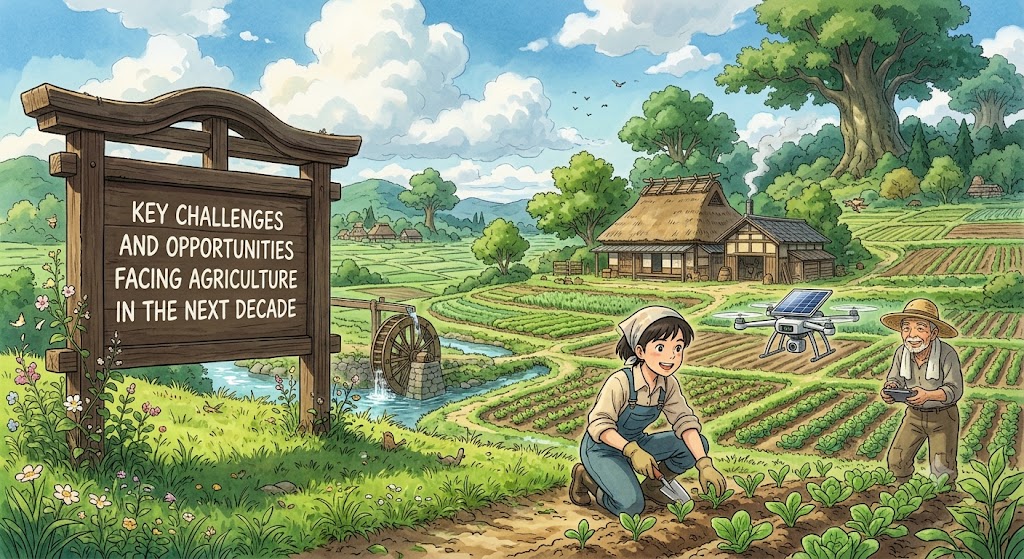
Agriculture stands at a critical turning point. Over the next decade, farmers, agribusinesses, researchers, and policymakers will face a rapidly changing landscape shaped by population growth, climate change, technological innovation, shifting consumer preferences, and evolving global markets. The decisions made today will play a major role in determining how effectively agriculture can meet future food demands while protecting natural resources and maintaining profitability.
Although the agricultural sector faces significant challenges, it also has access to unprecedented opportunities. Advances in technology, sustainable farming practices, improved genetics, and data-driven management systems are creating new possibilities for increasing productivity and resilience. Farmers who understand both the risks and opportunities ahead will be better positioned to adapt and succeed in an increasingly competitive environment.
This article explores the key challenges and opportunities likely to shape agriculture during the next decade.
The Growing Importance of Agriculture
Agriculture remains one of the most essential industries in the world.
The sector provides:
- Food production
- Animal feed
- Fiber
- Bio-based materials
- Employment opportunities
- Economic development
As the global population continues to increase, demand for agricultural products is expected to rise significantly.
Meeting this demand will require both innovation and responsible resource management.
Challenge 1: Climate Change and Weather Variability
Climate change is expected to remain one of the most significant challenges facing agriculture.
Potential impacts include:
- More frequent droughts
- Extreme temperatures
- Irregular rainfall patterns
- Increased flooding
- Stronger storms
These conditions can reduce yields, increase production risks, and disrupt farming operations.
Farmers will need to adopt more resilient production systems to manage climate-related uncertainties.
Opportunity: Climate-Smart Agriculture
While climate change presents risks, it also encourages innovation.
Climate-smart agricultural practices include:
- Conservation agriculture
- Precision irrigation
- Cover cropping
- Agroforestry
- Drought-tolerant crop varieties
These approaches help improve resilience while supporting sustainable productivity.
Climate adaptation technologies are likely to become increasingly valuable.
Challenge 2: Water Scarcity
Water availability is becoming a growing concern in many agricultural regions.
Contributing factors include:
- Population growth
- Increased demand
- Groundwater depletion
- Climate variability
Limited water supplies can affect crop yields and increase production costs.
Efficient water management will be essential for future agricultural success.
Opportunity: Advanced Irrigation Technologies
Innovations in water management are creating new opportunities.
Examples include:
- Drip irrigation
- Smart irrigation systems
- Soil moisture sensors
- Automated water management platforms
These technologies improve water-use efficiency and reduce waste.
Efficient irrigation supports both productivity and sustainability.
Challenge 3: Soil Degradation
Healthy soil is critical for agricultural productivity.
However, many regions face problems such as:
- Erosion
- Nutrient depletion
- Compaction
- Organic matter loss
Declining soil quality can reduce long-term productivity and increase input requirements.
Protecting soil health will remain a major priority.
Opportunity: Regenerative Agriculture
Regenerative farming practices focus on restoring soil health and ecosystem function.
Examples include:
- Cover crops
- Crop rotation
- Reduced tillage
- Organic matter management
Benefits include:
- Improved fertility
- Better water retention
- Increased resilience
Growing interest in regenerative agriculture may create both environmental and economic opportunities.
Challenge 4: Rising Production Costs
Farmers continue to face increasing expenses related to:
- Fertilizers
- Fuel
- Labor
- Machinery
- Crop protection products
Higher production costs can reduce profitability and increase financial pressure.
Efficient resource management will become increasingly important.
Opportunity: Precision Agriculture
Precision agriculture helps farmers use resources more efficiently.
Technologies include:
- GPS-guided equipment
- Variable-rate applications
- Drones
- Farm management software
Benefits include:
- Reduced waste
- Lower costs
- Improved productivity
Precision technologies are expected to become more widely adopted in the coming years.
Challenge 5: Labor Shortages
Many agricultural regions are experiencing labor shortages.
Factors contributing to labor challenges include:
- Aging populations
- Rural migration
- Increased labor costs
Labor-intensive sectors such as fruit and vegetable production may be particularly affected.
Finding reliable workers is becoming increasingly difficult.
Opportunity: Agricultural Automation
Automation technologies offer solutions to labor challenges.
Examples include:
- Autonomous tractors
- Robotic harvesters
- Automated feeding systems
- Smart greenhouse technologies
Automation can improve efficiency while reducing labor dependence.
Technological advancements are likely to accelerate adoption.
Challenge 6: Pest and Disease Pressure
Changing environmental conditions may contribute to:
- Expanded pest ranges
- New disease threats
- Increased resistance problems
Managing pests and diseases will remain a major concern for farmers.
Crop protection strategies must continue evolving to address emerging risks.
Opportunity: Advanced Monitoring Systems
Modern monitoring technologies support earlier detection and more effective management.
Examples include:
- AI-powered diagnostics
- Drone surveillance
- Sensor networks
- Digital monitoring platforms
Early intervention helps reduce losses and improve crop quality.
Technology is enhancing agricultural risk management capabilities.
Challenge 7: Food Security Demands
Global food demand is expected to increase substantially during the next decade.
Agriculture must produce more food while using limited land, water, and energy resources.
Balancing productivity with sustainability will be a major challenge.
Food security concerns will continue influencing agricultural policy and innovation.
Opportunity: Improved Crop Genetics
Advances in plant breeding and genetics are creating opportunities to improve:
- Yield potential
- Disease resistance
- Drought tolerance
- Nutritional value
Improved crop varieties can help farmers meet growing food demand more efficiently.
Genetic innovation remains an important driver of agricultural progress.
Challenge 8: Market Volatility
Agricultural markets can be influenced by:
- Economic conditions
- Trade policies
- Supply chain disruptions
- Consumer behavior
Price fluctuations create uncertainty for producers.
Financial planning and diversification will become increasingly important.
Opportunity: Direct Market Access
Digital technologies are improving market access for farmers.
Opportunities include:
- Online marketplaces
- Direct-to-consumer sales
- E-commerce platforms
- Digital supply chains
Improved connectivity can help producers reach new customers and increase profitability.
Market transparency is expected to improve over time.
Challenge 9: Sustainability Expectations
Consumers increasingly expect environmentally responsible food production.
Farmers may face pressure to address:
- Carbon emissions
- Resource conservation
- Biodiversity protection
- Water quality
Meeting these expectations may require changes in production practices.
Sustainability is becoming an important business consideration.
Opportunity: Sustainable Premium Markets
Many consumers are willing to pay more for products associated with:
- Sustainable production
- Organic farming
- Local sourcing
- Environmental responsibility
These markets create opportunities for farmers who adopt sustainable practices.
Premium pricing can improve profitability while supporting environmental goals.
Challenge 10: Technology Adoption Barriers
Although technology offers significant benefits, challenges remain.
These include:
- High initial costs
- Training requirements
- Infrastructure limitations
- Data management complexity
Not all farmers have equal access to modern technologies.
Addressing adoption barriers will be important for widespread innovation.
Opportunity: Expanding Digital Agriculture
Digital agriculture continues to become more accessible.
Emerging technologies include:
- Artificial intelligence
- Cloud-based management systems
- Mobile applications
- Remote sensing platforms
As costs decline and accessibility improves, more farmers will benefit from these tools.
Digital agriculture is expected to play a central role in future farming systems.
Building Resilient Agricultural Systems
The next decade will require farmers to focus on resilience.
Important priorities include:
- Soil health improvement
- Water conservation
- Crop diversification
- Technology adoption
- Risk management
- Sustainable resource use
- Continuous learning
Combining these strategies helps prepare farms for future challenges and opportunities.
The Future of Agriculture
Agriculture is entering an era of rapid transformation.
Future success will likely depend on:
- Innovation
- Sustainability
- Adaptability
- Efficient resource management
- Data-driven decision-making
Farmers who embrace change while protecting essential natural resources will be best positioned for long-term success.
Conclusion
The next decade will bring both significant challenges and exciting opportunities for agriculture. Climate change, water scarcity, rising costs, labor shortages, and sustainability demands will require farmers to adapt and innovate. At the same time, advances in technology, precision agriculture, automation, improved genetics, and sustainable farming practices offer powerful tools for improving productivity and resilience.
Agricultural success in the future will depend on balancing profitability with environmental responsibility. Farmers who invest in knowledge, innovation, and sustainable resource management today will be better prepared to meet the growing demands of tomorrow while building stronger and more resilient agricultural businesses.