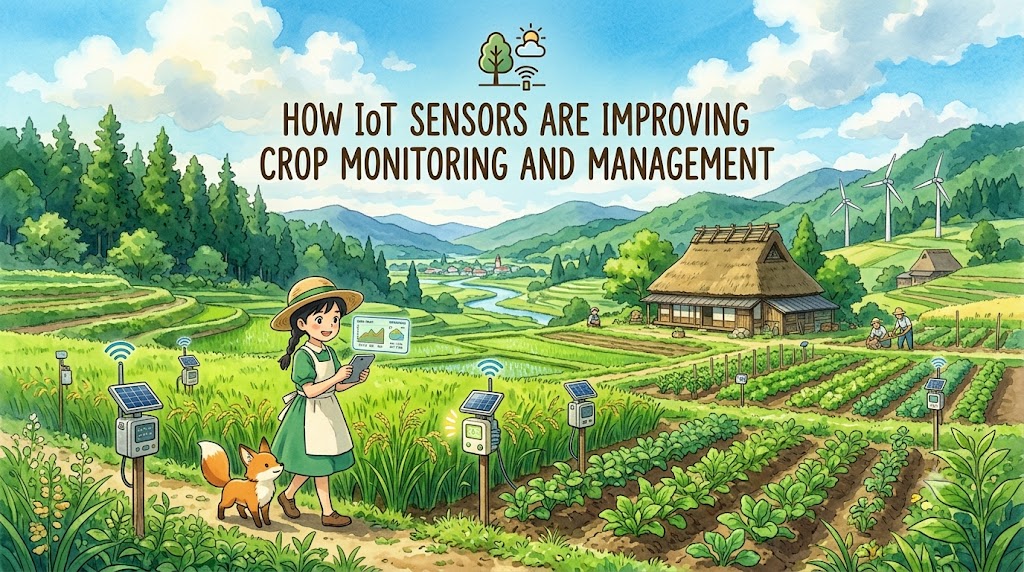
Early every morning, before many farmers even step into their fields, hundreds of tiny devices are already collecting valuable information. Soil moisture levels, air temperature, humidity, leaf wetness, sunlight intensity, and even nutrient availability are being measured automatically. Instead of spending hours inspecting every corner of a farm, growers can simply open a smartphone or computer and see exactly what is happening across their fields.
This is the power of the Internet of Things (IoT) in modern agriculture.
IoT sensors are transforming farming by providing real-time information that helps farmers make faster and more accurate decisions. Rather than relying only on experience or visual observation, farmers now have access to continuous data that improves irrigation, fertilization, pest control, and overall crop management.
As agriculture moves toward greater efficiency and sustainability, IoT technology is becoming one of the most valuable tools available to farms of every size.
Understanding IoT in Agriculture
The Internet of Things refers to a network of connected devices that collect, transmit, and analyze information without requiring constant human involvement.
In agriculture, IoT systems usually consist of:
- Smart field sensors
- Wireless communication networks
- Weather monitoring stations
- GPS technology
- Cloud-based software
- Mobile applications
Together, these components create a digital farming system that continuously monitors crop conditions throughout the growing season.
Why Traditional Crop Monitoring Has Limitations
For decades, farmers monitored crops by walking through their fields and observing visible signs of stress.
Although experience remains important, manual inspections have several limitations.
For example:
- Problems may not be noticed immediately.
- Large farms require significant inspection time.
- Weather conditions change rapidly.
- Hidden soil issues often remain undetected.
- Irrigation decisions may rely on guesswork.
IoT sensors solve these challenges by providing accurate information throughout the day.
The Most Common IoT Sensors Used on Farms
Different sensors measure different aspects of the farming environment.
Soil Moisture Sensors
These sensors measure how much water is available in the soil.
Farmers use this information to determine the best irrigation schedule and avoid both overwatering and underwatering.
Temperature Sensors
Temperature strongly influences seed germination, plant growth, flowering, and fruit development.
Continuous temperature monitoring helps farmers respond quickly to changing weather conditions.
Humidity Sensors
Humidity affects crop health and disease development.
Monitoring humidity allows farmers to identify conditions that may encourage fungal diseases or pest outbreaks.
Soil Nutrient Sensors
Some advanced sensors estimate nutrient availability within the soil.
This information supports more accurate fertilizer applications while reducing unnecessary input costs.
Leaf Wetness Sensors
Many plant diseases develop when leaves remain wet for extended periods.
Leaf wetness sensors help farmers predict disease risks before symptoms become visible.
Weather Stations
Modern farm weather stations monitor:
- Rainfall
- Wind speed
- Solar radiation
- Air pressure
- Relative humidity
- Temperature
Having local weather information improves daily farm planning.
How IoT Improves Daily Farm Management
Instead of reacting after problems occur, farmers can take preventive action using real-time sensor data.
Smarter Irrigation
Rather than watering fields on fixed schedules, irrigation systems respond automatically to actual soil moisture conditions.
This approach:
✔ Saves water
✔ Reduces energy consumption
✔ Improves root development
✔ Prevents waterlogging
Better Fertilizer Management
IoT data helps identify which areas of a field require additional nutrients.
As a result:
- Fertilizer use becomes more precise.
- Input costs decrease.
- Nutrient losses are reduced.
- Crop growth becomes more uniform.
Early Disease Detection
Changes in humidity, temperature, and leaf moisture often occur before diseases become visible.
Sensor data alerts farmers to potential risks, allowing preventive treatments that reduce crop losses.
Pest Monitoring
Some smart monitoring systems combine IoT sensors with digital insect traps and cameras.
These systems help detect increasing pest populations before serious infestations develop.
Advantages Beyond Higher Yields
Many people assume IoT technology exists only to increase production.
In reality, its benefits extend much further.
Farmers also experience:
- Reduced labor requirements
- Better resource management
- Improved record keeping
- Lower production costs
- Faster decision-making
- More consistent crop quality
- Increased environmental sustainability
These improvements contribute to stronger farm profitability over the long term.
Integration With Other Smart Farming Technologies
IoT sensors become even more powerful when combined with other agricultural innovations.
Many farms now integrate sensor data with:
- Artificial Intelligence
- Agricultural drones
- GPS guidance systems
- Satellite imagery
- Automated irrigation equipment
- Farm management software
Each technology complements the others, creating a complete precision farming system.
Challenges Farmers Should Consider
Although IoT technology offers significant advantages, successful adoption requires careful planning.
Some common challenges include:
| Challenge | Practical Solution |
|---|---|
| Initial installation costs | Begin with essential sensors first |
| Internet connectivity | Use systems with offline data storage |
| Device maintenance | Schedule regular inspections |
| Data interpretation | Learn through training programs |
| Battery replacement | Use solar-powered sensors where possible |
Most farms recover these investments through improved efficiency over time.
Can Small Farmers Benefit?
Absolutely.
Many people believe IoT farming is suitable only for large agricultural businesses, but affordable technology is making smart farming accessible to everyone.
Small farms can begin with:
- One soil moisture sensor
- A portable weather station
- Smartphone monitoring applications
- Automated irrigation timers
As farm income grows, additional sensors can be added gradually.
The Future of IoT in Agriculture
Agricultural IoT continues to evolve rapidly.
Future systems are expected to provide:
- AI-powered crop recommendations
- Fully automated irrigation management
- Self-calibrating sensors
- Predictive disease warnings
- Drone and sensor integration
- Real-time satellite monitoring
- Autonomous farm equipment communication
These innovations will make farming even more efficient while reducing environmental impact.
Final Thoughts
IoT sensors are changing the way farmers monitor crops and manage agricultural operations. By providing continuous real-time information about soil, weather, water, and plant health, these smart devices eliminate much of the guesswork traditionally associated with farming.
From improving irrigation efficiency and reducing fertilizer waste to detecting diseases earlier and supporting precision agriculture, IoT technology helps farmers produce healthier crops while lowering production costs. As sensors become more affordable and easier to use, farms of every size will be able to benefit from smarter, data-driven crop management that supports both profitability and long-term sustainability.
Frequently Asked Questions
1. What are IoT sensors in agriculture?
IoT sensors are smart devices that collect real-time data about soil, crops, weather, and environmental conditions to help farmers make informed decisions.
2. How do soil moisture sensors improve farming?
They measure the amount of water available in the soil, allowing farmers to irrigate only when necessary and conserve water.
3. Are IoT sensors expensive?
Basic sensor systems have become increasingly affordable, and many farmers start with a few essential devices before expanding.
4. Can IoT technology reduce farming costs?
Yes. Better irrigation, accurate fertilizer application, early disease detection, and efficient resource management all help lower production expenses.
5. Is IoT suitable for small farms?
Yes. Small farms can adopt IoT technology gradually using affordable sensors, weather stations, and mobile applications to improve crop monitoring and management.