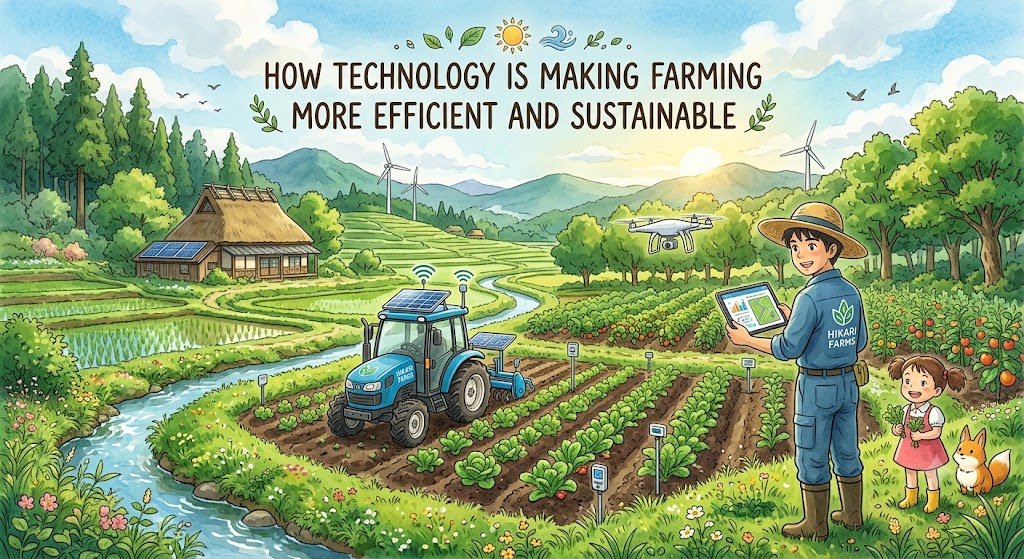
For generations, farming has relied on experience, hard work, and seasonal patterns. While these traditional practices remain valuable, modern agriculture is facing challenges that previous generations never experienced. Rising production costs, unpredictable weather, shrinking farmland, labor shortages, and increasing food demand are forcing farmers to rethink how they produce crops.
Technology is providing answers to many of these challenges.
Today’s farms are becoming smarter through the use of digital tools, automated equipment, artificial intelligence, precision farming systems, and advanced monitoring technologies. These innovations are helping farmers produce more food with fewer resources while protecting the environment for future generations.
The goal is not simply to replace traditional farming methods but to combine agricultural knowledge with modern technology to create a more productive and sustainable farming system.
Why Agriculture Needs Smarter Solutions
Every farming season involves dozens of important decisions. Farmers must determine when to plant, how much water to apply, which fertilizers to use, how to control pests, and when to harvest. Making these decisions based only on observation can sometimes lead to wasted resources or lower yields.
Technology reduces uncertainty by providing accurate information that supports better planning. Instead of reacting after problems appear, farmers can identify potential issues early and respond before crops are affected.
This proactive approach saves both time and money.
Smarter Fields Begin With Better Information
Modern farms generate a large amount of valuable information every day. Soil moisture, temperature, humidity, rainfall, plant growth, and nutrient levels all influence crop performance.
Using digital sensors and monitoring devices, farmers can collect this information continuously instead of relying on occasional field inspections.
This allows them to:
- Monitor changing field conditions
- Detect crop stress earlier
- Improve irrigation timing
- Reduce unnecessary fertilizer use
- Increase overall farm efficiency
Better information leads to better farming decisions.
Precision Farming Is Reducing Waste
One of the biggest improvements in modern agriculture is the ability to manage different areas of a field separately.
Not every section of farmland has the same soil quality, moisture level, or nutrient availability. Precision farming recognizes these differences and helps farmers apply resources only where they are actually needed.
Examples include:
- Variable-rate fertilizer application
- Targeted irrigation
- GPS-guided planting
- Site-specific pest management
By avoiding unnecessary applications, farmers reduce production costs while protecting natural resources.
Automation Is Saving Valuable Time
Many farming tasks require repetitive manual labor, especially during planting and harvesting seasons.
Modern agricultural equipment now performs many of these jobs automatically.
Automation is commonly used for:
- Seed planting
- Crop spraying
- Fertilizer spreading
- Greenhouse climate control
- Milking dairy animals
- Harvesting selected crops
Automated systems improve accuracy while allowing farmers to focus on farm management rather than repetitive work.
Artificial Intelligence Supports Better Decisions
Artificial Intelligence has become an important assistant on many farms.
Rather than making decisions for farmers, AI analyzes enormous amounts of information and provides useful recommendations.
It can help predict:
- Weather risks
- Crop diseases
- Nutrient deficiencies
- Irrigation requirements
- Expected yields
- Harvest timing
These insights help farmers respond more quickly and reduce costly mistakes.
Drones Are Changing Field Monitoring
Walking across large fields to inspect crops takes considerable time.
Agricultural drones now complete this task within minutes.
High-resolution cameras capture detailed images that reveal problems invisible from ground level.
Farmers use drones to:
- Monitor crop growth
- Detect pest outbreaks
- Assess irrigation performance
- Identify nutrient deficiencies
- Create detailed field maps
Earlier detection often prevents small issues from becoming major losses.
Smart Irrigation Conserves Water
Water is one of agriculture’s most valuable resources.
Traditional irrigation methods sometimes apply more water than crops actually require.
Modern irrigation systems combine sensors, weather forecasts, and automated controls to supply water only when necessary.
The benefits include:
✔ Lower water consumption
✔ Healthier crops
✔ Reduced energy costs
✔ Improved drought resilience
✔ Better resource management
This technology is especially valuable in regions where water availability is limited.
Digital Farm Management Is Improving Organization
Successful farming depends on more than growing crops.
Farmers must also manage finances, equipment, labor, inventory, and production records.
Farm management software helps organize:
- Planting schedules
- Field activities
- Machinery maintenance
- Input expenses
- Harvest records
- Profit analysis
Having all farm information in one place makes planning easier and improves business decisions.
Technology Is Supporting Sustainable Agriculture
Sustainability means producing enough food today without damaging the resources needed for future generations.
Modern agricultural technologies contribute to sustainability by helping farmers:
- Reduce fertilizer waste
- Minimize pesticide applications
- Improve soil health
- Lower fuel consumption
- Protect water resources
- Reduce greenhouse gas emissions
Efficient farming and environmental protection now work together rather than competing with one another.
Practical Benefits Farmers Experience
The advantages of agricultural technology become more noticeable over time.
Many farmers report improvements such as:
| Farming Challenge | Technology-Based Solution |
|---|---|
| High labor costs | Automation and robotics |
| Water shortages | Smart irrigation systems |
| Poor crop monitoring | Drones and remote sensing |
| Uncertain weather | AI forecasting tools |
| Rising fertilizer costs | Precision nutrient management |
| Record keeping | Digital farm software |
These improvements help farms remain productive despite increasing challenges.
Is Advanced Technology Only for Large Farms?
A common misconception is that modern agricultural technology is designed only for large commercial operations.
In reality, many innovations are now affordable for small and medium-sized farms.
Examples include:
- Smartphone-based farming apps
- Low-cost soil sensors
- Shared drone services
- Portable weather stations
- Solar-powered irrigation controllers
Farmers can adopt technology gradually without making large investments all at once.
The Future of Smart Farming
Agriculture will continue evolving as technology becomes more accessible.
Future farms are expected to use:
- Fully autonomous tractors
- AI-powered crop management
- Advanced agricultural robots
- Satellite-based crop monitoring
- Climate prediction systems
- Automated harvesting equipment
These innovations will help farmers produce more food while using fewer natural resources.
Final Thoughts
Technology is transforming agriculture by making farming more efficient, productive, and environmentally responsible. From precision farming and artificial intelligence to drones, automation, and smart irrigation systems, modern innovations are helping farmers reduce costs, improve crop performance, and conserve valuable resources.
While traditional farming knowledge remains essential, combining it with today’s technology creates stronger, more resilient farming systems. Farmers who embrace practical innovations are better prepared to meet future challenges, increase profitability, and contribute to a more sustainable global food supply.
Frequently Asked Questions
1. How does technology improve farming efficiency?
Technology helps farmers make better decisions, reduce waste, automate repetitive tasks, and monitor crops more accurately.
2. What is the biggest benefit of precision farming?
Precision farming applies water, fertilizers, and pesticides only where needed, improving efficiency while lowering production costs.
3. Can small farmers benefit from agricultural technology?
Yes. Many affordable tools, such as mobile farming apps, soil sensors, and drone services, are suitable for small farms.
4. Why is technology important for sustainable agriculture?
Technology reduces resource waste, protects soil and water, lowers environmental impact, and supports long-term farm productivity.
5. Will technology replace traditional farming?
No. Technology complements farmers’ experience by providing better information and improving efficiency rather than replacing agricultural knowledge.