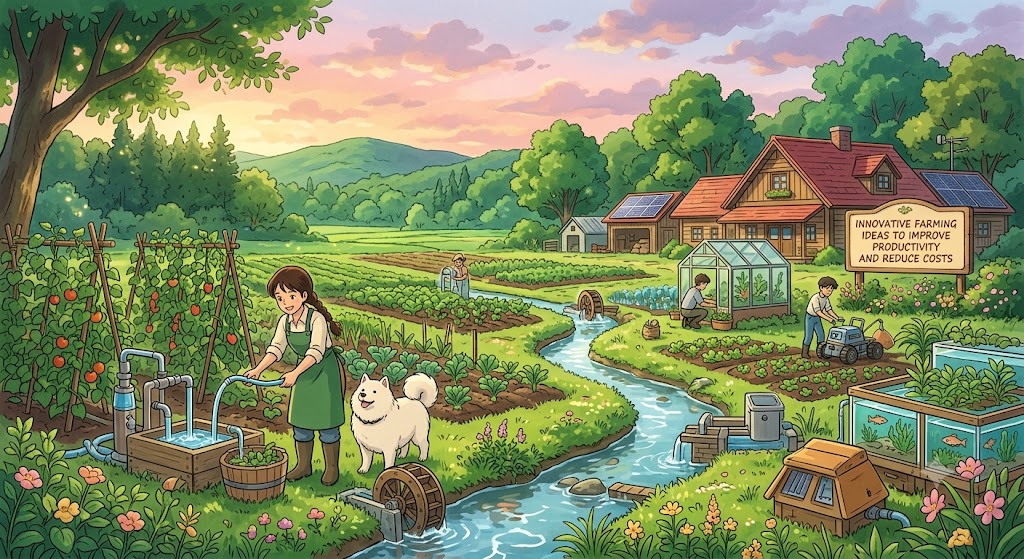
Agriculture is changing faster than ever before. Rising input costs, unpredictable weather, labor shortages, and increasing food demand have encouraged farmers to rethink traditional farming methods. Today, improving productivity is no longer just about applying more fertilizer or cultivating larger fields. The focus has shifted toward smarter farming practices that produce higher yields while using fewer resources.
Innovation in agriculture does not always require expensive machinery or advanced technology. Sometimes, simple changes in farm management, soil care, irrigation, and crop planning can significantly increase profits while reducing production costs. Farmers who combine modern innovations with sustainable practices often achieve better results than those relying solely on conventional methods.
This guide explores practical and innovative farming ideas that help farmers improve efficiency, increase crop production, and lower operating expenses without compromising long-term sustainability.
Why Innovation Matters in Agriculture
Every farming season presents new challenges, including changing weather, pest outbreaks, rising fertilizer prices, and water shortages.
Innovative farming helps farmers:
- Increase crop yields
- Reduce waste
- Improve resource efficiency
- Lower production costs
- Protect natural resources
- Improve farm profitability
- Build resilience against climate change
Adopting even a few innovative practices can make a noticeable difference over time.
Build Healthy Soil Before Increasing Inputs
Many farmers try to solve poor crop performance by applying more fertilizer, but healthy soil should always come first.
Ways to improve soil naturally include:
- Adding compost
- Applying well-rotted manure
- Growing cover crops
- Rotating crops
- Reducing excessive tillage
Healthy soil stores more nutrients and water, allowing crops to grow with fewer external inputs.
Use Precision Irrigation
Water is one of the most valuable farm resources. Applying it efficiently reduces both costs and waste.
Modern irrigation methods include:
- Drip irrigation
- Micro-sprinklers
- Soil moisture sensors
- Timed irrigation systems
- Rainwater harvesting
Delivering water directly to plant roots improves efficiency while lowering pumping expenses.
Diversify Crop Production
Depending on a single crop increases financial risk.
Growing different crops throughout the year provides several advantages:
- Continuous income
- Better soil fertility
- Reduced pest problems
- Improved market opportunities
- Lower weather-related risks
Combining vegetables, grains, legumes, herbs, or fruit crops creates a more stable farming business.
Grow High-Value Crops
Instead of increasing land area, many successful farmers increase profits by cultivating crops with greater market value.
Examples include:
- Garlic
- Ginger
- Turmeric
- Mushrooms
- Herbs
- Strawberries
- Medicinal plants
These crops often generate significantly higher income per acre than traditional field crops.
Improve Farm Planning with Digital Tools
Simple digital tools can help farmers organize daily operations more efficiently.
Useful applications include:
- Crop calendars
- Weather forecasting apps
- Irrigation scheduling tools
- Farm expense tracking
- Inventory management
Better planning reduces unnecessary spending and improves decision-making.
Recycle Farm Waste
Agricultural waste should be viewed as a valuable resource rather than something to discard.
Crop residues, leaves, and livestock manure can be converted into:
- Compost
- Organic mulch
- Vermicompost
- Biogas
- Animal feed (where appropriate)
Recycling farm waste reduces fertilizer expenses while improving soil fertility.
Rotate Crops Every Season
Crop rotation remains one of the simplest yet most effective farming innovations.
Benefits include:
- Improved soil nutrients
- Reduced weed pressure
- Lower disease incidence
- Better water use
- Increased biodiversity
Including legumes in the rotation naturally adds nitrogen to the soil.
Adopt Integrated Pest Management
Excessive pesticide use increases costs and may harm beneficial insects.
Integrated Pest Management (IPM) combines:
- Regular crop monitoring
- Biological control
- Resistant crop varieties
- Crop rotation
- Mechanical control
- Targeted pesticide use only when necessary
This balanced approach lowers chemical expenses while protecting crop health.
Improve Plant Nutrition Efficiently
Applying fertilizers without understanding soil needs often wastes money.
Instead:
- Test soil regularly.
- Apply nutrients according to crop requirements.
- Combine organic and mineral fertilizers.
- Split fertilizer applications during the growing season.
Balanced nutrition improves crop performance while reducing unnecessary fertilizer use.
Introduce Cover Crops
Cover crops protect fields during periods when commercial crops are not growing.
Popular options include:
- Clover
- Rye
- Cowpea
- Mustard
- Oats
Benefits include:
- Weed suppression
- Reduced erosion
- Better moisture retention
- Increased organic matter
- Improved microbial activity
Healthy soil requires less fertilizer over time.
Reduce Fuel Costs Through Conservation Tillage
Frequent deep plowing increases fuel consumption and labor costs.
Reduced tillage offers several advantages:
- Lower machinery expenses
- Better soil structure
- Improved moisture conservation
- Reduced erosion
- Increased soil carbon
Many farmers successfully combine reduced tillage with cover crops for even better results.
Harvest Rainwater
Rainwater is a valuable resource that often goes unused.
Collection systems can supply water for:
- Irrigation
- Livestock
- Nursery production
- Cleaning farm equipment
Rainwater harvesting reduces dependence on expensive groundwater or municipal water supplies.
Invest in Quality Seeds
Good seed is one of the highest-return investments on any farm.
Certified seeds generally provide:
- Better germination
- Uniform growth
- Disease resistance
- Higher yields
- Better crop quality
Starting with quality planting material reduces many production problems later in the season.
Monitor Fields Regularly
Walking through fields frequently allows farmers to identify problems before they become expensive.
Look for:
- Pest activity
- Disease symptoms
- Weed growth
- Nutrient deficiencies
- Water stress
- Uneven crop development
Early intervention almost always costs less than solving advanced problems.
Add Value Before Selling
Selling raw produce is not the only way to earn income.
Processing products often increases profits.
Examples include:
- Turmeric powder
- Garlic paste
- Dried herbs
- Fruit jams
- Chili flakes
- Pickles
- Packaged vegetables
Value-added products also create new marketing opportunities.
Explore Direct Marketing
Selling directly to customers often produces better returns than wholesale marketing.
Potential channels include:
- Farmers’ markets
- Local grocery stores
- Restaurants
- Community-supported agriculture (CSA)
- Online sales
- Home delivery services
Building relationships with customers increases long-term business stability.
Use Renewable Energy Where Possible
Solar-powered systems are becoming increasingly affordable for farms.
Common applications include:
- Water pumps
- Electric fencing
- Lighting
- Small irrigation systems
Renewable energy lowers long-term operating expenses while reducing environmental impact.
Train Continuously and Stay Updated
Agriculture continues evolving through new technologies and improved farming practices.
Successful farmers regularly:
- Attend workshops
- Read agricultural publications
- Learn from demonstration farms
- Exchange ideas with other farmers
- Test new techniques on small plots before large-scale adoption
Continuous learning is one of the most valuable investments in farming.
Common Mistakes That Increase Costs
Many farms lose money because of avoidable management errors.
Avoid:
- Applying unnecessary fertilizers
- Over-irrigation
- Delayed pest control
- Ignoring soil health
- Growing unsuitable crops
- Poor record keeping
- Depending on only one market
Small improvements in management often produce significant financial savings.
Conclusion
Innovative farming is not about replacing traditional agriculture—it is about improving it through smarter decisions, efficient resource management, and sustainable practices. Building healthy soil, adopting precision irrigation, rotating crops, recycling farm waste, using quality seeds, monitoring fields regularly, and exploring direct marketing opportunities all contribute to higher productivity and lower operating costs.
Farmers who embrace innovation while protecting natural resources create stronger, more resilient businesses capable of adapting to changing market conditions and environmental challenges. By making thoughtful improvements one step at a time, any farm—large or small—can become more productive, profitable, and sustainable for the future.
Frequently Asked Questions
1. What is the easiest farming innovation to adopt?
Improving soil health through compost, crop rotation, and cover crops is one of the simplest and most cost-effective innovations for most farms.
2. How can farmers reduce production costs?
Farmers can lower expenses by improving irrigation efficiency, recycling organic waste, applying fertilizers based on soil tests, reducing unnecessary tillage, and using integrated pest management.
3. Why is crop diversification important?
Growing multiple crops reduces financial risk, improves soil fertility, extends harvest periods, and creates multiple sources of income.
4. Can small farms benefit from innovative farming?
Yes. Many innovations, including drip irrigation, composting, direct marketing, quality seeds, and digital farm planning, are especially valuable for small and medium-sized farms.
5. How does healthy soil improve farm profitability?
Healthy soil improves nutrient availability, increases water retention, supports beneficial microorganisms, reduces fertilizer needs, and produces stronger crops with higher yields.